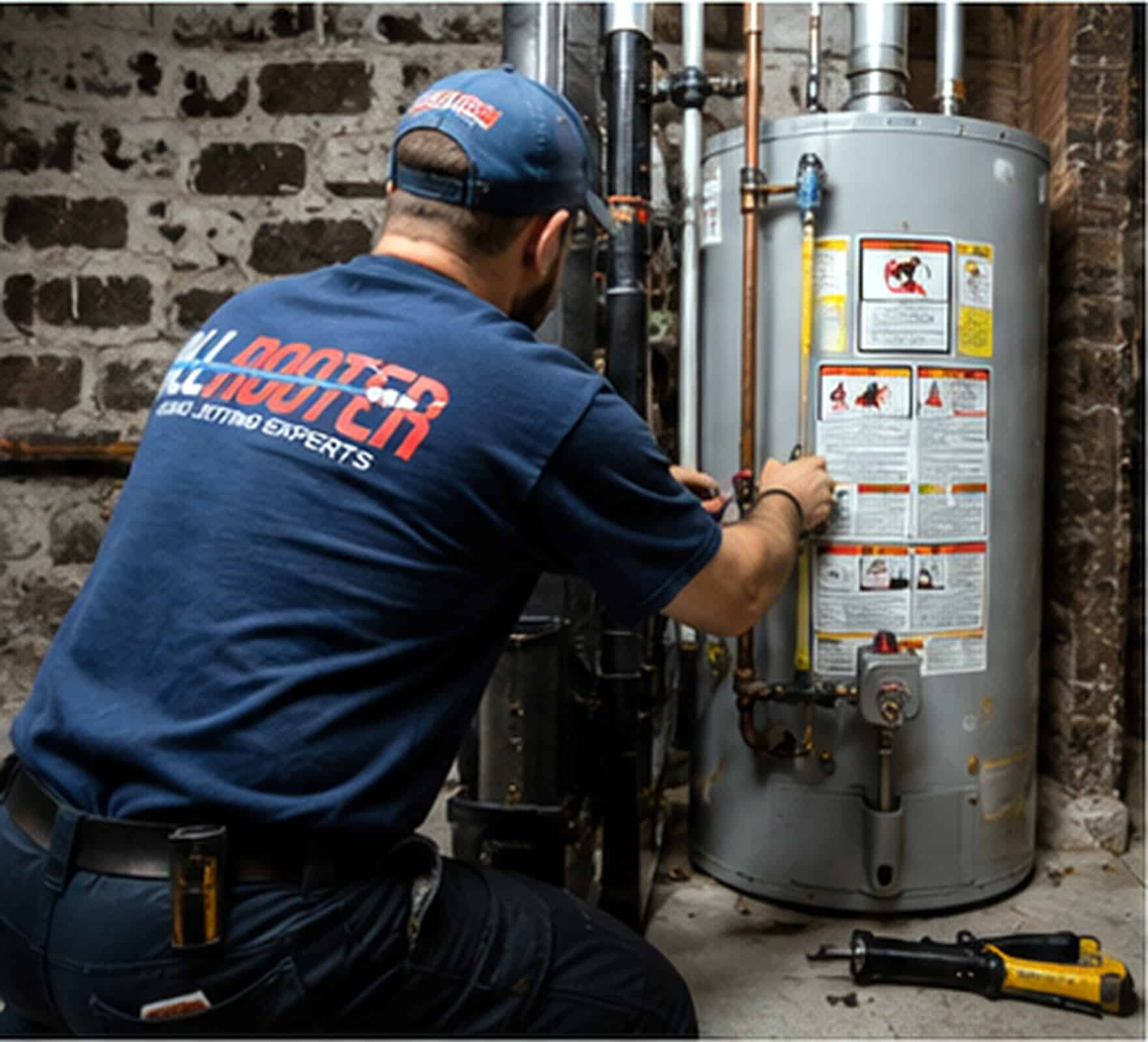
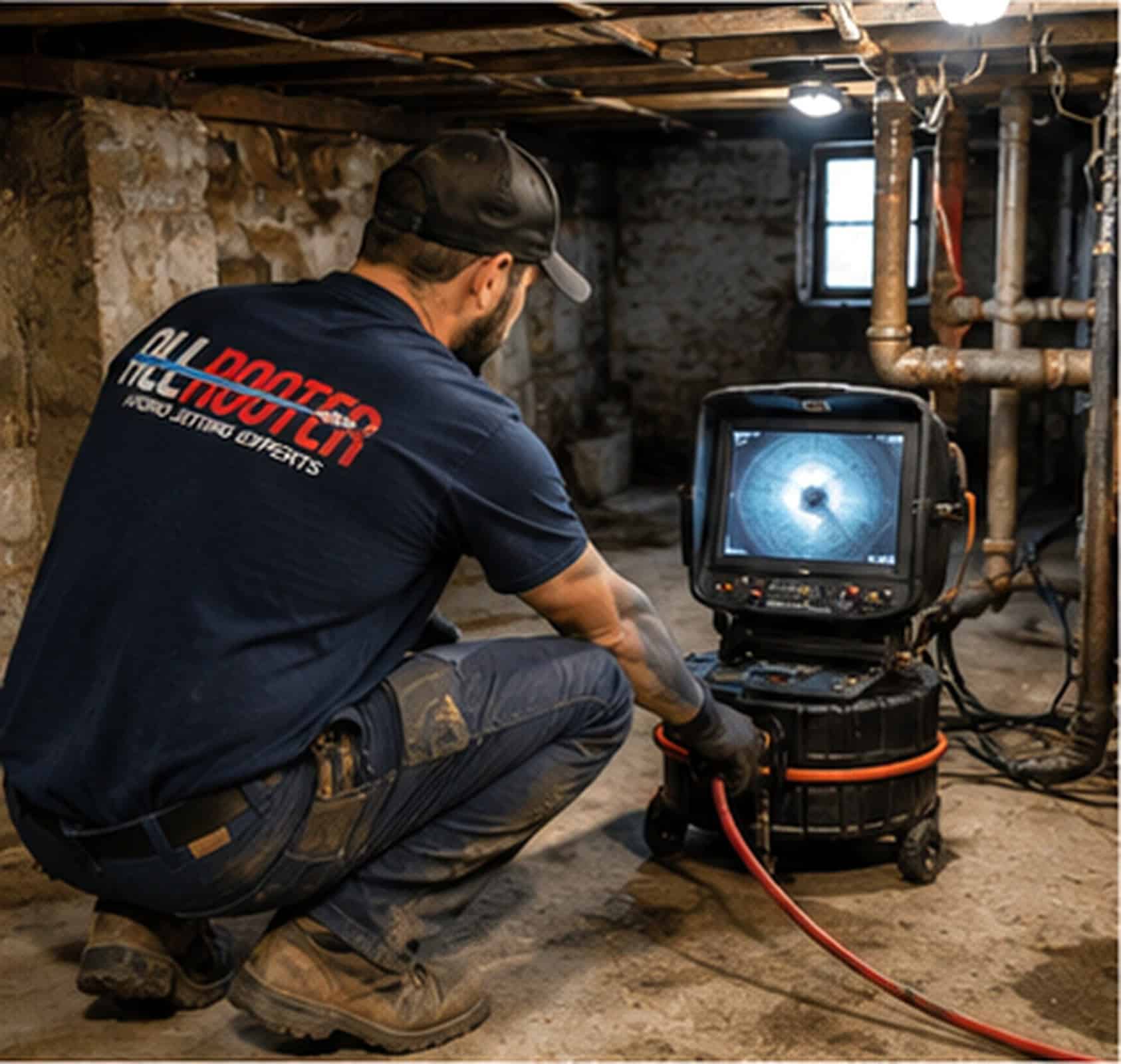
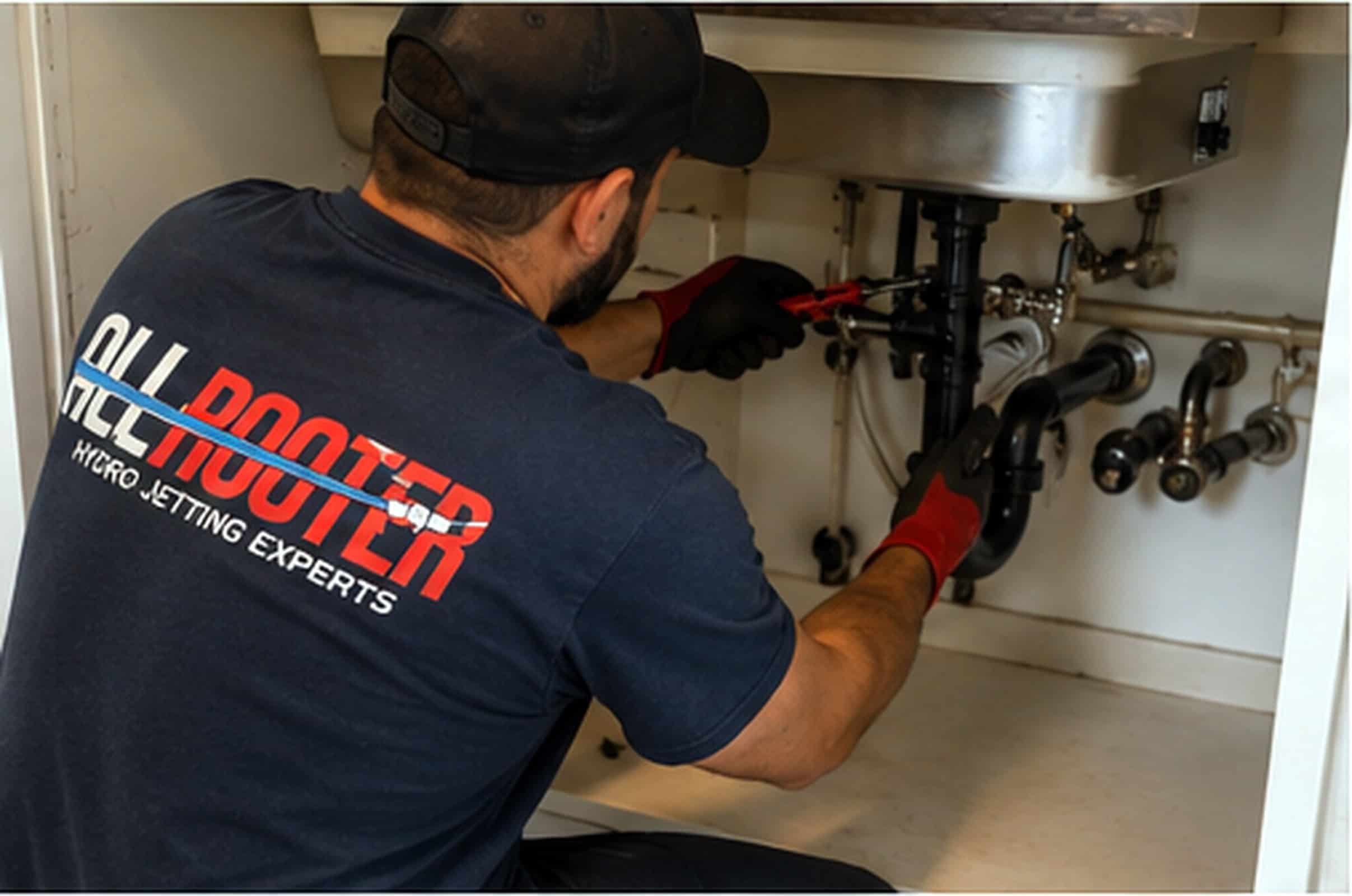
Repair or replace? If your water heater is acting up, this guide walks you through exactly how to decide before you call anyone.
Share:

Summary:
You noticed something was off—maybe the morning shower ran cold, maybe there’s a small puddle near the base of the tank, maybe the unit’s been making a sound it never used to make. Now you’re trying to figure out whether you’re looking at a quick fix or a full replacement, and you’re not sure who to trust to give you a straight answer.
That’s exactly what this guide is for. We’ll walk you through the real decision-making framework—the age rule, the cost rule, the warning signs that actually matter—so you can walk into any service call informed, not anxious.
Not every water heater problem means you need a new unit. A failed thermostat, a burned-out heating element, a faulty pressure relief valve—these are all legitimate, cost-effective repairs when the unit itself is in decent shape. The mistake most homeowners make is assuming the worst before anyone’s actually looked at it.
The smarter starting point is asking two questions: how old is the unit, and what’s the repair going to cost relative to replacing it? Those two factors tell you more than any symptom list.

Here’s the threshold worth knowing: most tank water heaters are designed to last 8 to 12 years. After the 10-year mark, most manufacturers themselves recommend replacement—not because something has necessarily gone wrong yet, but because the internal components are approaching the end of their reliable service life and repairs start to carry diminishing returns.
If your unit is under 8 years old and the repair is straightforward, fixing it almost always makes more sense than replacing it. If it’s between 8 and 10 years, the math gets more nuanced—you’re weighing the repair cost against how much useful life is realistically left in the tank. Past 10 years, you’re often better off putting that money toward a new unit, especially in Cook County where the winters push water heaters harder than almost anywhere else in the country.
Finding your unit’s age is easier than it looks. It’s encoded in the serial number on the data plate, usually near the top of the tank. The format varies by brand—Bradford White, Rheem, and A.O. Smith each use slightly different coding systems—but the manufacture year is always in there. If you can’t decode it, any plumber worth calling should be able to tell you in about 30 seconds.
In Cook County, this matters more than people realize. Chicago’s bungalow belt—the dense stretch of pre-war housing running through neighborhoods like Archer Heights, Brighton Park, Gage Park, and Clearing—has some of the oldest residential plumbing infrastructure in any major U.S. city. A lot of those homes have water heaters that are well past the 10-year mark, sometimes installed by a previous owner and never thought about since. If you’ve bought a home in the last few years and haven’t checked the age of your water heater, that’s the first thing to do.
Once you know the age, apply what the industry calls the 50% rule: if the cost of the repair exceeds 50% of what a new unit would cost, replacement is almost always the smarter financial move. It’s not a perfect formula, but it’s a reliable gut check that removes a lot of the guesswork.
The logic is straightforward. A repair on an aging unit doesn’t reset the clock—it just buys you more time on a system that’s already wearing out. If you spend a significant amount patching one problem and the unit fails again six months later, you’ve paid twice without solving anything. A new unit, by contrast, comes with a manufacturer’s warranty, better energy efficiency, and a full lifespan ahead of it.
New water heaters are also measurably more efficient than older models—up to 20% more efficient, with potential energy savings of up to $700 over the life of the unit. That’s real money, especially in a city where heating costs are a serious line item for most households. It doesn’t make replacement the automatic answer, but it’s a factor that deserves honest consideration when you’re doing the math.
One more thing worth knowing: if a water heater has already been repaired once and something new has gone wrong, that pattern is a strong signal. A unit that’s failing repeatedly isn’t going to stabilize—it’s going to keep failing. At that point, you’re not repairing a water heater; you’re financing a slow replacement one service call at a time.
The 50% rule and the age threshold work together. A young unit with a costly repair might still be worth fixing. An old unit with even a modest repair cost is often better replaced. The combination of both factors gives you a clearer picture than either one alone.
Some situations skip the repair vs. replace debate entirely. There are specific warning signs that point directly toward replacement—not because a plumber said so, but because the underlying problem can’t be fixed with parts and labor.
Knowing what those signs look like means you can walk into a service call with a realistic expectation, rather than being surprised by a recommendation you weren’t prepared for.

A leaking water heater doesn’t automatically mean you need a new one—but the location of the leak matters enormously, and this is where a lot of homeowners get confused.
Leaks coming from connections, fittings, the pressure relief valve, or the drain valve are often repairable. These are external components that can be replaced without touching the tank itself. If a plumber identifies the source as one of these, a repair is a legitimate option—assuming the unit’s age and overall condition support it.
Leaks coming from the tank body itself are a different story. That kind of leak almost always means internal corrosion has compromised the tank’s structural integrity. Once a tank is corroding from the inside, there’s no patch that holds long-term. Replacement is the only real answer.
This distinction matters especially in Cook County, where Chicago’s water supply—treated Lake Michigan water with measurable mineral content—contributes to sediment buildup and accelerated wear on the anode rod, the sacrificial component that protects the tank from internal corrosion. Over time, in homes that haven’t had regular maintenance, that corrosion process can move faster than it would in softer-water markets.
The other scenario that demands immediate attention: a leak that’s already caused water damage to the surrounding area. Water damage remediation in the Cook County area averages $1,300 to $5,550—separate from whatever the replacement itself costs. That’s the real financial risk of waiting on a unit that’s showing signs of failure. Proactive replacement, even when the unit is still technically functioning, is almost always cheaper than emergency replacement plus water damage repair.
The repair vs. replace decision is only as good as the plumber making the call. And in Cook County, the licensing and registration requirements are more layered than most homeowners realize—which means not every contractor who shows up with a truck is legally qualified to do the work.
Under Illinois law (225 ILCS 320), all plumbing work must be performed by or under the supervision of a licensed plumber. In Chicago specifically, that means holding a City of Chicago plumber’s license through the Chicago Department of Buildings, in addition to the state license. Cook County contractors are also required to be registered with the Department of Building and Zoning and carry a minimum of $1,000,000 in general liability insurance. Gas-fired water heater installations involve dual oversight—the Illinois Department of Public Health covers plumbing connections, and the Illinois Office of the State Fire Marshal covers gas piping—which raises the stakes of hiring someone who isn’t fully credentialed.
The practical takeaway: ask for a contractor’s Cook County registration card before work begins. If they’re registered, the county already has copies of their licenses on file. If they can’t produce it, that’s a clear signal to keep looking.
Beyond credentials, the right water heater plumber will give you a full cost disclosure before touching anything. Not a rough estimate, not a “we’ll see once we open it up”—an actual price you can agree to before work starts. That’s the standard we hold ourselves to at All Rooter Hydro Jetting Experts Inc, and it’s the standard you should expect from any plumber you invite into your home. Unpermitted work creates liability that follows the homeowner—it can complicate insurance claims, cause problems at resale, and leave you responsible for code violations you didn’t even know existed.
One more thing: Cook County winters are genuinely brutal. Polar vortex events regularly push temperatures to -20°F, and when that happens, your water heater is working at maximum capacity against near-freezing inlet water temperatures. A unit that’s marginal in September may not make it through January. If your unit is aging and showing any of the warning signs discussed above, fall is the right time to have it evaluated—not after the first cold snap of the season.
The repair vs. replace decision comes down to three things: the age of your unit, the cost of the repair relative to replacement, and whether the problem is isolated or a sign of deeper wear. Run those filters honestly and the right answer usually becomes clear—without anyone having to pressure you into it.
If your unit is under 8 years old and the issue is straightforward, repair is almost always worth it. Past 10 years, especially in an older Cook County home where the unit has been working hard through decades of cold winters and mineral-laden water, replacement often makes more financial sense than another round of repairs.
When you’re ready to have someone take an actual look, we at All Rooter Hydro Jetting Experts Inc have been doing this work in Cook County since 2000. We’ll tell you what we find, give you a straight price before anything starts, and let you make the call—no pressure, no surprises.
Article details:
Share:
Continue learning: