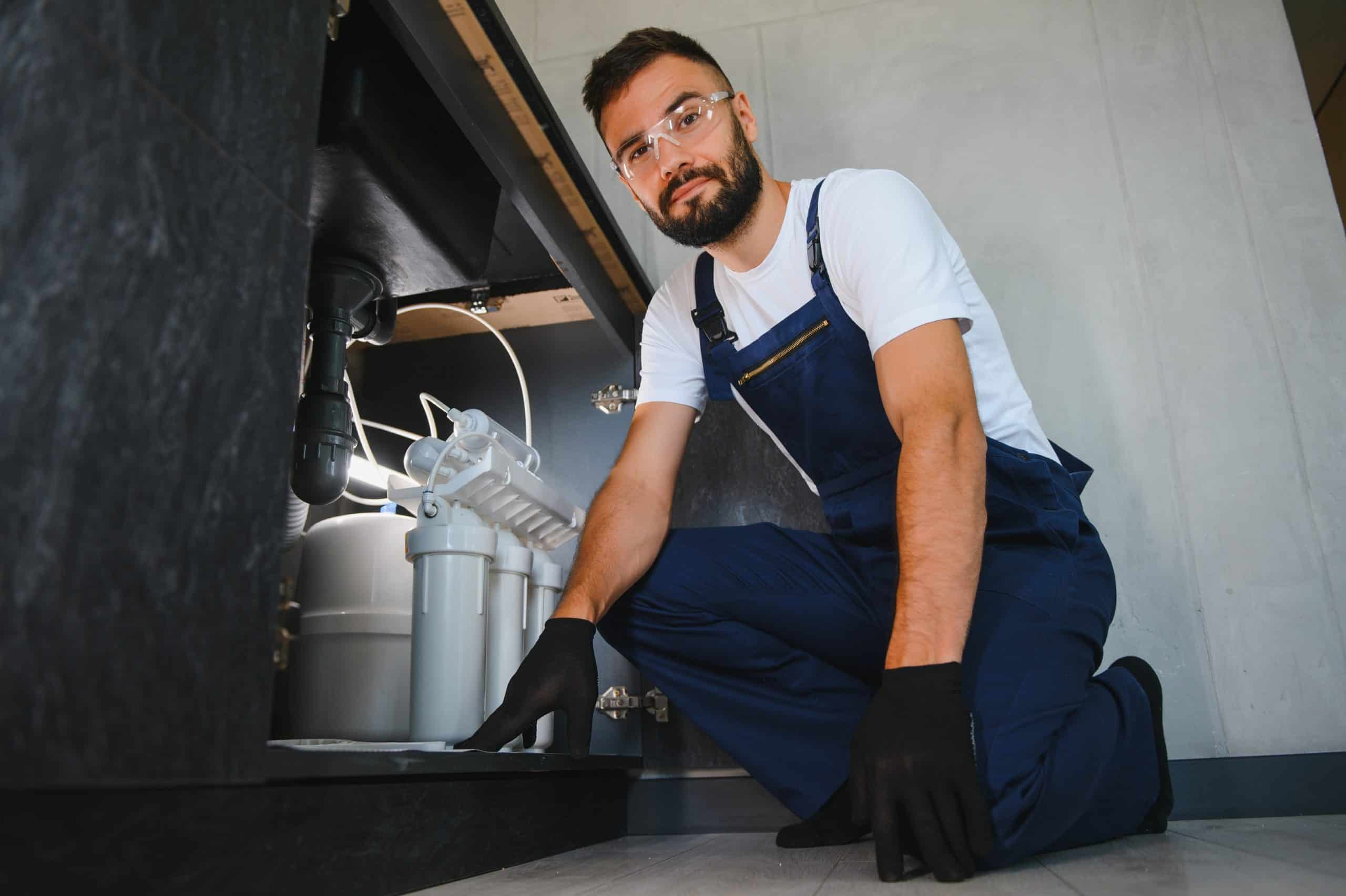
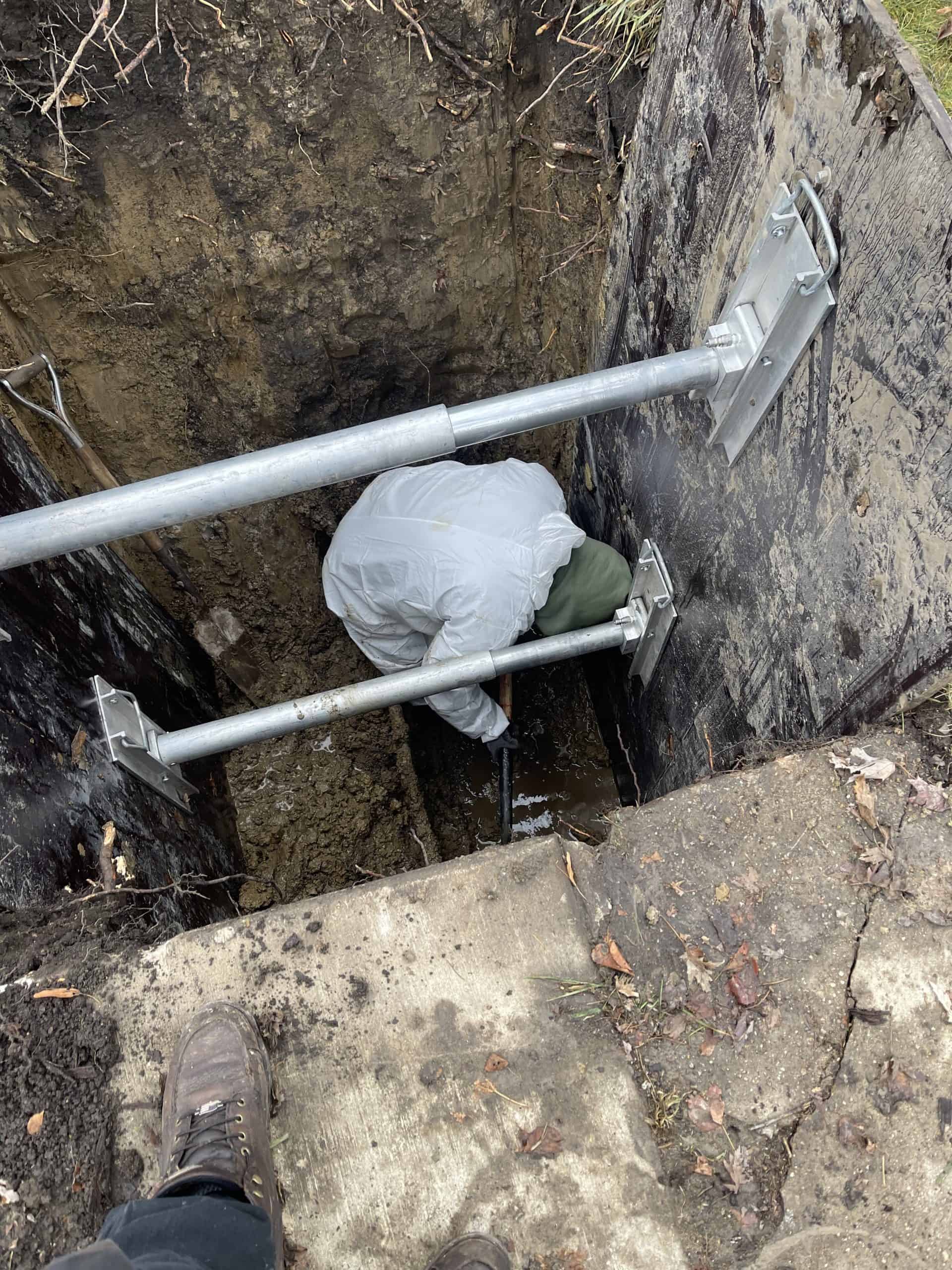
That weak trickle from your shower isn't just annoying — it's often a sign of something bigger happening inside your pipes or water heater.
Share:

Summary:
If your shower feels like it’s running on a wish, or your kitchen faucet takes forever to fill a pot, you’re not imagining it — and you’re not alone. Low water pressure is one of the most common complaints we hear from homeowners across Cook County. The frustrating part is that it can come from a dozen different places: your pipes, your water heater, the city’s supply line, or a valve that’s been slowly failing for years. Some of these are quick fixes. Others are signs of something that needs professional attention before it gets worse. Here’s what’s actually going on.
Normal residential water pressure runs between 40 and 80 PSI, with most plumbers recommending somewhere in the 50–60 PSI range as the sweet spot. Below 40 PSI and you’ll feel it at every fixture in the house. Above 80 and you risk stressing your pipes and appliances.
Here’s the Cook County-specific wrinkle: the municipal water supply can deliver pressure as low as 30 PSI in some neighborhoods — particularly those farther from pumping stations. By the time that water travels through aging pipes to your second-floor bathroom, the pressure can drop well below what’s comfortable or functional. That’s not a personal plumbing failure. It’s a Cook County reality that’s been quietly frustrating homeowners for decades.
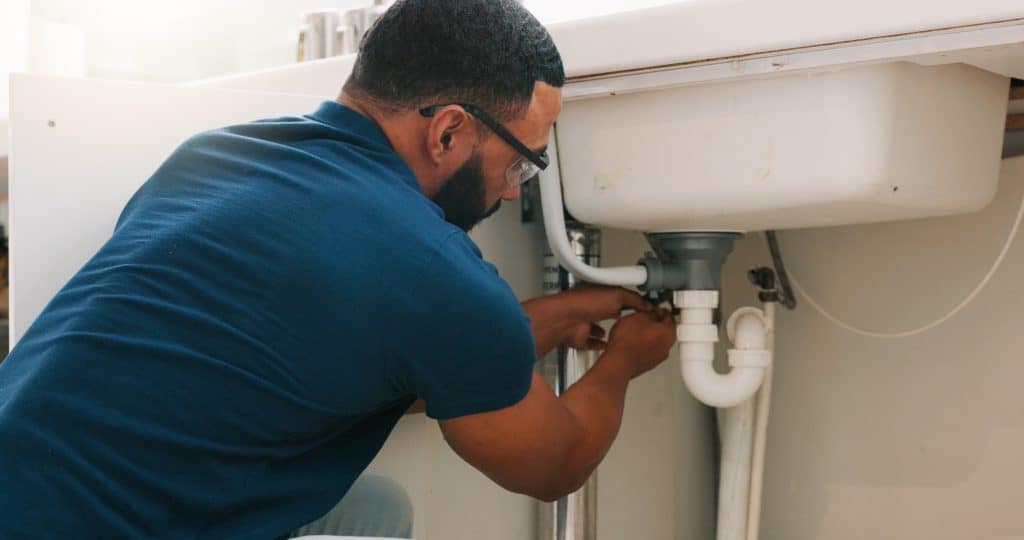
If your home was built before the early 1970s, there’s a good chance it still has galvanized steel pipes running through the walls. Galvanized pipes were the standard for decades, and they did their job — for a while. The problem is what happens as they age. Once the protective zinc coating wears off, the steel underneath starts to corrode. That corrosion doesn’t just weaken the pipe — it builds up on the interior walls, narrowing the space water has to move through. Think of it like plaque in an artery. The pipe looks fine from the outside, but inside, it’s slowly strangling your water flow.
This is one of the most common causes of chronic low pressure in Cook County’s older neighborhoods — Gage Park, West Lawn, Bridgeport, Berwyn, Oak Park, and dozens of other communities where the housing stock goes back 80 or 100 years. It’s not a fluke. It’s what happens to galvanized pipes in a hard-water city over a long enough timeline.
Chicago’s water comes from Lake Michigan and, while treated, it carries enough mineral content to accelerate scale buildup inside pipes and fixtures. Over time, that buildup compounds the corrosion problem. The interior diameter of your pipes gets smaller, pressure drops, and no amount of cleaning your showerhead aerator is going to fix it. Snaking a drain won’t cut it either — snaking punches through a clog, but it doesn’t touch the scale coating the pipe walls. Hydro jetting is the method that actually clears the full interior of the pipe, restoring flow the way a good descaling should. It’s the difference between poking a hole through a problem and actually solving it.
If you’ve had a plumber out more than once for the same pressure issue and it keeps coming back, corroded galvanized pipes combined with mineral buildup are the most likely explanation. A camera inspection can confirm it without any demolition — just a real-time look at what’s happening inside your plumbing before any repair decisions are made.
Not every pressure problem starts inside the pipes. Sometimes the issue is a pressure reducing valve — a PRV — that’s worn out or miscalibrated. The PRV is a small but important device installed on your main water line, usually near where it enters the house. Its job is to take the pressure coming in from the street and bring it down to a safe, livable level for your home’s plumbing. Cook County’s plumbing code actually requires one when incoming pressure exceeds 100 PSI, which happens more than people realize in certain parts of the city and suburbs.
When a PRV starts to fail, it can go one of two ways. It might let pressure run too high, which stresses your pipes and appliances. Or it might restrict flow too much, leaving you with that weak, frustrating trickle at every fixture. The tricky part is that PRV failure is gradual — it doesn’t announce itself with a dramatic burst or obvious leak. It just quietly gets worse until you notice that your water pressure isn’t what it used to be.
A PRV that’s more than 10 to 15 years old is worth having inspected, especially in Cook County homes where the municipal supply pressure can fluctuate. Replacing a failing PRV is a straightforward job for a licensed plumber, and it can make a noticeable difference almost immediately. If you’ve ruled out pipe corrosion and your fixtures are clean, the PRV is one of the first things worth checking. It’s an easy thing to overlook, but it controls the pressure for your entire home — so when it goes, everything suffers.
Most conversations about low water pressure focus on pipes and valves — and rightfully so. But your water heater is part of the equation too, and when it starts to fail, it can affect both pressure and safety at the same time.
If you’ve noticed a rotten egg or sulfur smell near your water heater, stop reading this and act. That smell is mercaptan — an additive the gas company puts into natural gas specifically so you can detect it. Natural gas itself is odorless. If you’re smelling it, there’s a leak. Don’t flip light switches, don’t use your phone near the unit, don’t try to find the source yourself. Get everyone out of the house, leave the door open, and call your gas company or an emergency plumber from outside. This is not a “schedule something for next week” situation.

Here’s something a lot of homeowners don’t realize: if your cold water pressure is fine but your hot water pressure is noticeably weaker, the problem almost certainly lives inside your water heater system — not in the city’s supply line, and not in your main pipes.
The hot water system has several components that work together to maintain both temperature and pressure: the tank itself, the pressure relief valve (PRV), the supply lines, and the heating elements or burner. When any one of these starts to fail, the effects show up at your fixtures. Sediment is the most common culprit in tank-style water heaters. Over time — especially in a hard-water market like Cook County — minerals settle at the bottom of the tank. That sediment layer insulates the water from the heating element, forces the unit to work harder, and can partially block the outlet where hot water exits the tank. The result is reduced hot water pressure, inconsistent temperatures, and a water heater that’s burning more energy to do less.
The pressure relief valve on your water heater is another piece worth understanding. It’s a safety device designed to release pressure if the tank gets dangerously overloaded. But a PRV that’s starting to fail doesn’t always fail dramatically — sometimes it just starts to weep or partially restrict flow, which shows up as lower pressure on the hot side of your plumbing. It can also create the opposite problem: a PRV stuck in the closed position allows pressure to build unchecked, which is a different kind of hazard entirely.
Annual maintenance matters here. Flushing sediment from a tank-style heater once a year is standard practice for a reason — it extends the life of the unit and keeps pressure consistent. In Cook County, where the water’s mineral content accelerates buildup, skipping that maintenance catches up with you faster than it would in softer-water markets. If your water heater is more than 10 to 12 years old and you’ve never had it serviced, the pressure drop you’re feeling at the hot tap is a symptom, not the root problem.
Tankless water heaters have become increasingly popular in Cook County homes over the last decade — they’re energy efficient, they don’t run out of hot water, and they take up far less space than a traditional tank. But they come with their own set of failure modes, and one of the most common is mineral scaling — which, in a hard-water city like Chicago, can happen faster than most manufacturers’ timelines suggest.
A tankless unit heats water on demand by passing it through a heat exchanger. In a high-mineral-content water supply, that heat exchanger becomes a magnet for scale buildup. Over time, the scale restricts flow through the unit, causes the heat exchanger to overheat, and can eventually trigger error codes or cause the unit to shut down mid-use. But before it gets to that point, you’ll often notice the pressure at your hot water fixtures gradually dropping — particularly when multiple taps are running at once.
When a tankless water heater starts leaking, it’s usually a sign that internal components have been compromised. Leaks can develop at connection fittings, at the heat exchanger itself, or at the pressure relief valve. A slow leak at the unit doesn’t just waste water — it can reduce the pressure available to the rest of your hot water system, and if it’s near electrical components, it creates a safety hazard on top of the plumbing problem.
The fix depends on where the leak is coming from and how far the damage has progressed. Sometimes it’s a failed fitting or a worn seal that’s straightforward to replace. Other times, if scaling has been allowed to build up for years without descaling service, the heat exchanger may need to be replaced — or the unit itself. In Cook County homes where the water is harder and winters are brutal, annual descaling of a tankless unit isn’t optional maintenance — it’s what keeps the unit running at the pressure and efficiency it was designed for. If your tankless heater is dripping and your hot water pressure has dropped, those two things are almost certainly connected. Getting a professional diagnosis sooner rather than later is almost always the cheaper path.
Low water pressure is easy to put off — it’s inconvenient, not dramatic. But in most cases, the longer it goes unaddressed, the more expensive the underlying problem becomes. Corroded galvanized pipes don’t stop corroding. Sediment in a water heater doesn’t flush itself. A failing PRV doesn’t recalibrate on its own.
If you’re dealing with pressure that’s been gradually getting worse, hot water pressure that’s weaker than cold, a water heater that’s more than a decade old, or — most urgently — any smell of gas near your water heater, these are not situations to troubleshoot indefinitely on your own. They need a licensed professional who can measure what’s actually happening, look inside the pipes if needed, and give you a straight answer about what the fix involves and what it will cost.
We’ve been helping Cook County and Chicago homeowners solve water pressure problems since 2000. If you’re ready to stop guessing and get a real diagnosis, call us — we’re available 24/7, and we’ll tell you upfront what you’re looking at before any work begins.
Article details:
Share:
Continue learning: