
A burst pipe in a Cook County home can go from bad to catastrophic in minutes. Here's exactly what to do — and what not to do — before the plumber arrives.
Share:

Summary:
You didn’t plan for this. Nobody does. One moment everything’s fine, and the next you’re standing in a wet basement at midnight wondering what to do first. A burst pipe in a Cook County home moves fast — at 2 to 4 gallons of water per minute, you’re looking at potentially hundreds of gallons of damage before morning if nothing gets done.
The good news is that the first few minutes matter more than anything else, and the right moves are simple. This guide covers exactly what to do when a pipe bursts, why Cook County homes are especially vulnerable, and what a real repair looks like from start to finish.
The moment you suspect a burst pipe, stop the water. Your main shutoff valve is your first move — not your phone, not your insurance company, not a YouTube video. In most Chicago bungalows and two-flats, the shutoff is in the basement near the front of the house, close to where the service line enters from the street. If you’ve never located it before, now is the time to find it.
Once the water is off, open a cold faucet somewhere in the house to relieve any remaining pressure in the line. Then turn off the electricity to any rooms where water is present — water and live circuits are a dangerous combination. After that, start documenting. Take photos and video of everything before you touch it, move it, or clean anything up. Your insurance adjuster will want to see the damage as it was, not after you’ve mopped the floor.

This is more common than most people admit, and it’s especially common in older Cook County homes. The city’s bungalows, greystones, and two-flats were built in an era when nobody handed you a homeowner’s manual at closing. Shutoff valves end up behind utility panels, tucked into mechanical rooms, or in corners of unfinished basements that haven’t been opened in years.
If you can’t locate the interior shutoff, your next option is the curb stop — the shutoff located at the street near your water meter. You’ll typically need a special tool to operate it, and in some cases the Chicago Department of Water Management may need to be contacted. This is exactly the kind of situation where having a plumber’s number already in your phone pays off. A plumber for burst pipes who is genuinely available at 2 AM can walk you through locating the valve over the phone while they’re already on the way.
One thing worth knowing: if your water meter is moving while every faucet in the house is off, that’s a reliable sign you have an active leak somewhere in the system — even if you haven’t found visible water yet. Pipes that burst during a freeze event may still be partially frozen at the break point, masking the damage until they thaw. By the time you see the water, the pipe has often been leaking for hours. That’s why a pressure drop or an unexplained wet spot on a wall or ceiling during cold weather deserves immediate attention, not a wait-and-see approach.
After the water is off and the damage is documented, call a licensed plumber — not a handyman, not a general contractor. Burst pipe repair in Cook County homes, especially those with older cast iron or galvanized steel plumbing, requires someone who understands the specific pipe materials and building code requirements that apply here. An incorrect repair can create code violations that surface later during a home sale or insurance claim, turning a fixable problem into a much larger one.
Cook County’s winters are genuinely punishing. Temperatures regularly drop below 20°F — the threshold at which pipes in unheated or poorly insulated spaces begin to freeze — and polar vortex events have pushed temps to -20°F or colder multiple times in recent years. Anyone who lived through the 2014, 2019, or 2021 polar vortex events knows what that kind of cold does to a neighborhood’s plumbing.
But the temperature alone isn’t the whole story. What makes Cook County particularly hard on pipes is the freeze-thaw cycling that happens throughout late fall and early spring. Temperatures can cross the freezing point multiple times in a single week, subjecting pipe joints and already-weakened sections to repeated stress. Each cycle is another opportunity for a failure that’s been building for years to finally give way.
The housing stock makes it worse. A significant share of homes in Cook County’s South Side neighborhoods — Marquette Park, Gage Park, Brighton Park, Back of the Yards, Bridgeport — were built between 1900 and 1960. Many of these homes have plumbing systems that are 60 to 100 years old, with cast iron drain lines and galvanized steel supply lines that were never designed to last this long. Cook County’s hard water accelerates the problem. High mineral content in the area’s water supply builds up inside older pipes over time, narrowing the interior diameter, raising internal pressure, and weakening pipe walls — setting the stage for a burst that cold weather then triggers.
When a pipe freezes, the water inside it expands as it turns to ice, generating internal pressure that can exceed 2,000 pounds per square inch. That’s enough to rupture copper, PEX, or even cast iron. And here’s the thing most homeowners don’t realize: burst pipes aren’t only a winter problem. Pipe age, corrosion, mineral scale buildup, and high water pressure can cause failures in any season. Summer water pressure spikes from irrigation and increased household usage can stress already-compromised sections just as effectively as a cold snap.
Patching the break is only part of the job. A thorough burst pipe repair starts with diagnosing why the pipe failed — not just where. Was it a freeze event? Corrosion? A pressure problem? A section of pipe that’s been failing slowly for years? The answer determines whether a single repair is sufficient or whether adjacent sections of the line need attention as well.
A licensed plumber will isolate the damaged section, assess the surrounding pipe for secondary damage, and repair or replace what’s needed using materials appropriate for your system. In Cook County’s older homes, that often means working with cast iron, galvanized steel, or early copper — materials that require specific techniques and fittings to repair correctly and durably.
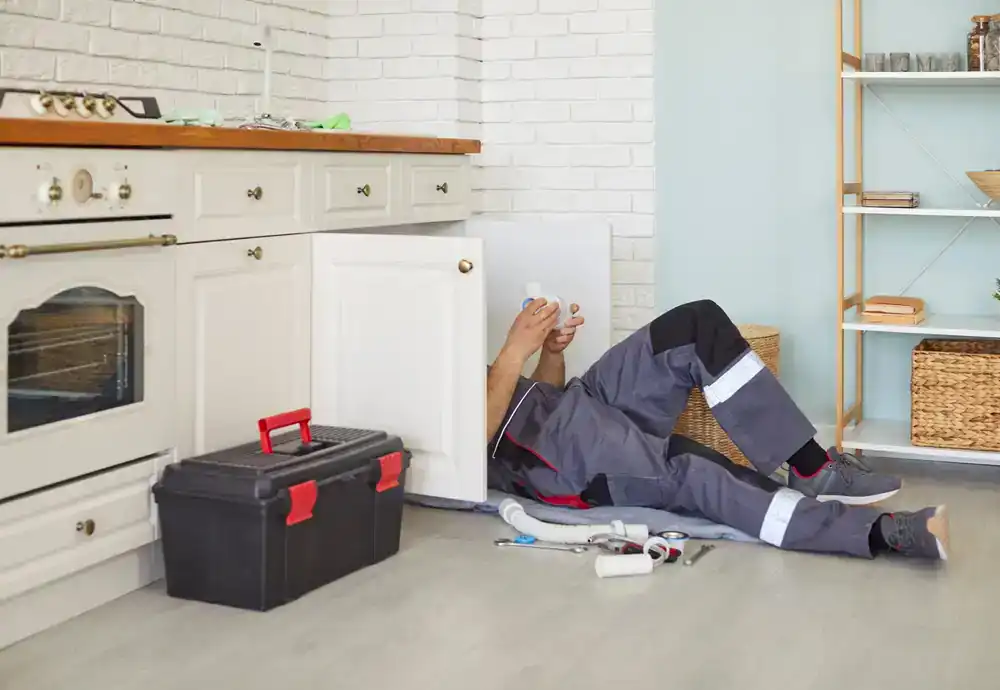
The repair itself is only one part of the process. Once the damaged section is addressed, a good plumber doesn’t just pack up and leave — we check the work and verify the system. That means restoring water pressure gradually and confirming that the repair holds, inspecting adjacent pipe sections for signs of weakness or corrosion, and verifying that no secondary damage occurred during the freeze or the burst event itself.
Camera inspection is one of the most valuable tools available after a burst pipe repair, particularly in Cook County’s older homes. A camera run through the line can confirm the repair is complete, identify any debris or scale that may have been dislodged during the event, and reveal whether other sections of the pipe are showing signs of deterioration. It’s the difference between knowing the problem is solved and hoping it is.
This is where hydro jetting becomes relevant beyond its reputation as a drain-clearing tool. After a burst pipe event, scale, sediment, and debris can remain in the line. Hydro jetting — which uses high-pressure water to clear the interior of the pipe — can remove that buildup, restore full flow, and reduce the pressure stress on the repaired section going forward. For Cook County homes with older plumbing and hard water mineral deposits, this kind of post-repair attention to the pipe’s overall condition is the difference between a fix that lasts and one that fails again in the next cold snap.
On the cost side, burst pipe repair in Cook County typically runs $415 to $1,560 for the plumbing work itself, with water damage cleanup adding $1,040 to $2,080 on top of that. The total exposure on a single burst pipe event can reach $3,640 or more if water damage has spread. That’s a significant number, and it’s why financing matters. We offer financing through Hearth — you can apply online — so the cost of the repair doesn’t have to be an all-or-nothing decision in the middle of a crisis.
This is one of the first questions homeowners ask, and the answer is: it depends on your policy and the cause of the damage. Most standard homeowner’s insurance policies cover sudden and accidental water damage — including damage from a burst pipe — but they typically do not cover damage resulting from neglect, gradual leaks, or flooding from an external source. A pipe that bursts because it froze during a Cook County polar vortex is generally a covered event. A pipe that failed slowly due to corrosion you were aware of is a harder claim.
The documentation you create in the first minutes after discovering the burst matters more than most people realize. Photographs and video of the damage as it was found — before any cleanup, before any temporary repairs — are the foundation of a successful insurance claim. Your adjuster needs to see the scope of the damage, the location of the failure, and the condition of the surrounding area. If you’ve already mopped the floor and moved the furniture, you’ve made their job harder and potentially reduced your payout.
One thing that trips up Cook County homeowners specifically: the service line running from the city water main to your home is your responsibility, not the Chicago Department of Water Management’s. If that line fails, the repair cost falls on you. Standard homeowner’s policies often exclude service line damage unless you’ve added a service line endorsement. It’s worth checking your policy before a problem occurs rather than after.
Calling your insurance company and calling a plumber are not mutually exclusive. You do not need to wait for an adjuster before getting the water stopped and the damage assessed. In fact, most policies require you to take reasonable steps to prevent further damage — which means stopping the water is not just a good idea, it’s likely a condition of your coverage. Call the plumber first. Document everything. Then call your insurance company with the photos already in hand.
A burst pipe is stressful, but it doesn’t have to become a disaster. Shut off the water, document the damage, and get a licensed plumber on the phone — in that order. The faster you act, the smaller the problem stays.
Cook County’s older homes, hard winters, and aging pipe systems mean this isn’t a rare event here. It’s a real and recurring risk, and the homeowners who come through it with the least damage are the ones who knew what to do before it happened.
If you’re dealing with a burst pipe right now — or you want to get ahead of the risk before the next cold snap — All Rooter Hydro Jetting Experts Inc. is available 24/7, offers upfront pricing before any work begins, and has been serving Cook County homes since 2000. Reach out by call or text and we’ll get someone to you fast.
Article details:
Share:
Continue learning:


