
Thinking about going tankless in Cook County? Here's what actually matters — from winter sizing to permit requirements — before you decide.
Share:

Summary:
If you’ve ever stood in a cold shower waiting for hot water to come back, or opened your energy bill and winced, you already know the problem. Most Cook County homes are still running tank water heaters that are 10, 12, sometimes 15 years old — quietly eating energy, taking up space, and living on borrowed time. A tankless water heater fixes most of that. But there’s a right way and a wrong way to do it, especially in a region with winters like ours and homes as old as ours. This guide covers what you actually need to know before making a decision.
A traditional tank water heater keeps 40 to 50 gallons of water hot around the clock, whether you’re using it or not. A tankless water heater — also called an on-demand or inline water heater — only heats water when you turn on the tap. Cold water flows through the unit, gets heated instantly by a gas burner or electric element, and arrives at your faucet hot. No tank, no standby heat loss, no waiting for a depleted tank to recover.
That on-demand approach is what makes tankless systems so efficient. The U.S. Department of Energy estimates they can be 24 to 34 percent more energy efficient than conventional storage tanks for average households — and water heating typically accounts for 14 to 18 percent of a home’s total energy bill. That’s a real number on a real bill, not a marketing claim.
For Cook County homeowners specifically, there’s another advantage that doesn’t get talked about enough: space. Chicago bungalows, two-flats, and greystones weren’t designed with sprawling utility rooms in mind. A tankless unit mounts on a wall and is roughly the size of a carry-on suitcase. If you’ve got a finished basement or a tight mechanical room, that alone can feel like a revelation.
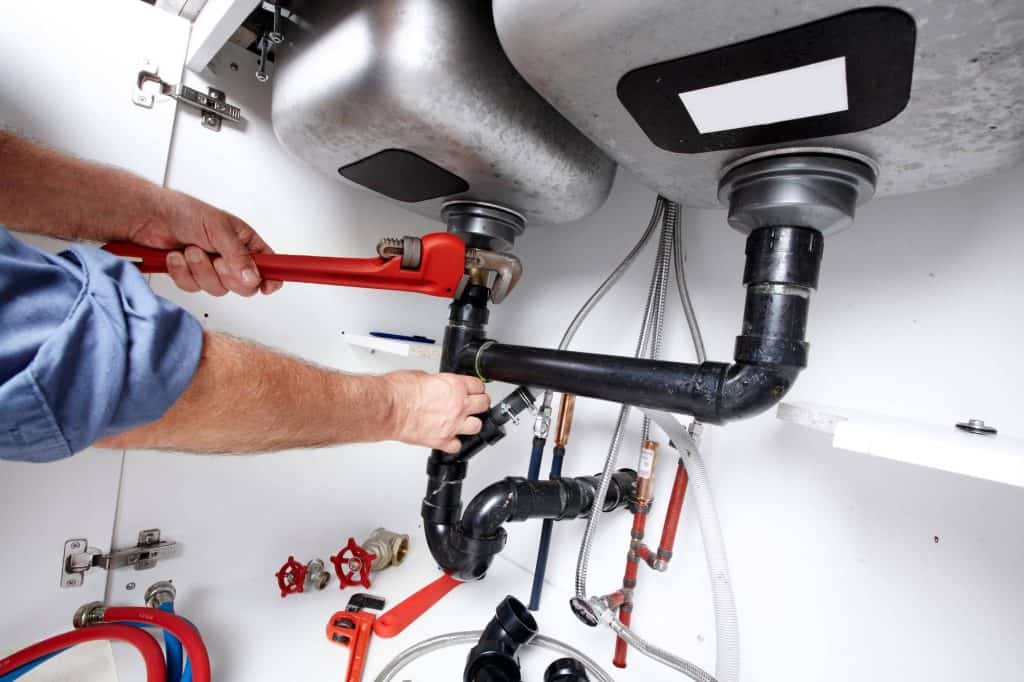
Here’s where a lot of homeowners get surprised — and where choosing the right installer matters more than the unit itself. A tankless water heater installation in Cook County is not the same as swapping out a tank. It often involves more moving parts, and in older Cook County homes, it almost always does.
The first thing we check is your gas line. Most tankless gas units require a larger gas supply than a traditional tank — often a one-inch line instead of the three-quarter-inch line that’s standard in pre-1960 homes. If your bungalow or two-flat still has its original gas line, upgrading it may be part of the job. Not every contractor mentions this upfront. We do.
Venting is the second piece. High-efficiency condensing tankless units require Category III or IV stainless steel venting — not the flexible aluminum Type B vent that older Cook County homes typically have. This isn’t optional, and it’s not a minor add-on. It’s a real cost that needs to be in your quote from the start.
Then there’s electrical. Electric whole-house tankless systems draw significant amperage — sometimes requiring a 200-amp panel. Many Cook County homes, particularly in neighborhoods like Logan Square, Chicago Lawn, and Belmont Cragin, have older panels that weren’t built for that load. An honest assessment before installation day prevents the kind of mid-job surprises that blow budgets and trust.
Cook County also requires permits for tankless installations. Unlike a simple tank-for-tank swap, a tankless conversion typically involves enough mechanical, electrical, and plumbing work to require traditional permit review — not an express permit. The City of Chicago and suburban Cook County municipalities each have their own building departments and their own processes. We know both, and we handle the permit side so you don’t have to.
The point is to make sure you go in with accurate expectations — and that whoever you hire gives you a complete, honest picture of the job before a single pipe is touched.
Sizing is the most important technical decision in a tankless installation, and it’s the one most often done wrong. Every tankless unit is rated by flow rate — gallons per minute — at a specific temperature rise. That temperature rise number is what changes everything in Cook County.
In warmer parts of the country, ground water entering a home might be 55 or 60 degrees Fahrenheit. In Cook County, that same water coming in during January or February can be 35 to 40 degrees. To deliver a comfortable 110 to 120-degree shower, your tankless unit has to raise the water temperature by 75 to 85 degrees — significantly more than a unit in Atlanta or Phoenix would ever need to do. That extra work reduces the maximum flow rate the unit can deliver at any given moment.
What this means practically: a unit that’s advertised as handling a whole house may fall short during peak demand on a January morning in Cook County if it wasn’t sized with our climate in mind. A typical household needs a flow rate of 7 to 9 gallons per minute under normal conditions. Factor in Cook County’s incoming water temperature, and you often need a higher-capacity unit than the national sizing guides suggest.
This is not a reason to avoid tankless — it’s a reason to work with someone who actually knows the local conditions. We size every installation for what the system actually has to do here, not what a generic spec sheet says it can do somewhere else. A properly sized unit handles a Cook County winter without breaking a sweat. An undersized one will leave you with lukewarm water right when you need it most.
Most Cook County homes run on natural gas, which makes gas tankless water heaters the more common choice — and often the more practical one. Gas units heat water faster, handle higher flow rates, and tend to perform better in cold climates where large temperature rises are needed. If your home is already on Peoples Gas or Nicor Gas service, a gas tankless unit is usually the straightforward path.
Electric tankless water heaters are a real option, particularly for smaller applications, additions, or point-of-use setups in a specific bathroom or kitchen. But for whole-house use in a Cook County home, the electrical demands are significant. Many older homes in Cook County don’t have the panel capacity to support a whole-house electric tankless system without a panel upgrade — which adds cost that isn’t always obvious at the start.
Neither option is universally better. The right answer depends on your home’s existing infrastructure, your usage patterns, and your long-term goals. That’s why an honest assessment before you buy anything is worth more than any spec comparison.
Not every Cook County property is on natural gas service. Some older properties, rural parcels at the county’s edges, and certain commercial buildings rely on liquid propane instead. For those situations, a propane on demand water heater — sometimes called an LP tankless water heater — works on the same basic principle as a natural gas unit, with adjustments made for the different fuel pressure and combustion characteristics of propane.
The performance profile of a propane instant water heater is comparable to natural gas in terms of heating speed and flow rate capacity. The main practical differences come down to fuel storage, delivery logistics, and the cost per unit of energy — propane tends to run higher than natural gas on a BTU-for-BTU basis, though that varies with market conditions.
If you’re on LP and considering a tankless upgrade, the installation process is similar to a natural gas job with a few additional considerations around regulator settings and venting. The key is making sure your installer has experience with LP systems specifically — not just gas in general. We work with both, and we’ll give you a straight read on whether a propane tankless system makes sense for your property and usage before you commit to anything.
A heat pump water heater isn’t tankless in the traditional sense — it uses a storage tank — but it belongs in this conversation because it’s one of the most energy-efficient water heating options available, and it’s increasingly relevant for Cook County homeowners thinking about long-term energy costs.
Instead of generating heat directly, a heat pump hot water system pulls heat from the surrounding air and transfers it to the water in the tank — similar to how a refrigerator works, but in reverse. This process uses significantly less electricity than a conventional electric resistance water heater, making it a compelling option for homes without natural gas service or for homeowners who want to reduce their carbon footprint alongside their energy bills.
The catch in Cook County is installation context. Heat pump water heaters work best in spaces with enough ambient air volume — typically a basement or utility room with at least 700 to 1,000 cubic feet of space. They also perform less efficiently in very cold spaces, since they’re drawing heat from the surrounding air. A well-insulated Cook County basement is usually fine, but a cold garage in January is a different story.
On the incentive side, heat pump water heaters may qualify for federal tax credits under the Inflation Reduction Act, which makes the higher upfront cost easier to absorb. Nicor Gas also offers rebates for qualifying energy-efficient water heater upgrades — up to $150 for certain tankless models — and your utility may have additional programs worth checking. We can help you identify what’s available for your specific situation so you’re not leaving money on the table.
A tankless water heater is a smart investment for most Cook County homeowners — but only when it’s sized correctly for our winters, installed with the right permits, and quoted honestly with every cost on the table before work begins. The technology is proven. The energy savings are real. The 20-plus-year lifespan makes the upfront cost look a lot better when you run the numbers over time.
What separates a good installation from a frustrating one is almost always the contractor — specifically, whether they know Cook County’s housing stock, know the permit requirements, and tell you the full story before the job starts rather than after.
If you’re ready to get a straight answer about whether tankless makes sense for your home, what it would actually cost, and what your house needs to support it, reach out to us at All Rooter Hydro Jetting Experts Inc. We’re available around the clock, we give you the price before we start, and we’ve been doing this in Cook County for over 20 years.
Article details:
Share:
Continue learning:


