Two trenchless methods, one big decision. Here's how to tell which repair your sewer line actually needs — before you commit to anything.
Share:
Summary:
You got the camera inspection. The contractor came back with a recommendation — maybe pipe lining, maybe pipe bursting — and now you’re sitting with a quote you don’t fully understand for a repair you didn’t plan on. That’s a stressful spot to be in, especially when the numbers aren’t small.
Here’s the thing: both methods are legitimate, and both can last decades when done correctly. But they’re not the same fix, and the right one depends entirely on what’s actually happening inside your pipe. This guide will help you understand the difference, know what questions to ask, and feel confident about whatever direction you go.
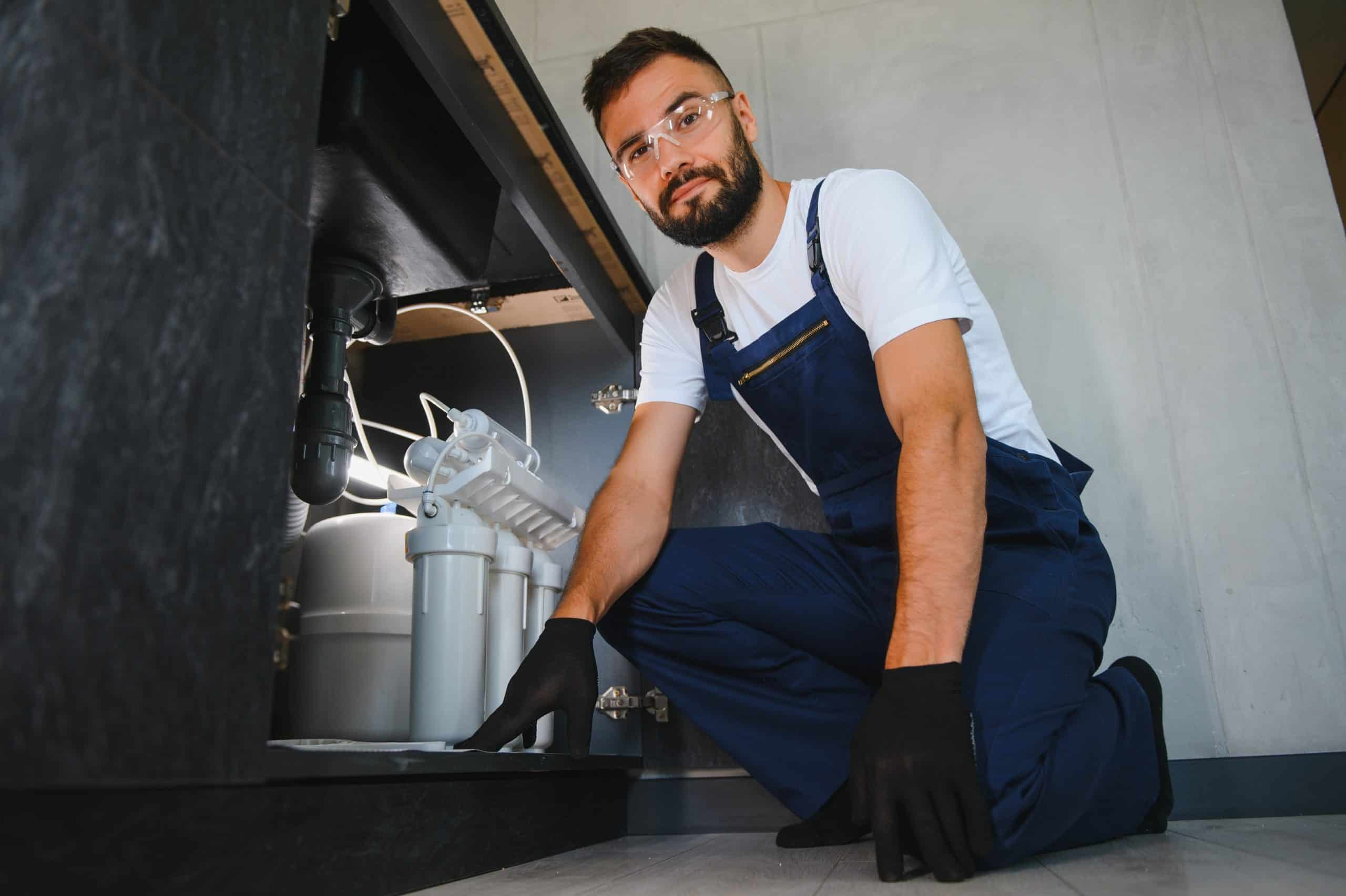
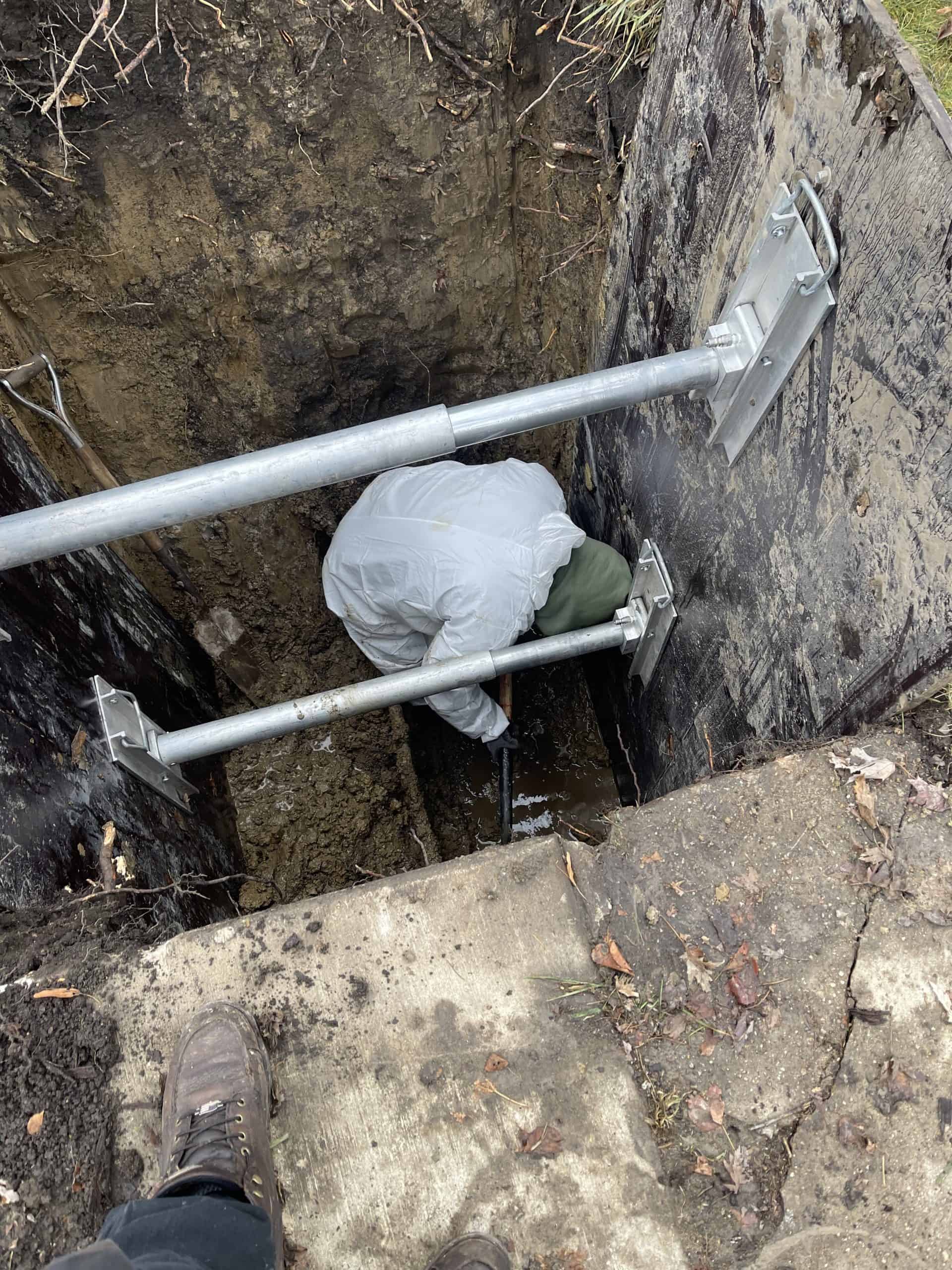
Trenchless pipe repair is exactly what it sounds like — fixing a damaged sewer line without digging a trench across your yard. Instead of excavating the full length of the pipe, we create one or two small access points and work from there. Your lawn stays intact. Your driveway doesn’t get torn up. Your landscaping survives.
That matters everywhere, but it matters especially in Cook County. A huge portion of the housing stock here — particularly in Chicago’s bungalow belt neighborhoods, the inner-ring suburbs, and communities across the South and West sides — was built before 1960. Many of those homes are still running on their original clay tile or cast iron sewer laterals. When those pipes fail, the last thing most homeowners want is a contractor jackhammering through a finished basement floor or ripping up a concrete driveway to reach them.
Trenchless methods exist specifically to avoid that scenario. But there are two main approaches, and they work very differently.
Pipe lining — more precisely called CIPP, or cured-in-place pipe lining — involves inserting a flexible liner coated in resin into your existing pipe, inflating it so it presses against the pipe walls, and then curing it in place using heat or UV light. Once it hardens, you have a new, seamless pipe formed inside your old one. That’s where the phrase “pipe within a pipe” comes from, and it’s not just a marketing line — the liner genuinely becomes a structural pipe in its own right.
This method works well when the original pipe is still largely intact. Cracks, minor fractures, root intrusion, corrosion, small gaps at the joints — pipe lining handles all of that. The resin fills in the damaged areas, the seamless interior eliminates the joints where roots used to sneak in, and the finished liner is designed to last 50 years or more when installed correctly.
One thing worth knowing: the liner does slightly reduce your pipe’s interior diameter. In practice, this is rarely a problem because the smooth, seamless surface actually improves flow compared to a corroded or root-choked original pipe. But it’s worth mentioning because it occasionally comes up as a concern, and you deserve a straight answer on it.
Pipe lining is also generally the less disruptive of the two trenchless options. The access requirements are minimal, the process is relatively quiet, and in many cases the job can be completed in a single day. For a homeowner in Beverly or Oak Park whose pipe has cracked from decades of freeze-thaw soil movement but is otherwise holding its shape, pipe lining is often the right call.
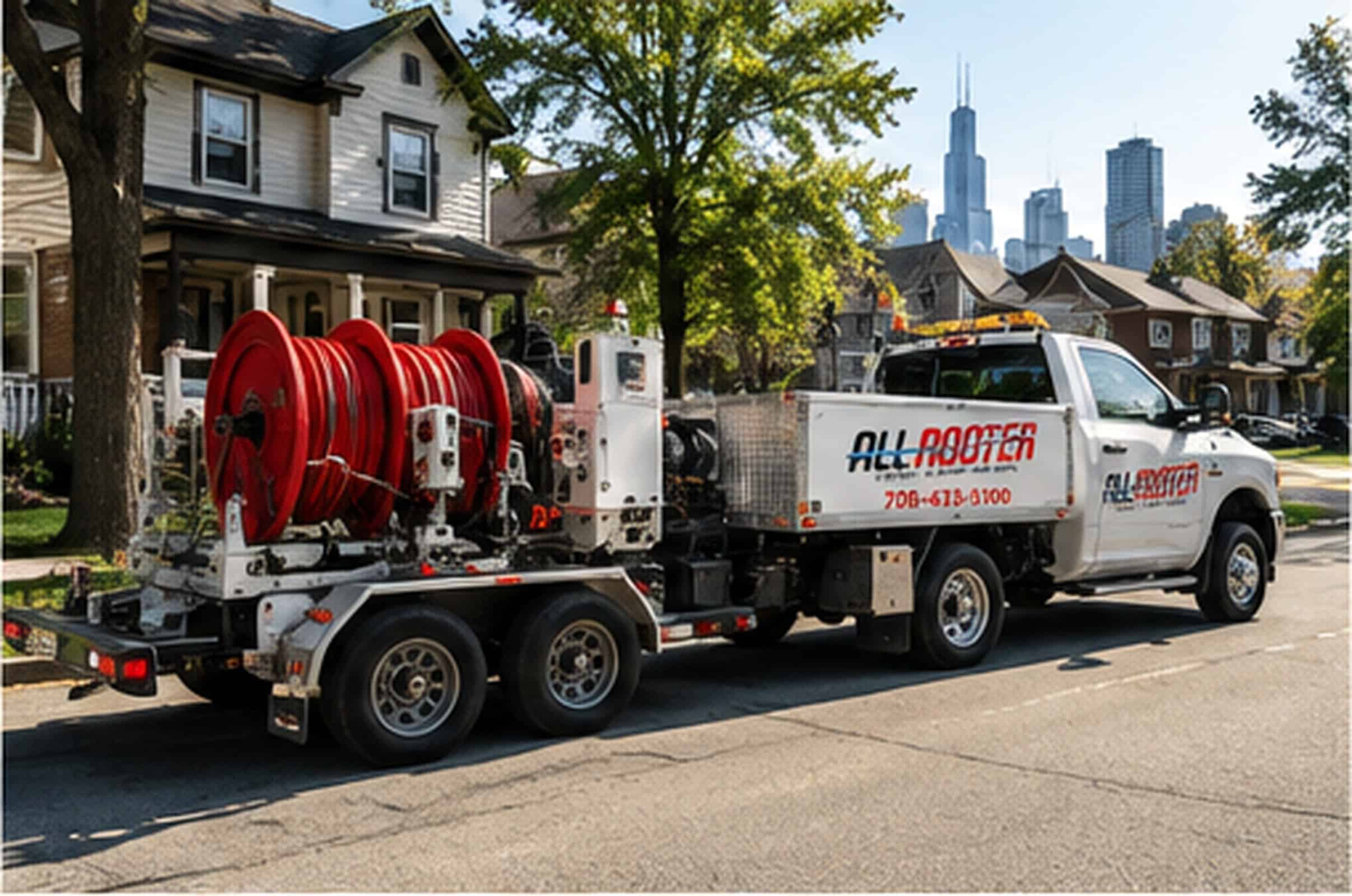
Before any lining can happen, though, the pipe has to be cleaned — thoroughly. Grease buildup, debris, and root material have to be removed so the resin bonds properly to the pipe wall. That’s where hydro jetting comes in. We specialize in hydro jetting here at All Rooter Hydro Jetting Experts Inc., and it’s not incidental to the lining process — it’s what makes the lining actually work. A pipe that isn’t properly cleaned before lining is a pipe that’s going to have problems down the road.
Pipe bursting takes a fundamentally different approach. Instead of rehabilitating the existing pipe, it destroys it and replaces it entirely. A bursting head is pulled through the old pipe, fracturing it outward into the surrounding soil, while simultaneously pulling a new pipe in behind it. When the process is complete, the old pipe is gone and a brand-new one is in its place.
This method is the right call when the existing pipe is too far gone to support a liner. A pipe that has collapsed, severely corroded, or deteriorated to the point where there’s not enough structural integrity left to bond a liner to — that pipe needs to be replaced, not rehabilitated. Pipe lining can reinforce a cracked pipe, but it can’t fix what isn’t there.
There’s another scenario where pipe bursting has a clear advantage: when you need to upsize. Because we’re pulling in an entirely new pipe as the old one is destroyed, we can actually install a larger-diameter pipe than what was originally there. For older Cook County homes where the original sewer lateral was undersized for current demand — or where repeated root intrusion has caused chronic flow problems — pipe bursting gives you the opportunity to fix the underlying capacity issue at the same time.
The tradeoff is that pipe bursting typically requires more access than lining. The bursting head has to travel the full length of the pipe, and the soil conditions need to allow the old pipe to fracture outward without damaging adjacent utilities or structures. In densely built neighborhoods — think parts of Evanston, Cicero, or Chicago’s Northwest Side — those conditions need to be evaluated carefully before bursting is recommended.
The honest answer is that neither method is universally better. The right one depends on your pipe’s specific condition, the material it’s made from, how badly it’s damaged, and what’s surrounding it underground. That’s exactly why a camera inspection isn’t optional — it’s the only way to know which method is actually appropriate for your situation.
Whether you end up with pipe lining or pipe bursting, the overall process follows a similar arc. It starts with a full-length camera inspection to assess the pipe’s condition and determine which method makes sense. From there, the pipe gets cleaned — again, hydro jetting is the standard here, not a drain snake — and then the repair work begins.
After the lining cures or the new pipe is pulled in, we perform a follow-up camera inspection to confirm the work was done correctly and that flow has been fully restored. That post-installation verification step matters. It’s how you know the liner cured without voids, or that the new pipe is seated properly. Any contractor worth hiring does this as a matter of course.
The whole process, for most residential sewer laterals, can typically be completed in a day or two. That’s one of the genuine advantages of trenchless work — not just that it avoids digging, but that it minimizes the disruption to your daily life.
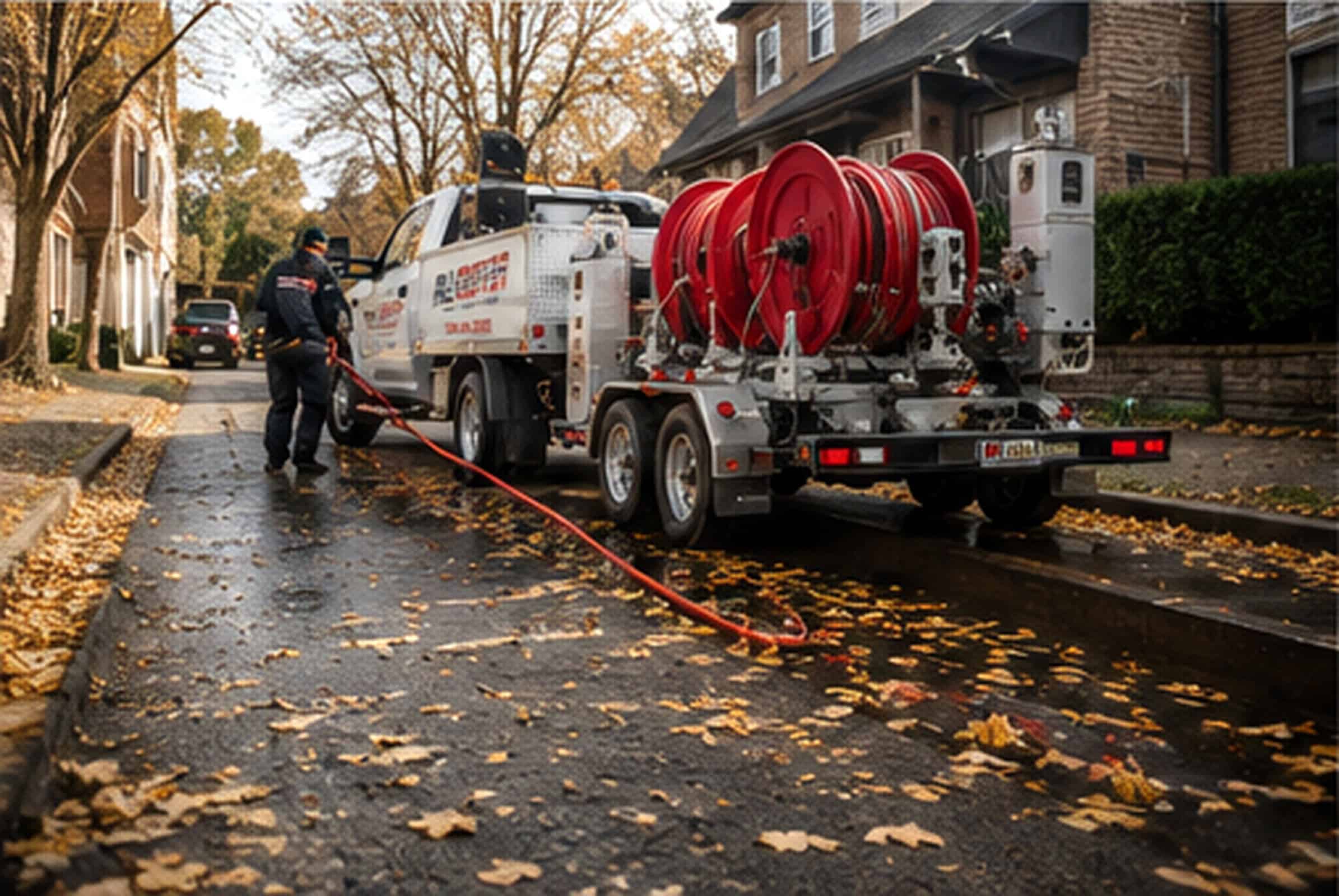
Cook County has a pipe problem that most homeowners don’t know about until something goes wrong. A significant portion of the residential sewer laterals running under properties in Chicago and the inner-ring suburbs were installed before World War II — and many of those original clay tile pipes are still in the ground today. Clay tile was the standard material for decades, and it did its job. But clay tile joints shift. They crack under freeze-thaw pressure. And in a county where roughly 42% of the surface is covered in impervious material — driveways, streets, parking lots — there’s enormous pressure on the underground drainage system every time it rains hard.
Add to that the mature tree canopy that makes neighborhoods like Wilmette, Park Ridge, and Hyde Park beautiful, and you’ve got a recipe for root intrusion. Tree roots seek out water, and a cracked clay tile joint is an open invitation. Once roots get in, they don’t stay small — they grow, they expand the crack, and eventually they can block the pipe entirely.
The freeze-thaw cycle accelerates all of this. Chicago winters are hard on underground infrastructure. Soil expands when it freezes and contracts when it thaws, and pipes — especially older ones with multiple joints — absorb that movement over decades until something gives. Many homeowners discover their pipe has been slowly deteriorating for years; the backup or the slow drain is just the moment it finally becomes impossible to ignore.
If your Cook County home was built before 1960, there’s a real possibility your sewer lateral has never been replaced. That doesn’t mean it’s failing right now, but it does mean a camera inspection is worth having — not because something is definitely wrong, but because knowing what’s down there puts you in control of the decision rather than reacting to an emergency.
The method matters, but so does who’s doing the work. Trenchless sewer repair isn’t a commodity service — the quality of the installation directly affects how long the repair lasts, and a liner that wasn’t properly cured or a pipe that wasn’t correctly seated can fail years before it should.
A few things to look for: any reputable contractor should perform a camera inspection before recommending a method, not after. If someone is quoting you pipe lining or pipe bursting without having looked inside the pipe first, that’s a problem. The recommendation should come from what the camera shows, not from what the contractor happens to prefer or what’s more profitable.
You should also get a written estimate that spells out the scope of work — cleaning, lining or bursting, any spot repairs, and post-installation verification. A one-line price with no detail is a yellow flag. Understand what’s included and what happens if the camera reveals additional problems once work begins.
Illinois requires licensed plumbers for sewer repair work, and that licensing requirement exists for a reason. Unlicensed work can result in failed inspections, code violations, and liability issues that land squarely on the homeowner. Verify that whoever you hire is licensed, bonded, and insured — not just because it protects you legally, but because it’s a basic indicator that the contractor operates professionally.
All Rooter Hydro Jetting Experts Inc. has been serving Cook County since 2000. We’re locally owned and operated out of Chicago’s Archer Heights neighborhood, which means we know this area’s pipe infrastructure — the clay tile laterals under the bungalows on the Southwest Side, the cast iron lines in the older suburbs, the combined sewer system dynamics that make spring backups so common. We give you upfront pricing before any work begins, and we offer free estimates so you can understand what you’re dealing with before you commit to anything. If cost is a concern, we also offer financing through Hearth — because a sewer repair shouldn’t have to wait because the timing is inconvenient.
The short version: pipe lining is the right call when your pipe is cracked, corroded, or root-infiltrated but still structurally present. Pipe bursting is the right call when the pipe is too far gone to support a liner, or when you need to upsize. Neither method is better in the abstract — what matters is matching the repair to the actual condition of your pipe, and the only way to know that is a camera inspection.
If you’re in Cook County and you’ve been putting off a slow drain, a recurring backup, or a quote you’re not sure about, the worst outcome is waiting until the situation forces your hand. A planned repair is almost always less expensive — and less stressful — than an emergency one.
Reach out to All Rooter Hydro Jetting Experts Inc. for a free estimate. We’ll tell you honestly what we find, explain your options in plain language, and give you a price upfront before anything starts. No surprises, no pressure — just a straight answer about what’s going on under your property and what it’s going to take to fix it.
Article details:
Share:
Continue learning: