When Chicago temperatures drop and you suspect frozen pipes, knowing what to do in the first few minutes can mean the difference between a quick fix and thousands in water damage.
Share:
Summary:
The first thing you need to do is stay calm and act fast. Panicking leads to mistakes, and mistakes with frozen pipes can turn a manageable situation into a flooded basement. Your immediate priority is controlling the situation and preventing it from getting worse.
Start by checking multiple faucets throughout your home. If only one faucet isn’t working, the freeze is probably localized to that section of pipe. If nothing’s flowing anywhere, you’ve got a bigger problem. Either way, you need to know the scope before you do anything else.
Next, locate your main water shut-off valve right now—not later, right now. In most Cook County homes, you’ll find it in your basement near where the water line enters your house, usually within a few feet of the water meter. No basement? Check near your water heater, under the kitchen sink, or in a utility closet. Turn that valve clockwise until it stops. This cuts off the water supply to your entire home and prevents flooding if a pipe has already cracked but hasn’t started gushing yet.

If you’ve never located your main water shut-off valve before, now’s not the time to start guessing. But since you’re reading this, chances are you’re already in an emergency, so here’s the fastest way to find it.
In Chicago-area homes with basements, look along the front foundation wall where the main water line enters your house. The shut-off valve is typically mounted on the wall or attached directly to the pipe, just a few feet from where it comes through the foundation. It’ll either be a round wheel handle that you turn clockwise or a lever handle that you flip a quarter turn. If you see your water meter, the shut-off is usually right next to it on the house side.
For homes built on a slab without a basement, check the mechanical room where your water heater lives. The main shut-off often sits near the water heater or under the kitchen sink in these setups. Some newer homes have the valve in a utility closet or even in the garage if that’s where your water line enters.
Can’t find it anywhere inside? Some older Cook County properties have the main shut-off in a utility box buried in the front yard near the street. You’ll see a metal or plastic cover flush with the ground. This is usually the curb stop valve, and you might need a special key to operate it. If you’re at this point and water’s already flowing, call an emergency plumber immediately—you’re past the DIY stage.
The valve itself will look like either a gate valve with a round wheel or a ball valve with a lever handle. Gate valves require multiple full rotations to close completely. Ball valves only need a quarter turn. When the handle is perpendicular to the pipe, it’s off. When it’s parallel, it’s on. Simple as that.
Once you’ve shut off the water, open a few faucets throughout your house—both hot and cold. This releases any pressure still in the pipes and gives the water somewhere to go if ice starts melting. It also helps you confirm that you actually shut off the water supply correctly. If water keeps flowing after a minute or two, you didn’t get the right valve.
Knowing whether your pipes are frozen, freezing, or already burst changes everything about how you respond. Here’s what to look for and what each sign means.
The most obvious sign is when you turn on a faucet and get nothing—no water, no sound, nothing. That means the pipe feeding that fixture is completely blocked with ice. If you’re getting a weak trickle instead of normal flow, the pipe is partially frozen and you’re in the danger zone. Ice is forming but hasn’t completely blocked the line yet. This is actually when pipes are most likely to burst because pressure is building up behind the blockage with nowhere to go.
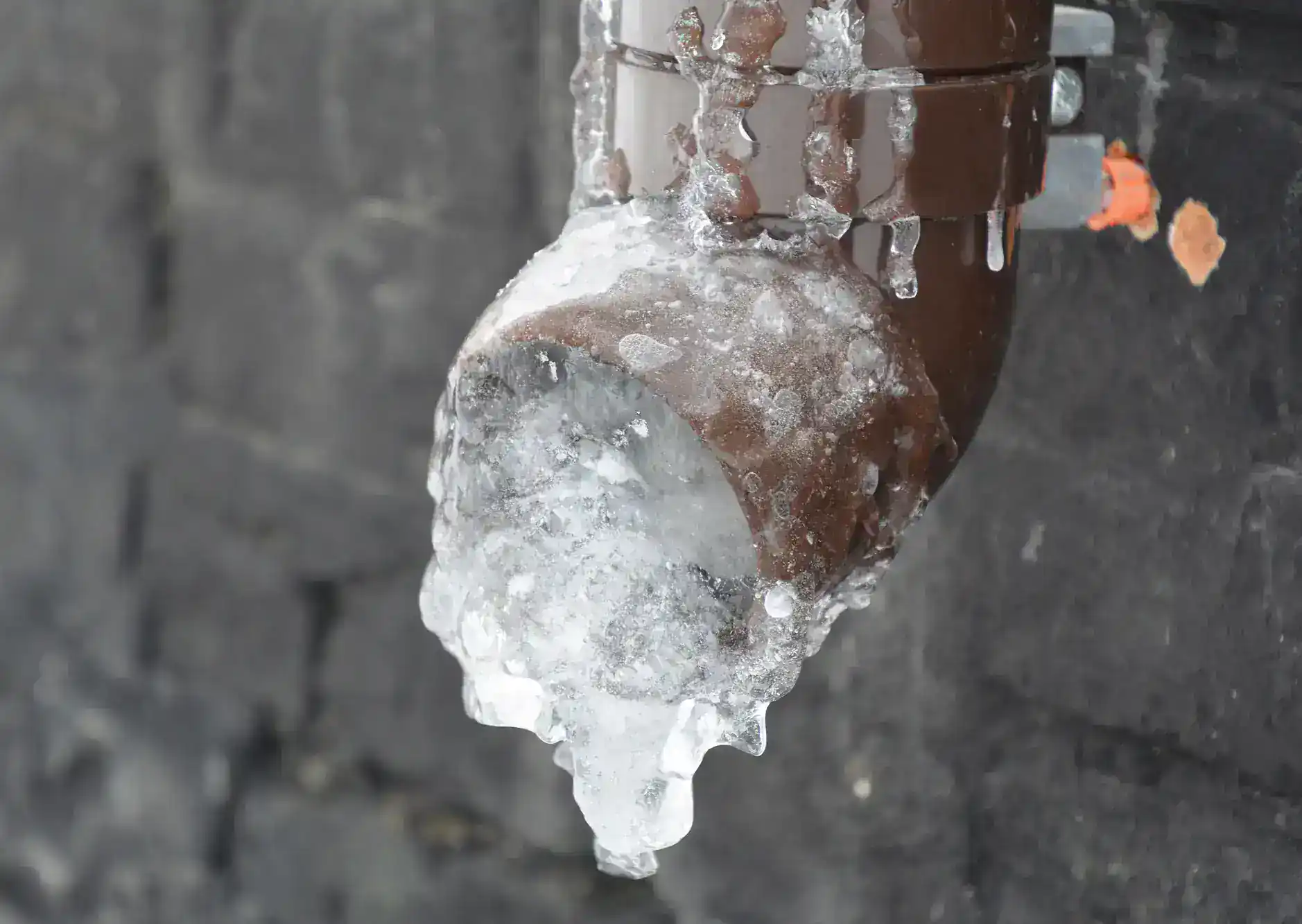
Look at any exposed pipes you can access—in the basement, crawl space, or under sinks. If you see frost or condensation on the outside of a pipe, the inside is definitely frozen. Copper pipes will sometimes show visible bulging or slight deformations when ice has expanded inside them. That’s a really bad sign. The pipe is under extreme stress and could burst the moment temperatures rise and the ice starts to shift.
Listen for strange noises. Frozen pipes make sounds you wouldn’t normally hear. Banging, clanking, whistling, or gurgling when you turn on faucets means water and air are trying to move through partially frozen pipes. It’s the plumbing equivalent of a warning alarm. Your pipes are telling you they’re in trouble.
Smell something off? If you notice foul odors coming from your drains or faucets during cold weather, it could mean your drain pipes have frozen. Ice blocks the normal flow of sewer gases out of your home, so they back up into your living space instead. It’s not as immediately dangerous as a frozen supply line, but it tells you the temperature around your pipes has dropped low enough to freeze water.
Check for water damage even if you don’t see active leaking. Damp spots on walls or ceilings, water stains, bubbling paint, or a musty smell can all indicate that a pipe has already cracked and is slowly leaking. When pipes freeze and crack, you might not see flooding right away. The ice is still plugging the hole. But once it thaws, that crack becomes a gusher. If you see any signs of hidden water damage during cold weather, assume you have a compromised pipe and call a professional immediately.
Temperature matters too. If it’s been below 20°F outside for more than six hours, and you have pipes in unheated spaces like your basement, crawl space, attic, or exterior walls, those pipes are at serious risk. Chicago winters regularly create these exact conditions. You don’t need to wait for symptoms. If the temperature and duration match up, it’s time to take preventive action.
There’s a line between what you can safely handle yourself and when you need to call in professionals. Crossing that line in the wrong direction either wastes money or causes catastrophic damage. Here’s how to know which side you’re on.
Call an emergency plumber immediately if you see any active leaking or water damage. That means a pipe has already burst. Every minute counts. Also call if you can’t locate the frozen section, if the frozen pipe is inside a wall or under a floor where you can’t access it, or if you’ve tried safe thawing methods for 30 minutes with no results. When you’re dealing with your main water line or any pipe that supplies multiple fixtures, that’s not a DIY situation either.
You might be able to handle it yourself if the frozen pipe is exposed and accessible, if you can clearly identify where the freeze is located, if there’s no visible damage or leaking, and if you have the right tools and knowledge to thaw it safely. Even then, you need to understand the risks. DIY thawing gone wrong causes more damage than just calling a professional in the first place.

If you’ve determined that you can safely attempt to thaw the pipe yourself, here’s how to do it without making things worse. The key word here is “safely.” More homeowners cause burst pipes trying to fix them than you’d think.
Start by keeping the affected faucet open. As the ice melts, water and steam need somewhere to escape. An open faucet relieves pressure and helps the melting process. Apply heat slowly and evenly, starting from the faucet end and working back toward the frozen section. This lets melting water drain out instead of getting trapped behind ice.
Use gentle heat sources only. A hair dryer on low to medium setting works well. Hold it several inches from the pipe and move it back and forth along the frozen section. Don’t focus heat on one spot. An electric heating pad wrapped around the pipe does the job too. Space heaters can warm up the entire area where pipes are located, but keep them at least three feet away from anything flammable and never leave them unattended.
Hot towels are the safest option if you’re nervous about using electric devices near water. Soak towels in hot water, wring them out, and wrap them around the frozen pipe. Replace them every few minutes as they cool down. It takes longer but there’s almost no risk of damage.
Never use open flames. No blowtorches, no propane heaters, no candles, nothing with an open flame. You’ll melt plastic pipes instantly, cause copper pipes to burst from rapid temperature changes, and you might burn your house down in the process. It’s not worth it. Also avoid pouring boiling water directly onto pipes or down drains. The thermal shock can crack pipes just as easily as ice can.
Work slowly. Thawing should take 30 to 45 minutes minimum. If you’re trying to rush it, you’re doing it wrong. The goal is gradual, even warming. As the pipe thaws, you should start seeing water flow from the open faucet. Keep applying heat until full pressure returns.
Check for leaks while you work and after you’re done. Just because water is flowing doesn’t mean the pipe survived intact. Look for any drips, moisture, or wet spots along the entire length of pipe you thawed. If you find any, shut the water back off and call a plumber. A small leak now becomes a flood later.
Professional plumbers don’t just have better tools—we have the experience to know what you can’t see. When you call an emergency plumber for frozen pipes, you’re not just paying for thawing. You’re paying for damage prevention and peace of mind.
Professional thawing equipment uses controlled, even heat that warms pipes from the inside out. This prevents the thermal shock that causes pipes to crack during DIY attempts. We can also access pipes that you can’t reach without tearing into walls or floors. We have specialized cameras and detection equipment that locate exactly where the freeze is, even when pipes are hidden. That means no guessing and no wasted time.
More importantly, we know how to check for damage you wouldn’t notice. A pipe can develop hairline cracks from freezing that don’t leak immediately. These cracks fail days or weeks later, often when you’re not home. We pressure-test the system after thawing to make sure everything is solid. If we find damage, we fix it right then. You don’t discover it at three in the morning when your basement floods.
The cost difference isn’t as big as you think either. Emergency pipe thawing typically runs $200 to $400 if there’s no damage. Compare that to the $3,000 to $8,000 average cost of water damage restoration after a burst pipe floods your home. Even if you successfully thaw a pipe yourself, you’re still gambling that you didn’t miss hidden damage. Professional service removes that risk entirely.
For Cook County homeowners, there’s another factor. Chicago winters don’t mess around. When it’s ten below zero with windchills at minus forty, your pipes can refreeze within hours even after you’ve thawed them. We can install temporary heat tape or recommend permanent solutions that prevent the problem from happening again. We’re not just fixing today’s emergency—we’re preventing next week’s disaster.
We provide 24/7 emergency frozen pipe service throughout Cook County. Our technicians live in the Chicagoland area, which means faster response times when every minute counts. We arrive with professional thawing equipment, complete repair capabilities, and upfront pricing so you know exactly what you’re paying before work starts. No surprise charges because it’s a weekend or the middle of a blizzard.
Frozen pipes don’t have to become your winter nightmare. When you know the warning signs, understand the emergency steps, and recognize when to call for professional help, you’re already ahead of most homeowners who face this problem.
The moment you suspect frozen pipes, shut off your main water supply and assess the situation calmly. Check for signs of damage, locate the frozen section if possible, and decide whether it’s safe to attempt thawing yourself or if you need professional intervention. Remember that the cost of an emergency plumber call is nothing compared to the cost of water damage restoration after a burst pipe floods your home.
For Cook County homeowners dealing with frozen pipe emergencies or looking to prevent them before Chicago’s next cold snap, we stand ready with experienced technicians, professional equipment, and the local expertise that comes from years of handling Chicago winter plumbing challenges. Don’t wait until you’re ankle-deep in water to make the call.
Article details:
Share:
Continue learning: