The Ultimate Homeowner’s Guide To Handling A Sewer Water Emergency Repair In Cook County, IL
Sewage is coming up your drain and you don't know who pays for it. Here's how to sort that out fast.
Share:
Summary:
Sewage in the basement is stressful enough without wondering who pays for it. This guide covers what to do in the first hour, how to tell if the problem sits on your side of the property line or the city’s, and what a fair repair process looks like.
You’ll also find honest cost ranges, a quick way to check a plumber’s license, and local details about Cook County, IL sewers and storms.
Table of contents
It’s 11 p.m., there’s water where there shouldn’t be, and the smell tells you exactly what it is. Whatever you do in the next hour, you want it to be the right thing.
If you’re facing a sewer water emergency repair anywhere in Cook County, IL, this guide walks you through what’s likely happening under your house, what you can do while you wait for help, and what to ask before anyone starts digging. Most of what’s written on this topic comes from national companies. This is written for Chicago basements, Chicago storms, and the way sewers in Cook County are set up. Let’s start with why it happens.
Why sewage backs up into Cook County basements
Most of Chicago and many older Cook County suburbs run on a combined sewer system, where storm water and household wastewater share the same pipes. During a heavy storm those pipes can fill faster than they drain, and water looks for the lowest opening it can find. In a lot of homes, that’s the floor drain in the basement.
Storms aren’t the only cause. Tree roots, grease buildup, a collapsed section of old clay or cast iron pipe, or a belly where the line has sagged can all block your sewer lateral, the pipe that carries waste from your house to the main. When that happens, everything you flush or drain upstairs has nowhere to go but back down and out the lowest fixture.
A useful clue: if only one fixture is backing up, the clog is probably in that branch line. If the basement floor drain is gurgling or overflowing when you run water upstairs, the problem is in the main line.
What to do in the first hour
Stop using water. No flushing, showers, laundry or dishwasher. Every gallon you send down adds to what comes up.
Keep people and pets away. Sewage carries bacteria. Don’t wade through it without boots and gloves, and keep kids out of the basement.
Shut off power to the basement if water is near outlets or appliances, but only if you can reach the panel without standing in water.
Take photos and video of the water line, damaged items and the floor drain before you clean anything. Your insurer will ask for them.
Call a plumber who handles main sewer lines, not just fixtures. Ask whether they can clear the line tonight and run a camera once it’s flowing.
Is it your pipe or the city's?
In most Cook County communities, the homeowner is responsible for the sewer service line from the house out to the public main, and the municipality is responsible for the main itself. The exact dividing point varies by town, so check with your village or the City of Chicago if you’re unsure.
The fastest way to know which side the problem is on is a sewer camera inspection. A camera shows whether the blockage is roots in your lateral, a broken joint under your yard, or water backing up from a surcharged main in the street. If it’s the main, report it to your municipality right away and keep the camera footage as proof.
How emergency sewer repair works
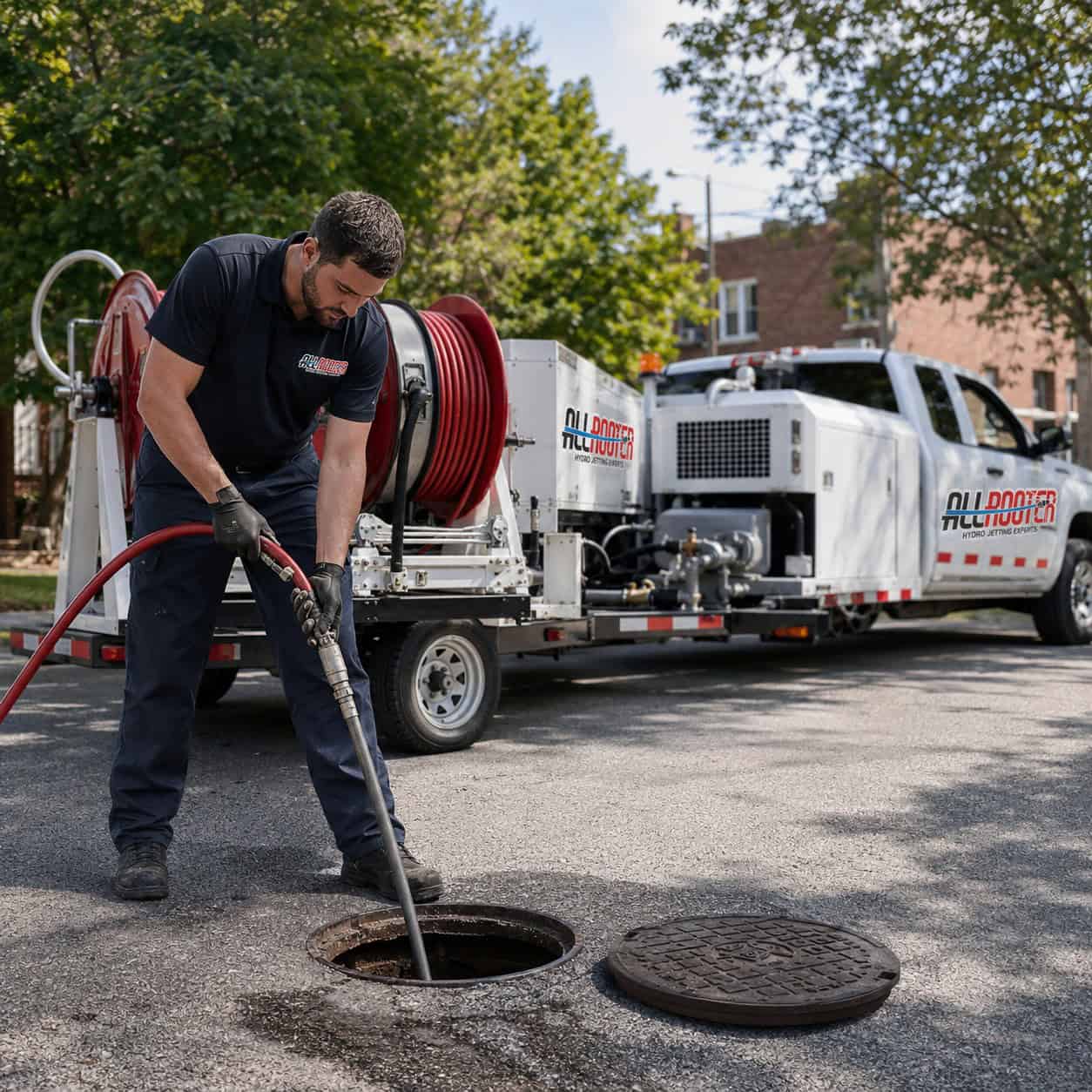
A good emergency visit happens in three steps. First, the plumber gets the line flowing so you can use your home again, usually by rodding the main or with hydro jetting, which scours grease and roots off the pipe walls instead of just punching a hole through them.
Second, once water is moving, they run a camera to find out why it backed up. Clearing a clog without finding the cause is how homeowners end up calling again a month later.
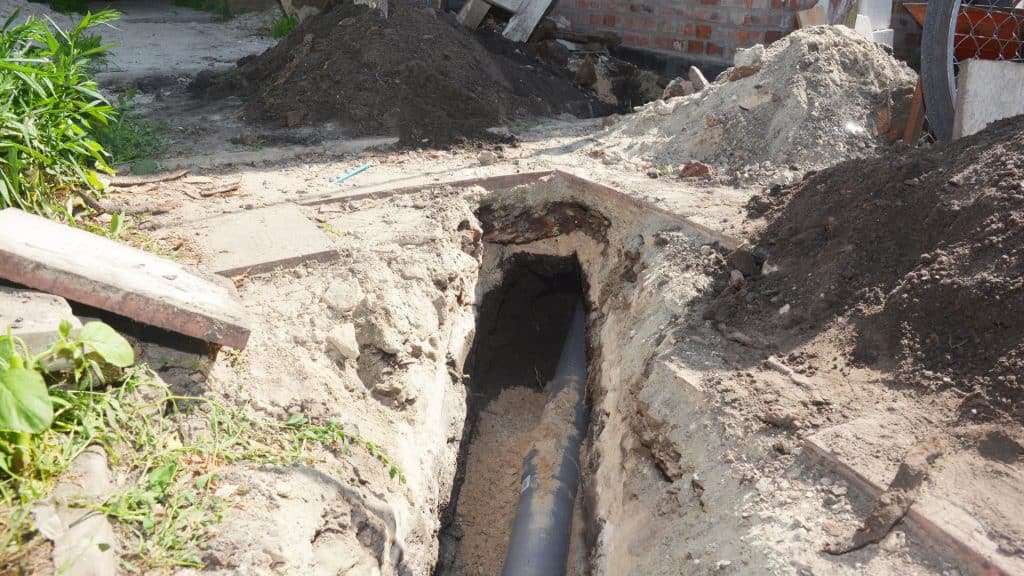
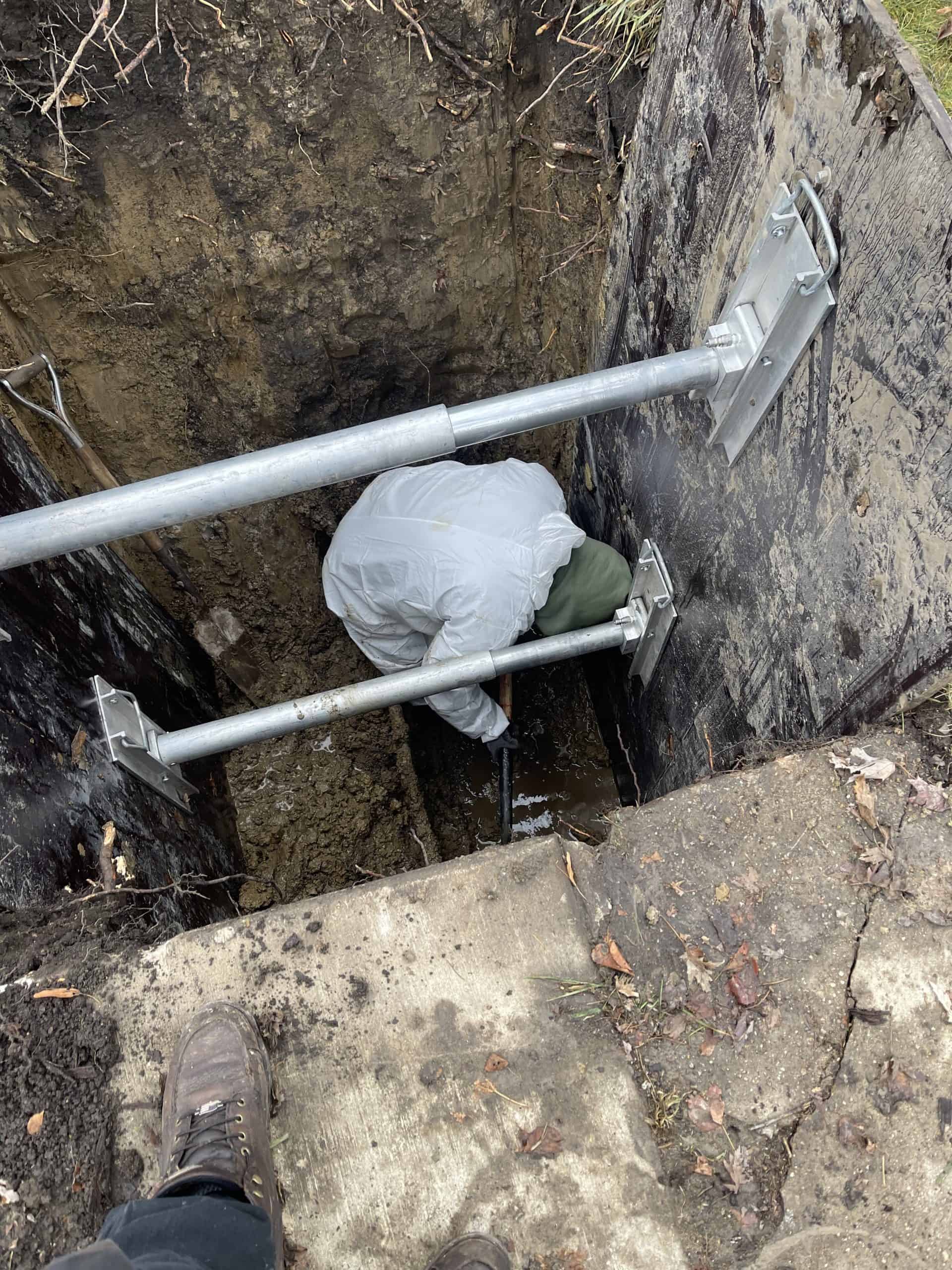
Third, they give you options in writing. A small break might be fixed with a spot repair. A badly damaged or collapsed line may need sewer repair or replacement, either by excavation or a trenchless method such as pipe lining or pipe bursting. You shouldn’t feel pushed into a full replacement at midnight. Getting the line flowing tonight and deciding on the repair tomorrow is a reasonable plan.
What it typically costs
Every job is different, but these are the ranges Cook County homeowners usually see:
Emergency drain or main line clearing: about $200 to $600, depending on the time of day and how far the clog is.
Hydro jetting a residential line: commonly $363 to $622, with complex or very long lines running higher.
Sewer camera inspection: roughly $100 to $500.
Sewer line replacement: often $2,768 to $3,974 for an average Chicago-area job, with complex or trenchless work reaching $6,000 to $15,000 plus permits and surface restoration.
Ask for a written estimate before work starts and make sure it says what’s included. Upfront pricing protects you from surprises on the invoice.
Check the plumber's license before anyone digs
Sewer work in Illinois must be done by a licensed plumber. It takes about two minutes to check: search the contractor’s name or license number on the Illinois Department of Public Health plumber license lookup and confirm the license is active. For work in unincorporated Cook County, the contractor should also be registered with the county.
Ask for proof of insurance too. If someone at your door can’t show a license and insurance, keep looking. Our guide on how to look up an Illinois plumber license walks through it step by step.
Preventing the next backup
Once the emergency is over, a few steps make a repeat much less likely:
Install backflow protection. A flood control system or backwater valve stops sewer water from coming up through the floor drain during storms.
Keep grease and wipes out of the drains. “Flushable” wipes don’t break down the way toilet paper does.
Schedule maintenance on older lines. If roots or buildup caused this backup, periodic drain cleaning or jetting keeps the line clear.
Know where your cleanout is so a plumber can get to the line fast next time.
If sewage is in your basement right now, call All Rooter at 708-669-3570. We’re available 24/7 across Chicago and Cook County, with licensed plumbers and upfront pricing.