A Chicago winter is no time to discover your water heater has been running on borrowed time. Here's what to check before the cold arrives.
Share:
Summary:
Chicago winters don’t ease in gradually. One week it’s tolerable, and the next you’re watching the polar vortex warnings scroll across your phone. Your water heater feels that shift just as sharply as you do — only it can’t tell you when it’s struggling. If your unit hasn’t been serviced in a year or more, now — before November — is the window that matters. Wait until it fails on a February morning and you’re looking at an emergency call, a cold house, and a decision you’re making under pressure. This guide helps you get ahead of that.
Most water heater maintenance advice is written for a generic national audience — somewhere with mild winters and soft water. Cook County is neither of those things.
During a Chicago winter, groundwater temperatures can drop close to freezing. That means your water heater isn’t raising incoming water by 60 or 70 degrees — it’s raising it by 80 to 100 degrees, working at near-maximum capacity for months at a time. On a unit that’s already carrying sediment buildup or a depleted anode rod, that added thermal load accelerates wear in ways that don’t show up until the unit stops working entirely.
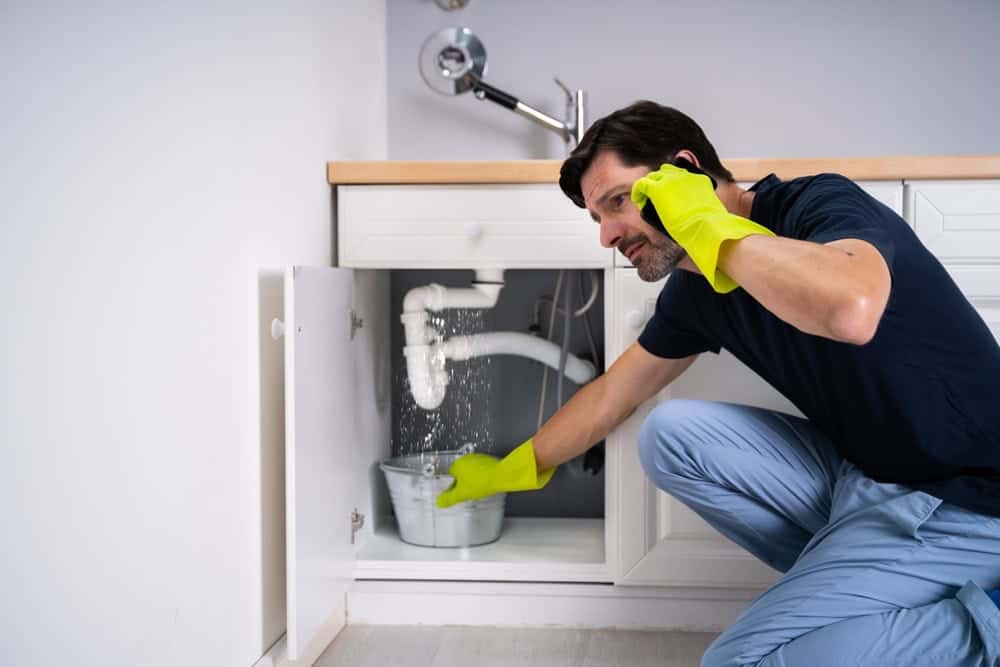
Chicago’s water supply comes from Lake Michigan and carries a moderate level of mineral hardness — roughly 8 to 10 grains per gallon in most Cook County municipalities. That mineral content isn’t harmful to drink, but inside your water heater tank, it settles at the bottom over time and forms a layer of sediment between the water and the heating element.
That layer forces your heater to work harder to transfer heat. The result is higher energy bills, longer wait times for hot water, and that rumbling or popping sound you might have noticed — which is actually water getting trapped under the mineral deposits and boiling unevenly. It’s not dangerous on its own, but it’s your unit telling you it’s overdue for a flush.
What makes Cook County different from softer-water markets is the pace of buildup. If you’ve been following the general advice of flushing every two or three years, you may already be behind. In this area, once a year is the baseline — and if you have a water softener or a high-usage household, twice a year is worth considering.
The other thing sediment does quietly is accelerate the depletion of your anode rod. The anode rod is a sacrificial metal rod — usually magnesium or aluminum — that sits inside the tank and corrodes slowly so the tank walls don’t. Once the rod is gone, the tank itself starts corroding from the inside. By the time that shows up as a leak, the rod has typically been depleted for years. In hard water environments like Cook County, that rod can wear down faster than the standard inspection interval suggests.
This is why a proper maintenance visit isn’t just a quick drain and refill. It’s an inspection of the components that are silently degrading while your unit still appears to be working fine.
There’s a meaningful difference between a real maintenance visit and someone opening the drain valve for two minutes and calling it a flush. If you’re going to schedule service before winter, it’s worth knowing what a thorough visit covers so you can evaluate what you’re getting.
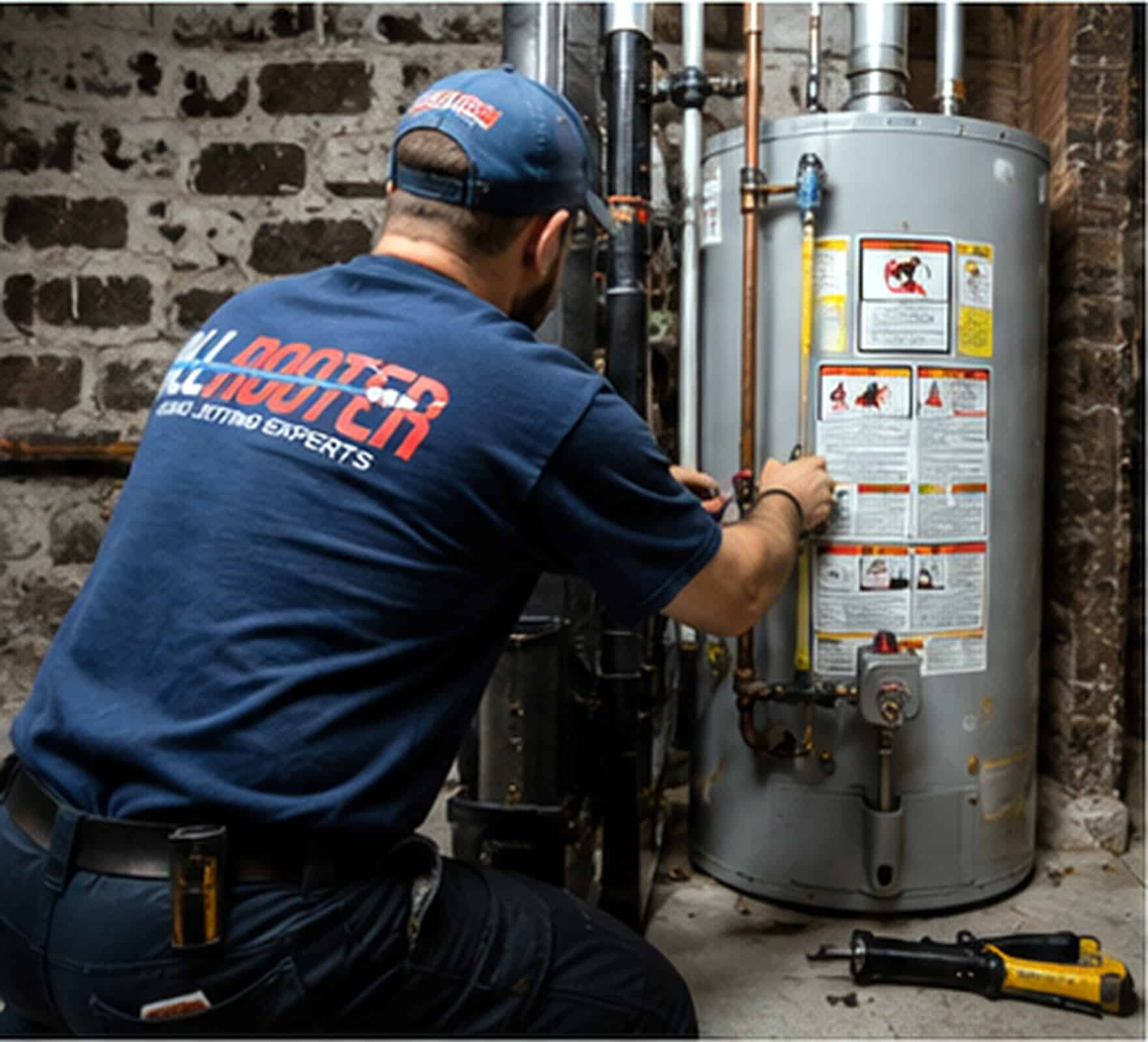
A complete water heater maintenance service should include testing the temperature and pressure relief valve — the T&P valve — which is the primary safety device on the unit. It’s designed to release pressure if the tank overheats, and it should be tested annually by briefly lifting the lever to confirm water discharges properly. A valve that drips constantly or doesn’t respond at all needs to be replaced, not ignored.
The technician should drain and flush the tank to remove accumulated sediment. On units that haven’t been serviced in several years, the drain valve itself can become clogged with buildup — which is one reason this isn’t always a straightforward DIY job. If the valve is compromised, a professional can address it without turning a maintenance visit into an emergency.
Anode rod inspection is another step that often gets skipped. The rod should be replaced when it’s more than about 75% corroded. If you have a water softener, the salt environment depletes it faster, so annual inspection is worth doing regardless of how new the unit is.
Beyond those core tasks, a thorough visit also covers checking the thermostat setting — 120°F is the recommended standard, hot enough to prevent bacterial growth and low enough to avoid scalding and excess energy use — inspecting the venting system on gas units for blockages or damage, checking water pressure at the unit, and looking for any signs of corrosion or leaks at connections. For gas-fired units in Chicago, there’s also a real seasonal safety consideration: after heavy snowfall, exterior vents can become blocked and create a carbon monoxide risk. It’s a detail specific to Chicago winters that a local technician will know to flag.
For tankless water heaters, the maintenance process is different. Tankless units don’t accumulate sediment in a tank, but they do develop scale buildup inside the heat exchanger — especially in hard water areas. Annual descaling with a vinegar flush is the standard, and the inlet screen filter should be cleaned every six months. Skipping this in a Cook County home is a fast way to reduce efficiency and shorten the unit’s lifespan.
For a lot of Cook County homeowners — especially in older neighborhoods like Archer Heights, Bridgeport, or the Bungalow Belt on the Southwest Side — the water heater in the basement came with the house. If you don’t know exactly how old it is, the serial number on the unit will usually tell you. Most manufacturers encode the manufacture date into the first few characters.
Tank water heaters typically last 8 to 12 years. If yours is approaching or past that range, the question isn’t whether to maintain it — it’s whether a maintenance visit makes sense given what a failure would cost you mid-winter.
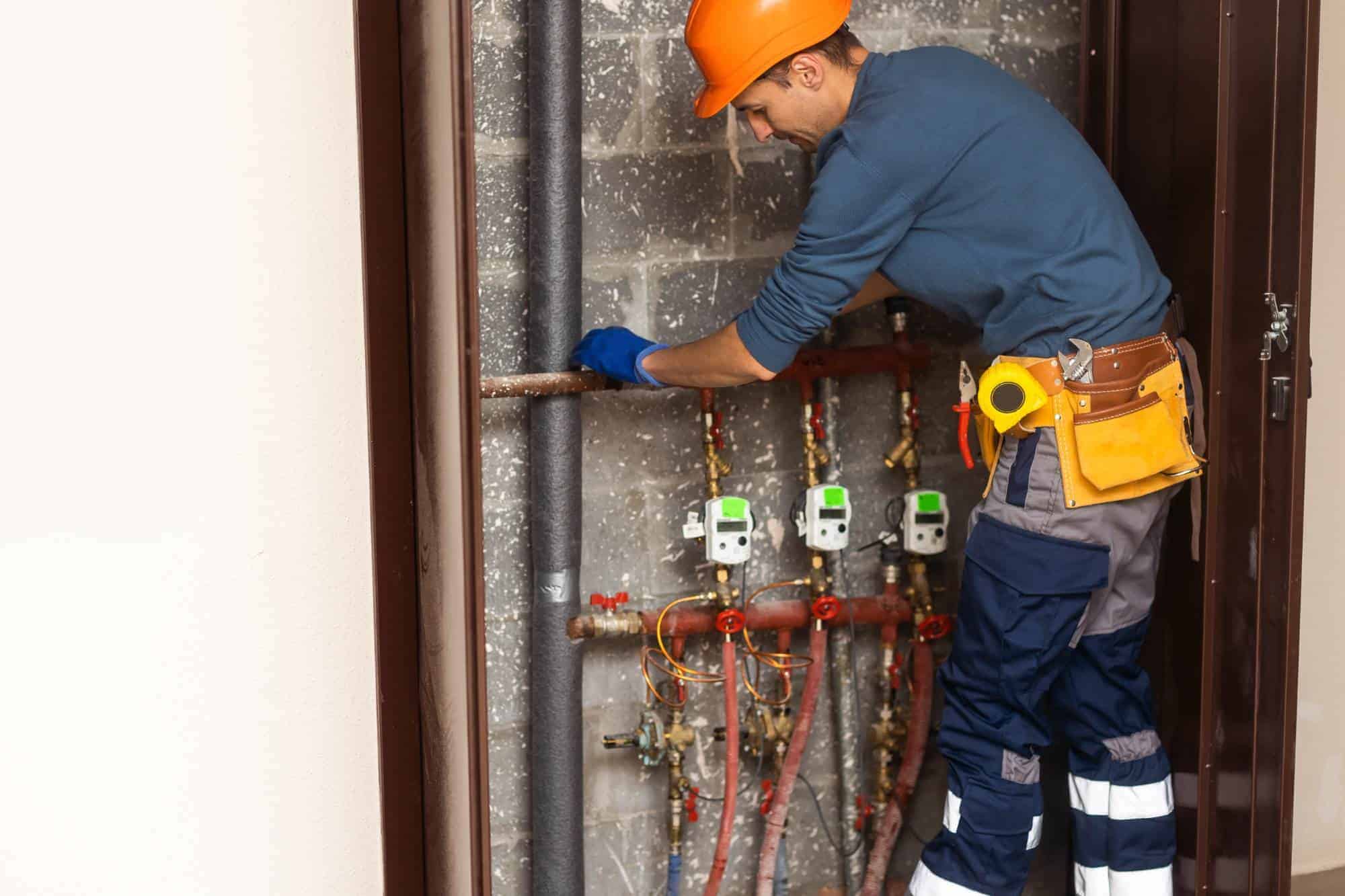
Some symptoms point to a specific, fixable problem. Others are signals that the unit is nearing the end of its useful life and patching it may not be the right investment.
Rumbling, popping, or banging sounds are almost always sediment buildup — a flush and possibly an anode rod replacement can resolve that. Lukewarm water or hot water that runs out faster than it used to can indicate a failing heating element on an electric unit, a degraded thermostat, or heavy sediment insulating the heating element. These are typically repairable, especially on a unit that’s under 8 years old.
Discolored or rust-tinted hot water is more serious. It can mean the anode rod is gone and the tank walls are corroding, or it can mean the tank itself has rusted internally. On an older unit, that’s often a replacement conversation rather than a repair one.
A water heater that’s leaking from the bottom of the tank — not from a fitting or connection, but from the tank body itself — is not repairable. That’s a replacement. Leaks from connections, fittings, or the T&P valve discharge pipe are different — those can often be addressed without replacing the whole unit.
The honest answer for most homeowners is that a qualified technician should look at the unit and give you a clear assessment before you commit to anything. The right call depends on the unit’s age, condition, and what the repair actually costs relative to replacement.
There’s a real and finite window for pre-winter water heater maintenance in the Chicago area, and it’s shorter than most homeowners assume. September and early October are the right time — before the heating season begins, before every plumber in Cook County is fully booked with emergency calls, and before your unit is already running at maximum thermal load.
Once temperatures drop and groundwater gets cold, your water heater stops being a maintenance project and starts being a liability. A unit that’s been carrying sediment buildup and a depleted anode rod through three Chicago winters is not going to announce when it’s done. It’ll just stop working — usually on the coldest morning of the year, when you have the least flexibility to deal with it.
Scheduling service in September or October also gives you time to make a thoughtful replacement decision if that’s what the inspection reveals. If your unit is 10 years old and the technician finds significant corrosion, you want to be making that call in October — with time to research options, apply for financing if needed, and schedule the installation on your terms. Not in January when you have no hot water and you need someone out that day.
For homeowners who have been putting this off for a few years, there’s one more practical reality: a tank that hasn’t been flushed in a long time may have a drain valve that’s clogged with sediment. Attempting a DIY flush on a neglected unit can go sideways quickly. A professional visit handles that safely and tells you exactly what condition your unit is in — which is information worth having before winter, not after.
If you’re financing a replacement, we work with Hearth and you can apply online before your appointment. That removes the “I’ll deal with it later” pressure when the inspection reveals something that needs to be addressed now.
The goal here isn’t to make you anxious about your water heater. It’s to give you enough information to make a good decision before winter forces one on you. For most Cook County homeowners, a pre-season maintenance visit is straightforward — a flush, an anode rod check, a T&P valve test, and a clear picture of where the unit stands. For some, it reveals that replacement makes more sense than another season of maintenance. Either way, knowing in October is better than finding out in January.
We’ve been doing this work in Chicago since 2000, and we know what these winters do to water heaters that haven’t been properly maintained. We’ll tell you exactly what we find and what it costs before we do anything — no pressure, no surprises.
If you’re ready to get ahead of it, reach out to All Rooter Hydro Jetting Experts Inc. We offer free estimates, same-day availability, and you can text us directly at 708-669-3570 if that’s easier than a call.
—
**Frequently Asked Questions**
**How often should I flush my water heater in the Chicago area?** At minimum, once a year. Because Chicago’s water supply from Lake Michigan carries moderate mineral hardness, sediment builds up faster in Cook County homes than in soft-water markets. If you have a water softener or a high-demand household, flushing twice a year — spring and fall — is a reasonable standard. Units that haven’t been flushed in several years may have a clogged drain valve and should be serviced professionally rather than attempted as a DIY project.
**When is the best time to schedule water heater maintenance before a Chicago winter?** September or early October is the ideal window for Cook County homeowners. That’s before the heating season begins, before groundwater temperatures drop and your unit starts running at maximum capacity, and before pre-winter scheduling fills up. Waiting until November or later means you’re either dealing with a fully loaded unit or competing with emergency calls for appointment availability.
**My water heater is making a rumbling noise — is that serious?** It’s a signal worth acting on, but it’s not usually an emergency. That sound is almost always sediment buildup at the bottom of the tank — water getting trapped under mineral deposits and boiling unevenly. It means the unit is working harder than it should be. A flush and possibly an anode rod replacement will typically resolve it. Left alone, it shortens the unit’s lifespan and raises your energy bills.
**My water heater is leaking — what should I do?** That depends on where it’s leaking. A drip from the T&P valve discharge pipe or from a fitting or connection is often repairable. A leak from the bottom of the tank body itself usually means the tank has corroded through, and replacement is the right answer. Either way, don’t ignore it. If you’re seeing water pooling around the base of your unit, call us — we’re available 24/7 and can assess the situation quickly.
**Do tankless water heaters need maintenance too?** Yes, and in Cook County’s hard water environment, they may need it more frequently than the manufacturer’s standard interval suggests. Tankless units develop scale buildup inside the heat exchanger that reduces efficiency and can cause ignition lockouts over time. Annual descaling is the standard, and the inlet screen filter should be cleaned every six months. If your tankless unit is producing less hot water than it used to or cycling on and off unexpectedly, it’s likely overdue for service.
Article details:
Share:
Continue learning: