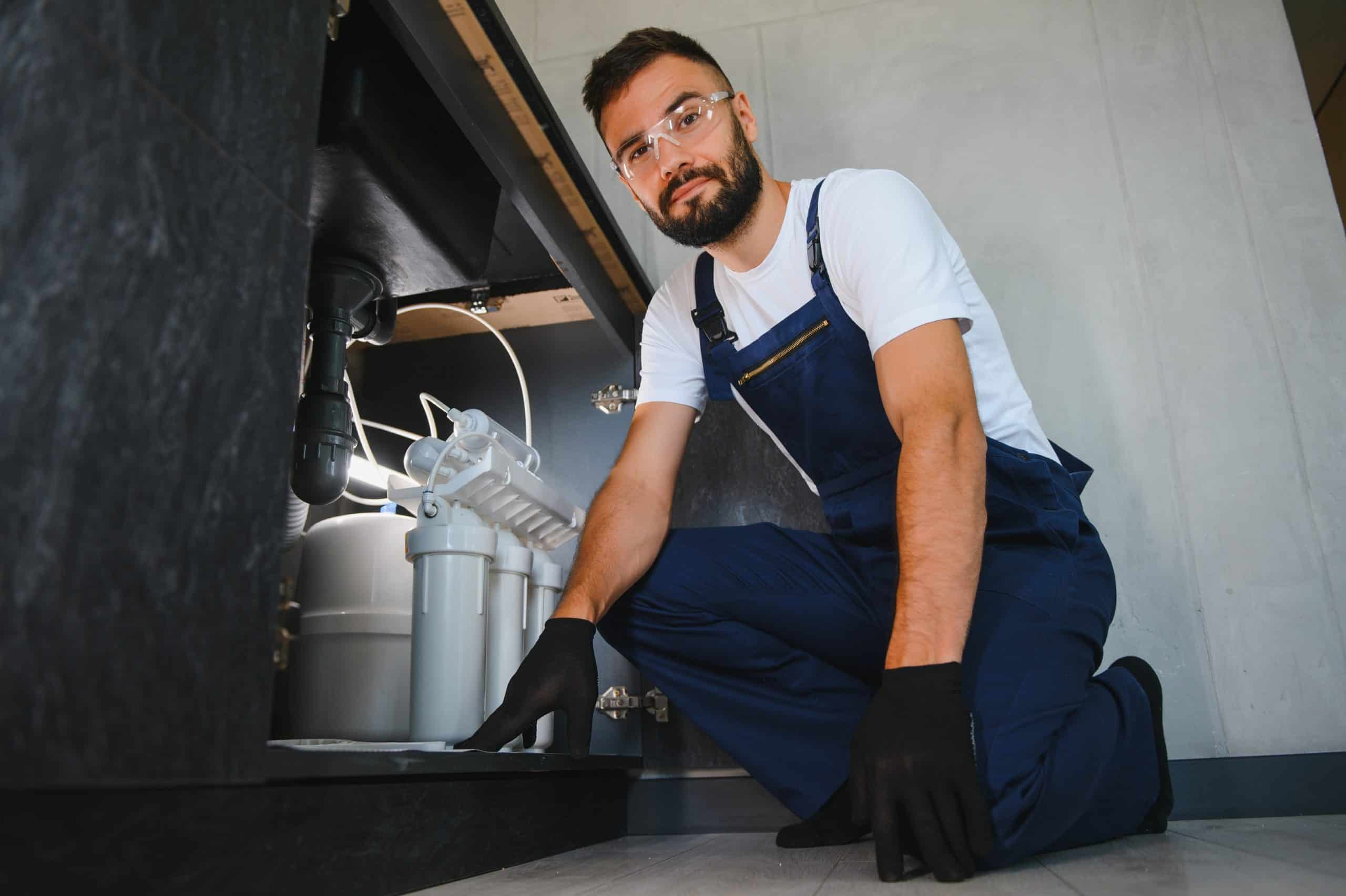
What Cook County restaurant owners need to know about grease trap cleaning — the rules, the risks, and what a professional service actually involves.
Share:
Summary:
If you run a restaurant, café, or commercial kitchen anywhere in Cook County, grease trap cleaning is not optional. It’s written into Chicago’s municipal code, enforced by inspectors who don’t call ahead, and tied directly to your ability to keep your doors open. Most operators know they’re supposed to clean their trap — but fewer understand exactly what that means, how often it needs to happen, and what happens when grease travels past the trap and into the drain lines behind it. This guide covers all of it, in plain terms, so you can stay compliant and avoid the kind of surprise that ruins a Friday night service.
A grease trap — also called a grease interceptor — is a container installed between your kitchen drains and the municipal sewer. Its job is to catch fats, oils, and grease (FOG) before they enter Chicago’s sewer system, where they can harden, accumulate, and cause blockages that affect entire city blocks. Cook County operates one of the largest combined sewer systems in the country, meaning stormwater and sanitary sewage share the same infrastructure. When FOG gets into those lines, the consequences aren’t just local — they can trigger overflows and backups that affect neighboring properties.
Grease trap cleaning is the process of removing the accumulated FOG and food solids from that interceptor before they reach a level where the trap stops working. It’s not glamorous work, but it’s critical. And in Cook County, it’s not something you can defer until you notice a problem.

The mechanics are straightforward. Wastewater from your sinks, dishwashers, and floor drains flows into the grease trap, where it slows down inside a baffled chamber. Grease is lighter than water, so as the wastewater cools, FOG rises to the top while food solids sink to the bottom. The cleaner water in the middle passes through to a second chamber and eventually into the city sewer. The trap holds everything else.
The problem is that this process only works when the trap has enough capacity to do its job. Once FOG and solids accumulate beyond a certain point, wastewater starts bypassing the separation process entirely — and grease flows straight into the sewer line. That’s not just a plumbing problem. In Cook County, it’s a compliance violation.
The legal threshold is called the 25% rule. Under Chicago regulations, your grease trap must be cleaned before the combined depth of FOG and solids reaches 25% of the trap’s total liquid capacity. This isn’t a scheduling suggestion — it’s the standard inspectors use when they show up. If your trap is over that threshold at the time of inspection, you’re in violation, regardless of whether you’ve had any backups or complaints.
For most commercial kitchens, hitting that threshold happens every one to three months. High-volume operations — busy restaurants, institutional kitchens, catering commissaries — may need monthly service. The only way to know for certain is to have your trap monitored by a professional who can track accumulation rates based on your actual cooking volume.
Chicago’s requirements go beyond just keeping the trap clean. Under Municipal Code 18-29-1003.3.1, every commercial kitchen and multi-dwelling unit in the city is required to have a functioning grease interceptor connected to any sink where food, utensils, or equipment are washed. The Metropolitan Water Reclamation District of Greater Chicago — which manages wastewater for over 5 million Cook County residents — mandates the installation and ongoing maintenance of these interceptors as part of its FOG pretreatment program, operating under authority delegated from the U.S. EPA under the Clean Water Act.
Beyond the cleaning itself, Chicago requires food service establishments to maintain detailed records of every grease trap service for a minimum of three years. Those records need to include the date of each cleaning, the name and contact information of the service provider, and the volume of waste removed. The Chicago Department of Public Health and the Department of Water Management both have inspection authority — and they exercise it without advance notice. If you can’t produce your maintenance records during an inspection, the cleaning you paid for might as well not have happened from a compliance standpoint.
One more thing worth knowing: Chicago law prohibits the use of enzymes, emulsifiers, or chemical additives to dissolve FOG and flush it into the sewer system. Products marketed as grease trap treatments don’t satisfy your cleaning requirement — they just push the problem downstream. If an inspector finds evidence of chemical treatment in lieu of proper service, that’s a separate violation on top of any others.
Fines for non-compliance in Cook County start at $500 and can escalate to $10,000 for repeated or serious violations. Beyond the fines, continued non-compliance can mean mandatory corrective action, permit suspension, and in serious cases, forced closure. The grease trap cleaning requirement isn’t a box to check once a year — it’s an ongoing operational obligation.
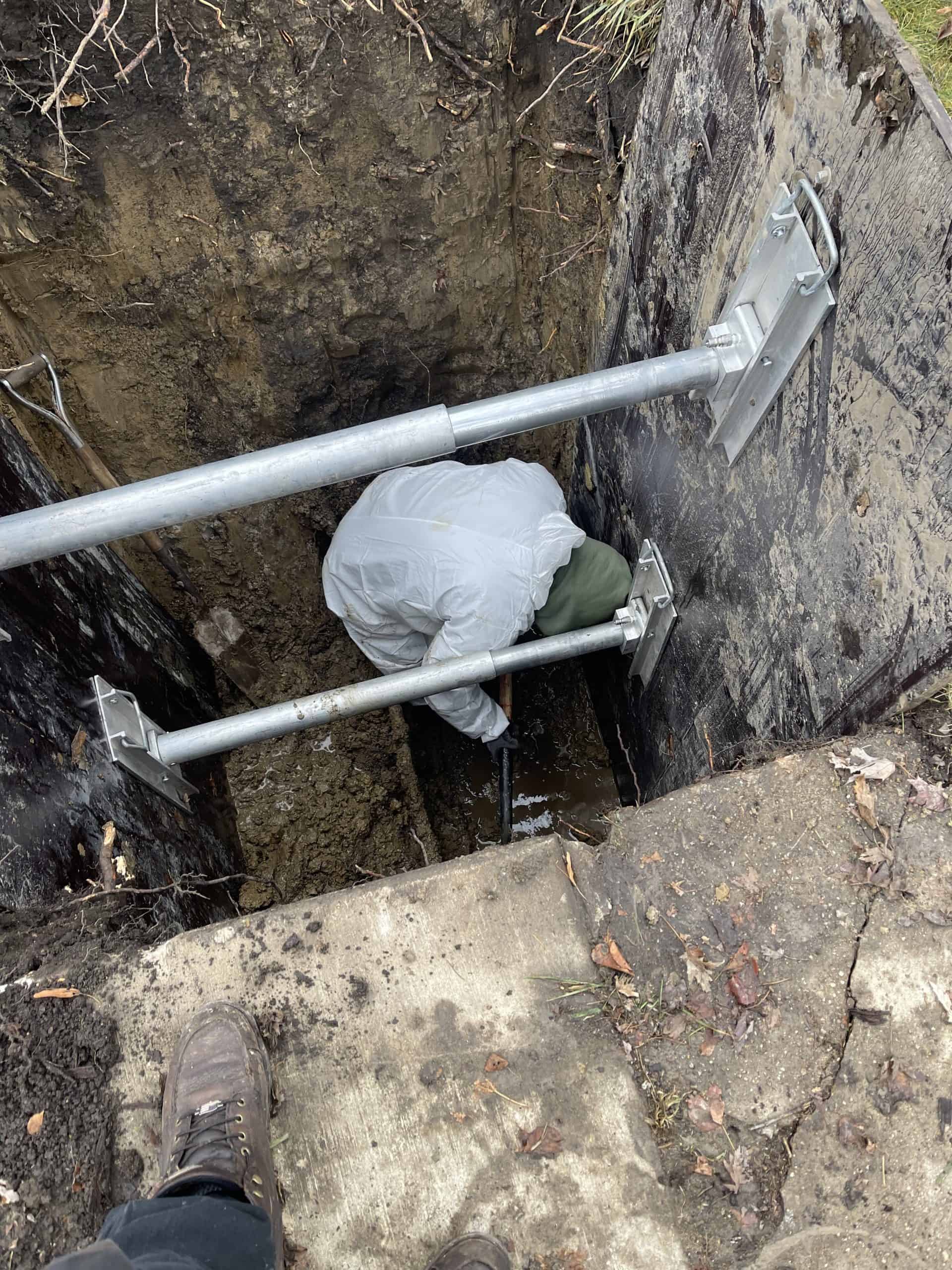
Here’s something most restaurant operators don’t know: pumping your grease trap doesn’t necessarily mean your drain system is clean. Grease regularly migrates past the trap and builds up inside the lateral drain lines that connect your kitchen to the city sewer. Over time, that buildup narrows the pipe, slows drainage, and eventually causes the kind of backup that forces you to close mid-service.
Standard trap pumping doesn’t reach those lines. That’s where commercial drain cleaning — specifically hydro jetting — comes in. It’s the difference between addressing the symptom and solving the actual problem.
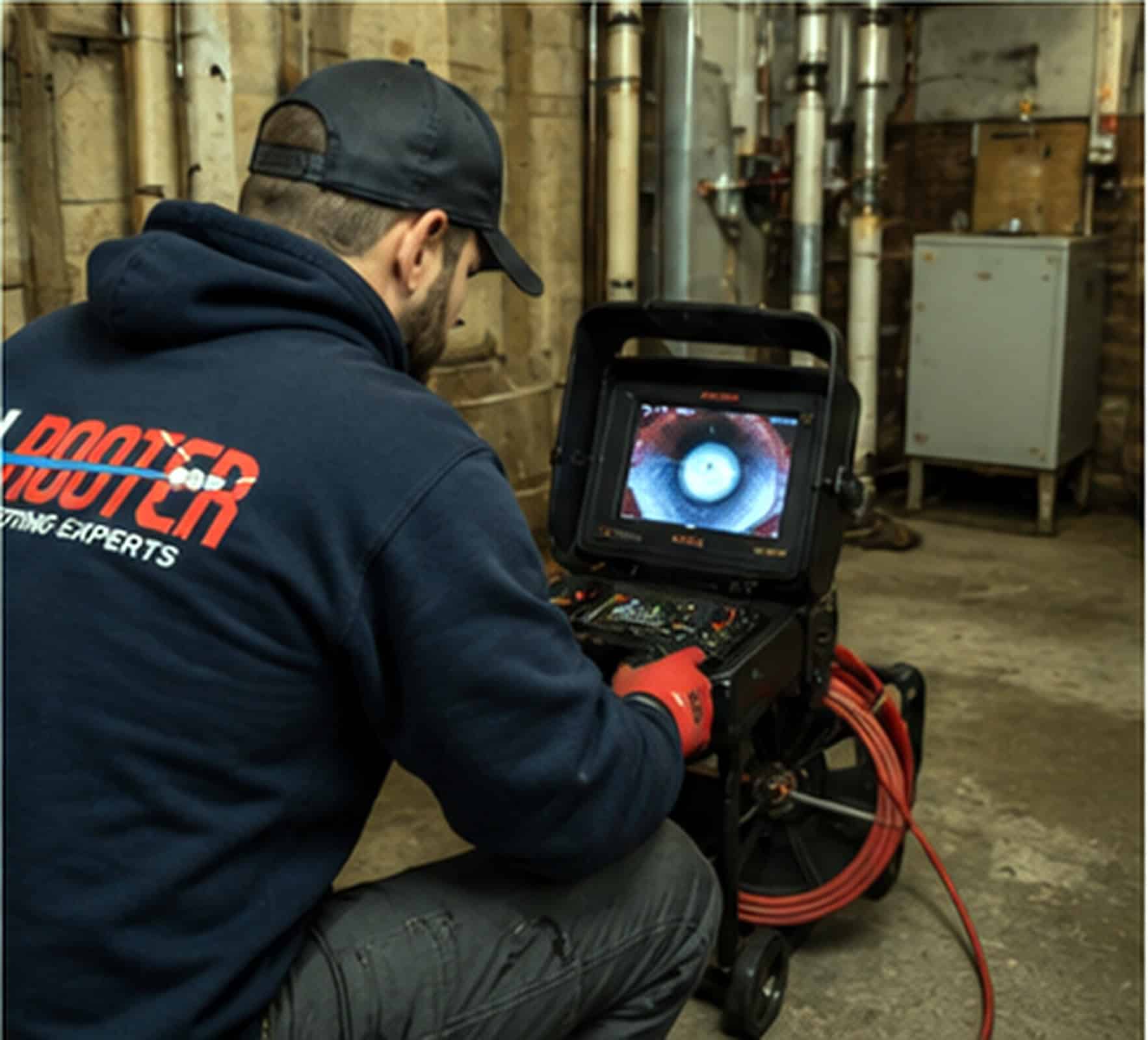
Hydro jetting uses pressurized water — in our case, at over 4,000 PSI — to scour the full interior diameter of a drain pipe. It doesn’t just poke a hole through a grease blockage the way a snake or rod does. It removes the buildup from the pipe walls, restoring the line to near-original capacity. For commercial kitchens dealing with recurring slow drains or backups even after routine trap pumping, hydro jetting of the downstream lateral lines is often the missing piece.
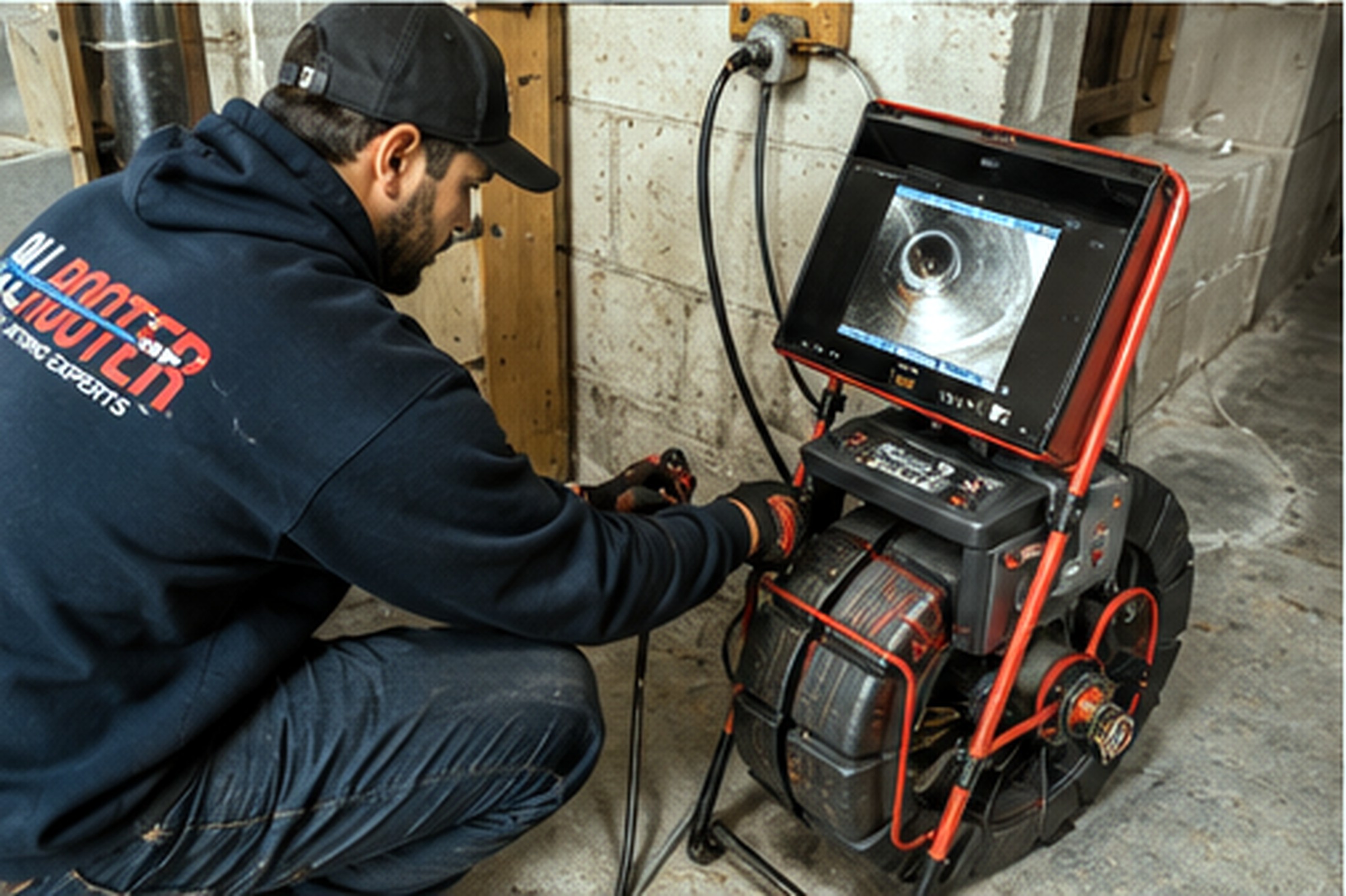
Cook County’s older building stock makes this especially relevant. Much of the commercial infrastructure in neighborhoods like Pilsen, Bridgeport, Back of the Yards, and the Near West Side consists of aging plumbing that has accumulated decades of FOG deposits in the lines. Standard pumping keeps the trap compliant, but it doesn’t address what’s already hardened inside those older pipes. A camera inspection combined with hydro jetting gives you a clear picture of what’s happening downstream — and clears it out before it becomes an emergency.
Cook County winters add another layer of urgency. Grease that migrates into underground lateral lines during warmer months can harden quickly when temperatures drop, turning a slow drain into a full blockage by January. Scheduling a hydro jetting service in late fall — alongside or shortly after your routine trap cleaning — is a practical way to head that off before the cold sets in.
We’ve been doing this work in Cook County since 2000, and the pattern is consistent: restaurants that experience recurring drain problems despite regular trap pumping almost always have grease accumulation in the lateral lines. Addressing both the trap and the downstream lines is what actually stops the cycle.
Not every plumber in Cook County is legally authorized to handle grease trap waste. Chicago law requires that grease trap cleaning and waste disposal be performed by a licensed waste hauler. Hiring an unlicensed provider might save a few dollars upfront, but it exposes you to compliance liability — the restaurant owner is responsible for ensuring the service was performed correctly and that the waste was disposed of at a licensed FOG receiving facility, not dumped illegally.
When you’re evaluating commercial plumbing contractors for this work, there are a few things worth asking directly. Are they licensed, bonded, and insured? Can they provide a service manifest after the cleaning — the documentation you’ll need for your three-year compliance records? Do they offer camera inspection to assess what’s happening in your downstream lines, not just inside the trap itself? And critically — are they available outside of your service hours? A grease trap cleaning scheduled during dinner rush is a problem. A provider who can work early morning or late night, or respond to an emergency at 2 a.m. on a Saturday, is a different kind of resource.
We offer all of the above. All Rooter Hydro Jetting Experts Inc is licensed, bonded, and insured, and we provide documentation after every service so your records stay current. Our team is available 24 hours a day, seven days a week — including for grease trap emergencies when a backup can’t wait for a scheduled appointment. We also offer estimates before any work begins, with upfront pricing and no hidden fees, because restaurant operators don’t need billing surprises on top of everything else. And for business owners who prefer to communicate in Spanish, we offer that too — a straightforward option that matters in the diverse food service communities we serve across Cook County.
The short version: clean your trap before it hits the 25% threshold, keep your records for three years, skip the enzyme products, and don’t assume a pumped trap means clean drain lines. If you’re in a high-volume kitchen, monthly service is likely the right interval. For most operations, every one to three months keeps you on the right side of Chicago’s requirements.
The longer version is that grease trap compliance in Cook County is an ongoing responsibility, not a one-time fix. The MWRD, the Department of Public Health, and the Department of Water Management all have enforcement authority — and they use it. The cost of staying ahead of this is far lower than the cost of getting caught behind it.
If you’re not sure where you stand, or if you’ve been dealing with slow drains that routine pumping hasn’t fixed, reach out to All Rooter Hydro Jetting Experts Inc. We’ve been serving Cook County for over 25 years, and we know what it takes to keep a commercial kitchen’s drain system running the way it should.
Article details:
Share:
Continue learning: