Frozen pipes in a Chicago winter can go from inconvenient to catastrophic fast. Here's what to do — and what to avoid — before things get worse.
Share:
Summary:
It’s early morning. You turn on the faucet and nothing comes out. Or maybe just a trickle. Outside, it’s 12°F and the wind is making it feel worse. You already know what this probably means.
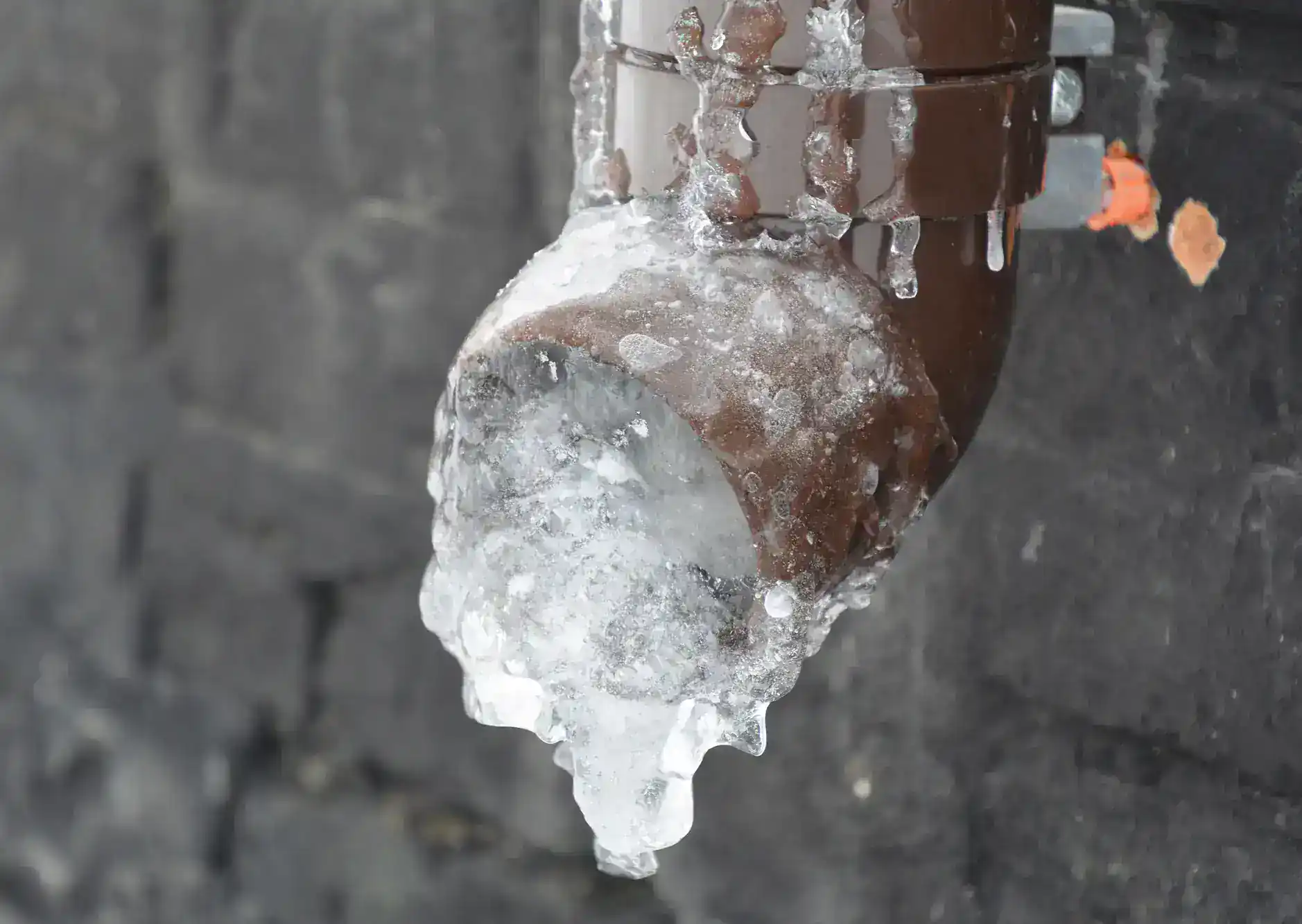
Frozen pipes are one of the most stressful things a Cook County homeowner can deal with — not because the fix is always complicated, but because the window between “frozen” and “burst” can be short, and the wrong move can close that window fast.
Here’s what you actually need to know: how to thaw safely, what to avoid, and how to tell when it’s time to call someone who does this for a living.
The most obvious sign is no water flow at all when you open a faucet. But a frozen pipe doesn’t always announce itself that clearly. Sometimes it’s just reduced pressure — a slow, weak stream where you’d normally have full flow. That partial freeze is still dangerous, because the ice is still expanding and putting pressure on the pipe wall.
Other signs worth paying attention to: frost or condensation on a visible pipe, a strange smell coming from a drain or faucet (a frozen sewer vent can push gas back into the house), or a gurgling sound when you run water elsewhere in the home. If you’re seeing any of these during a cold snap, don’t wait to see if it resolves on its own.
Location matters a lot here, and it matters differently in Cook County than it does in markets with newer housing stock. Chicago’s classic brick bungalows — built mostly between 1910 and 1940 and still standing in Bridgeport, Pilsen, Back of the Yards, Cicero, and dozens of other neighborhoods — were constructed with exterior walls that have little to no modern insulation. Pipes running along those walls are among the most freeze-prone in the entire county.
Two-flats and three-flats add another layer of complexity. These buildings have shared plumbing stacks, which means a freeze in one unit can cut water service to the whole building. If you’re a landlord, that’s both a financial and a legal urgency.
Beyond the walls, the most vulnerable spots are unheated basements and crawl spaces, pipes in attached or detached garages, lines near exterior doors and windows, and anything running through what Chicagoans call the gangway — that narrow passage between homes where wind-driven cold air concentrates and accelerates freezing. If you’ve never thought about which pipes run through your gangway, winter is a good time to find out.
One more thing that surprises a lot of people: during severe winters, Chicago’s frost line can drop below the depth of residential water service lines. The city’s own Water Management Commissioner has confirmed this publicly. That means even underground pipes — the ones most homeowners assume are safe — can freeze during an extended polar vortex event. It’s not a common scenario, but it happens, and Cook County residents have experienced it firsthand.
This is the step most people skip — and it’s the most important one. Before you attempt to thaw any frozen pipe, locate your main water shutoff valve and make sure you can operate it quickly. In most Chicago-area homes, it’s in the basement near where the water line enters the building, often close to the front foundation wall.
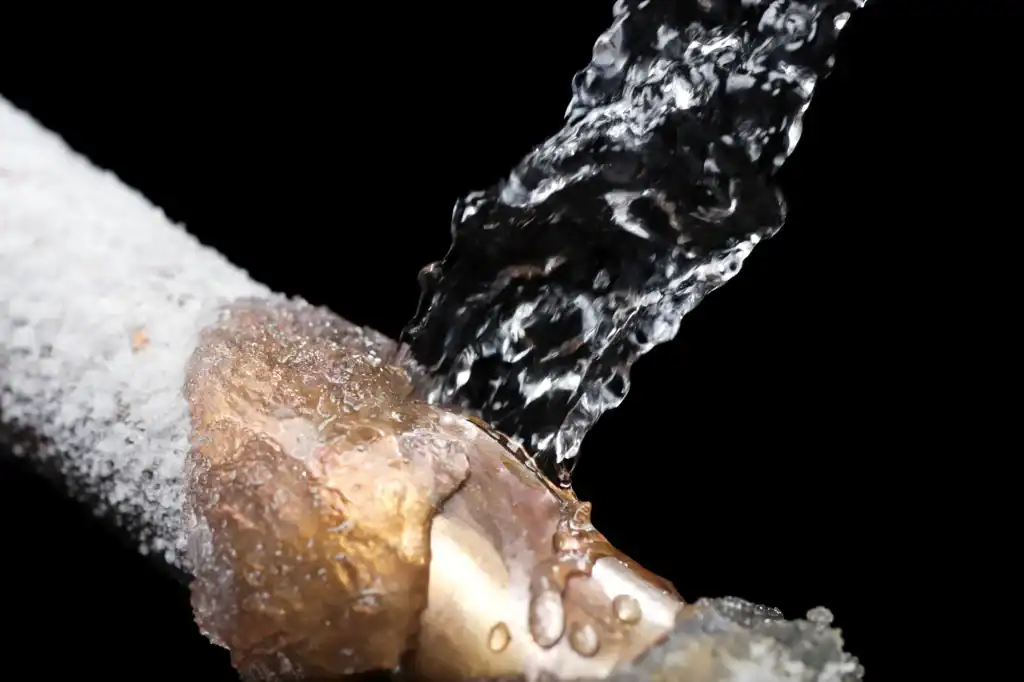
Here’s why this matters: if a pipe has already cracked internally from ice expansion — which can happen without any visible sign — thawing it will cause it to fail. When that happens under full water pressure, you’re looking at a flood, not a drip. A small crack in a pressurized pipe can release more than 250 gallons of water per day. Knowing where your shutoff valve is means you can stop that in seconds instead of minutes.
If you’re not sure where your shutoff valve is, or if it hasn’t been turned in years and you’re not confident it will work, that’s worth addressing before the next cold snap — not during one. A quick call to us can get that sorted in under an hour and save you a significant amount of stress and money down the line.
One more thing: if you call 311 expecting the city to handle a frozen pipe inside your home, you’ll be redirected. The City of Chicago is responsible for water mains and service lines up to your property line. Everything from the property line into your home is yours to deal with. A lot of homeowners find this out for the first time during an emergency, which is not the ideal moment for the discovery.
Once you’ve confirmed a freeze and located your shutoff valve, the question becomes whether you can safely thaw the pipe yourself or whether you need professional help. The answer depends on where the pipe is, how accessible it is, and whether you have any reason to believe it’s already damaged.
For visible, accessible pipes — ones you can see and reach without opening a wall — careful DIY thawing is often a reasonable first step. For anything inside a wall, under a floor, or in a section of the house you can’t easily access, call a plumber. Attempting to thaw a pipe you can’t see is guesswork, and the consequences of getting it wrong are significant.

The goal with any thawing method is gradual, controlled warming — not fast, intense heat. Start at the faucet end of the frozen section and work your way toward the blockage. This is important: if you start at the frozen end and work toward the faucet, you trap melting water and steam inside the pipe, which builds pressure and can cause a burst. Always work from the open faucet end inward.
A hair dryer on a low or medium setting is one of the most practical tools for this. Keep it moving — don’t hold it in one spot — and maintain a safe distance from the pipe surface. A heating pad set to medium, wrapped around the pipe, works well for longer sections. Warm towels soaked in hot (not boiling) water and wrapped around the pipe are another option, especially for pipes in tight spaces where a dryer won’t fit easily.
What you should never do: use an open flame. No propane torches, no lighters, nothing with a direct flame near a pipe. This is the single most dangerous DIY mistake, and it happens more often than you’d think. Open flames can melt solder joints, damage plastic pipes, and start fires inside wall cavities where you won’t see them until it’s too late. Boiling water poured directly on plastic pipe is also a bad idea — thermal shock can crack PVC and CPVC. And don’t use any electrical heating device near standing water.
Thawing a frozen pipe can take anywhere from 30 minutes to a few hours depending on the severity of the freeze and the method you’re using. Be patient. Don’t stop applying heat until you have full water pressure restored at the faucet. A partial thaw that you abandon is just a pipe that will refreeze the next night.
There’s a point where DIY thawing stops being reasonable — and recognizing that point early saves a lot of damage. If the pipe is inside a wall or under a floor, if you’ve been applying heat for more than an hour with no improvement, if you have multiple frozen pipes throughout the house, or if you have any suspicion the pipe has already cracked, it’s time to call a licensed plumber.
Professional pipe thawing uses equipment that homeowners simply don’t have access to. Electrical current thawing — where a low-voltage current is passed through the pipe to heat it from the inside out — is one of the safest and most effective methods for severe or inaccessible freezes. It’s faster than surface heat methods and doesn’t require opening walls. We assess the pipe before thawing begins, checking for signs of existing damage that would change the approach entirely.
Here’s something most people don’t think about until after the fact: a freeze-thaw cycle loosens debris, mineral deposits, and corrosion inside older pipes. In a Chicago bungalow with galvanized steel pipes that are 80 or 90 years old, that loosened material doesn’t just disappear — it can create new clogs or accelerate existing weak points. After thawing, a camera inspection can show exactly what’s going on inside the pipe, and hydro jetting can clear out anything that the freeze dislodged. That combination — thaw, inspect, clean — in a single visit is something we offer, and it’s the difference between a short-term fix and a line that actually holds up through the rest of winter.
Illinois consistently ranks first in the nation for frozen pipe property damage costs. State Farm has paid out hundreds of millions of dollars in Illinois frozen pipe claims in recent years, with average claims exceeding $15,000. Professional service also means professional documentation — detailed damage reports that protect your insurance claim and give you a paper trail if the insurer asks questions. That’s not a minor detail when you’re dealing with a claim of that size.
If cost is a concern — and for a repair that could run into the thousands, it often is — we offer an easy payment plan so the expense doesn’t have to hit all at once. We also give you an upfront price before any work starts, no matter when you call. That includes 2 AM during a polar vortex.
If you’re reading this in the middle of a freeze, the short version is this: shut off your main water valve if you have any doubt about the pipe’s condition, use gentle heat on accessible pipes only, and call a licensed plumber the moment the situation moves beyond what you can see and reach.
The longer version is that Cook County winters — especially the polar vortex events that have become part of Chicago’s recent history — are genuinely hard on plumbing, particularly in the older homes that make up so much of this city’s housing stock. A pipe that survives ten winters can fail on the eleventh. The risk is real, and the damage it causes is expensive.
We’ve been handling frozen pipe emergencies across Chicago and Cook County since 2000, and we’re available around the clock when it matters. If you need help right now or want to get ahead of the problem before the next cold snap, we’re ready to help.
Article details:
Share:
Continue learning: