
Wondering what hydro jetting actually costs in Chicago? Get the real numbers, pricing factors, and honest guidance on when this investment makes sense for your pipes.
Share:
Summary:
You’ve had your drains snaked twice this year. The clog comes back every few months. Now someone’s mentioned hydro jetting, and you’re wondering what it actually costs and whether it’s worth the price difference.
Here’s what you need to know: hydro jetting typically runs higher than snaking upfront, but the cost conversation changes when you factor in how long the results last. In Chicago, where aging cast iron and clay pipes create ongoing challenges, understanding the real numbers helps you avoid overpaying for temporary fixes or underspending on problems that need a thorough solution.
Let’s break down what hydro jetting actually costs in Cook County, what affects the price, and when it makes financial sense.
Most Chicago homeowners pay between $363 and $622 for hydro jetting, with the average landing around $492. That’s the realistic range for standard residential work—not the best-case scenario or the worst.
The spread exists because every job is different. A straightforward main line cleaning with easy cleanout access costs less than dealing with a heavily clogged line in a 1950s bungalow with no accessible entry point. Your hydro jetting cost depends on what’s actually happening in your pipes, not just a flat rate someone quotes over the phone.
Some situations push costs higher. If you’re looking at $600 to $1,500, you’re likely dealing with more complex issues—longer sewer lines, severe blockages, or pipes that need extra care due to age and condition. Commercial properties or multi-unit buildings typically see higher pricing due to larger systems and more extensive buildup. But for most residential homes in Cook County, you’re working within that $363 to $622 window.

Several factors determine where your quote lands within that range. The length and layout of your sewer line matters—a 40-foot main line takes less time to clean than a 100-foot run with multiple bends.
Accessibility plays a big role in your final sewer line jetting cost. If we can easily reach a ground-level cleanout, the job moves faster. Older Chicago homes built in the 1940s through 1960s often lack accessible cleanouts, which means our technician might need to remove a toilet or work through a more difficult access point. That extra labor time shows up in your final cost.
The severity of your blockage affects pricing too. A moderate grease buildup clears faster than a line packed with years of scale, tree roots, or hardened debris. Plumbers charge by the hour in most cases—between $45 and $200 depending on experience and whether you need emergency service—so the more time it takes, the more you’ll pay.
Pipe condition matters as well. If you have older cast iron or clay pipes, we may need to run a camera inspection first to ensure the pipes can handle high-pressure water without damage. That inspection typically adds $150 to $350 but prevents potentially expensive pipe damage. For aging Chicago infrastructure, it’s often worth the added cost for peace of mind.
Your location within Cook County can shift pricing slightly. Urban areas with higher operating costs tend to see prices on the higher end, while suburban locations might come in lower. But the difference usually isn’t dramatic—maybe $50 to $100 in most cases.
Snaking typically costs $100 to $250, making it the cheaper option upfront. Hydrojet drain cleaning cost runs $200 to $800 or more. So why would anyone pay three to four times as much?
Because snaking and hydro jetting solve different problems. A snake punches a hole through your clog—enough to get water flowing again. But it leaves most of the buildup stuck to your pipe walls. That leftover grease, scale, and debris catches new material within weeks or months, and you’re back to slow drains.
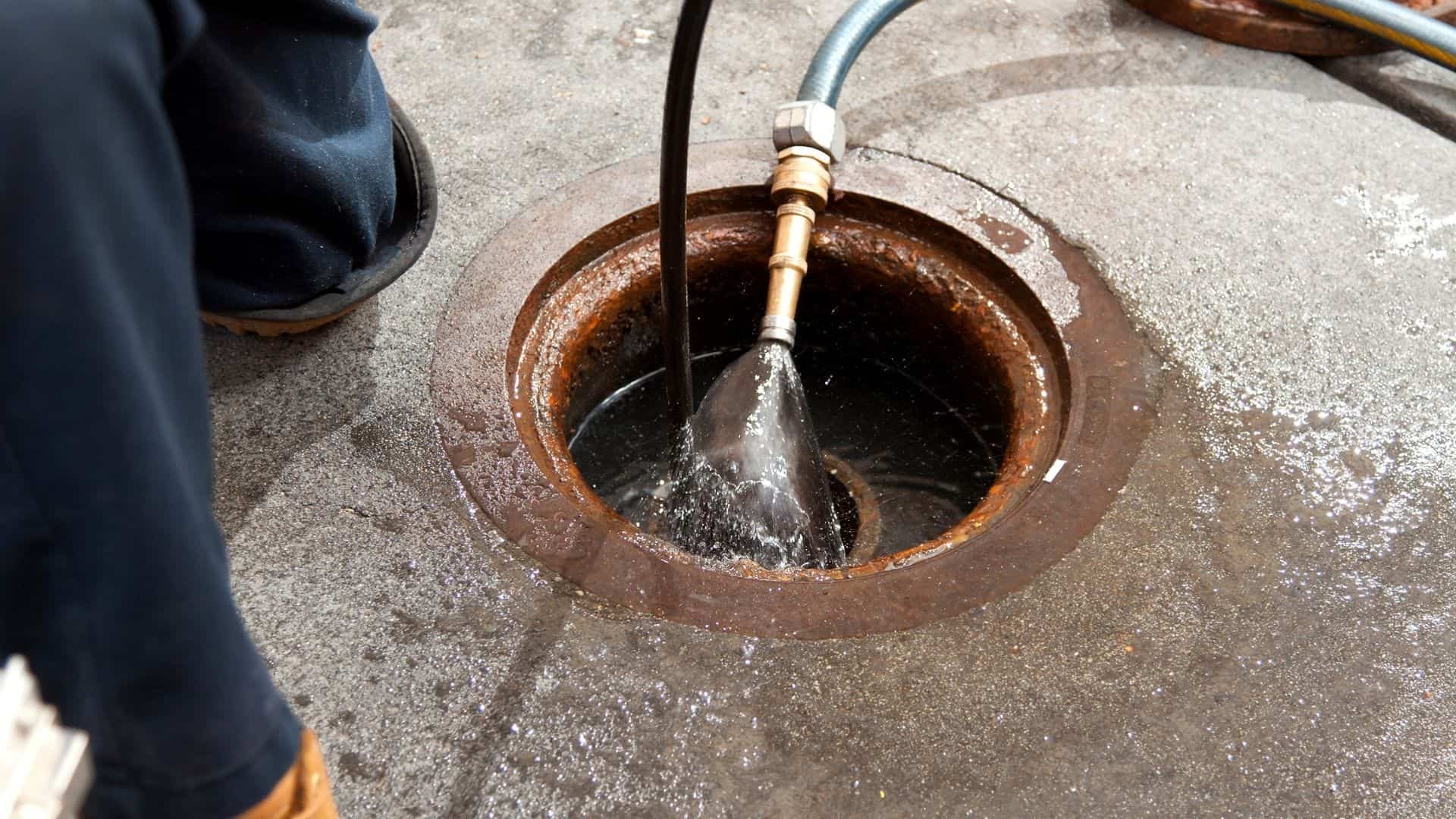
Hydro jetting uses high-pressure water—sometimes up to 4,000 PSI—to scour the entire interior of your pipes clean. It removes the clog and everything clinging to the pipe walls. You’re left with pipes that drain like new, not just pipes that drain for now.
For a one-time clog caused by something obvious—too much toilet paper, a toy flushed by a kid—snaking makes sense. It’s fast, affordable, and gets the job done. But if you’re dealing with recurring clogs, slow drains in multiple fixtures, or years of buildup, snaking becomes a temporary fix you’ll pay for repeatedly.
The math shifts when you factor in frequency. If you’re calling a plumber every three to six months for snaking at $150 to $200 each time, you’ll spend $300 to $800 annually. One hydro jetting service might cost $400 to $600 but last two to three years for most homes. Over time, the hydrojet drain cleaning cost often works out to less while delivering better results.
Chicago’s aging pipe infrastructure makes this especially relevant. Homes with cast iron or clay pipes develop internal corrosion and scale buildup that snaking can’t address. Hydro jetting clears that accumulation, which not only improves drainage but can extend the life of your pipes by reducing the stress from constant blockages.
There’s also the issue of what’s causing your clogs. Tree roots are common in older Chicago neighborhoods where mature trees line the streets. A snake might cut through smaller roots temporarily, but hydro jetting can blast through thicker root intrusions and flush them out completely. For grease buildup—especially common in kitchen lines—snaking barely makes a dent, while hydro jetting removes it entirely.
Not every drain problem needs hydro jetting. If you’ve got a simple, isolated clog and your pipes are otherwise healthy, snaking works fine and saves you money.
Hydro jetting makes sense when you’re facing recurring issues, when snaking hasn’t provided lasting relief, or when you’re dealing with buildup that simpler methods can’t touch. It’s also the right call for preventive maintenance if you have older pipes prone to buildup or if you run a commercial kitchen where grease accumulation is inevitable.
Think of it this way: snaking treats the symptom. Hydro jetting addresses the underlying condition. The question is whether you need symptom relief or an actual solution.

Certain situations signal that hydro jetting will deliver better value than cheaper alternatives. Multiple drains backing up at the same time suggests a main line issue, not just a localized clog. That usually means significant buildup or blockage that needs thorough cleaning.
Frequent clogs in the same location—especially if you’ve already had the line snaked once or twice—indicate that debris is being left behind and catching new material. Continuing to snake that line becomes a cycle of diminishing returns. You’re not saving money at that point—you’re just spreading the same expense across multiple service calls.
Slow drainage throughout your home, gurgling sounds from drains, or foul odors that won’t go away despite cleaning all point to buildup inside your pipes. These are signs that the interior of your pipes has narrowed due to grease, scale, or other accumulation clinging to the walls.
If you’re in a home built before 1975, especially in Chicago where cast iron and clay pipes were standard, you’re more likely dealing with internal corrosion and scaling that benefits from hydro jetting’s thorough cleaning power. These older materials develop rough interior surfaces over time that catch debris more easily. Chicago’s freeze-thaw cycles accelerate this deterioration, creating the perfect conditions for recurring clogs.
Tree root intrusion is another clear indicator. If a camera inspection shows roots in your sewer line, snaking might provide temporary relief, but roots grow back quickly. Hydro jetting cuts through roots more completely and can delay regrowth longer than mechanical cutting alone.
For commercial properties—particularly restaurants, multi-unit buildings, or any facility with heavy water usage—regular hydro jetting becomes preventive maintenance rather than emergency repair. Grease and debris accumulate faster in high-volume settings, and staying ahead of buildup prevents costly backups and downtime.
Pricing transparency matters because hydro jetting costs vary enough that you need to understand what you’re paying for. We’ll assess your situation before quoting a price—not give you a number over the phone without seeing the problem.
Expect a thorough evaluation that includes questions about your symptoms, how long you’ve had issues, and what you’ve already tried. For older homes or recurring problems, a camera inspection should be part of the assessment. This isn’t upselling—it’s due diligence. Running high-pressure water through pipes without knowing their condition risks damage that costs far more than the inspection.
A good estimate breaks down what’s included: the inspection, the hydro jetting service itself, any additional services like a post-cleaning camera check to verify results, and labor time. You should know upfront whether the quote is flat-rate or hourly, and what circumstances might change the price. No surprises when the work is done.
Ask about the equipment being used and the technician’s experience with hydro jetting specifically. This isn’t basic drain cleaning—it requires specialized equipment and training. A plumber who primarily does snaking and occasionally rents a jetter isn’t the same as a company that specializes in hydro jetting and owns professional-grade equipment.
Be wary of prices that seem too good to be true. A quote significantly below the typical Chicago range might mean you’re getting basic rodding marketed as hydro jetting, or it might indicate corners being cut on inspection and safety protocols. On the flip side, prices well above the normal range should come with clear justification—unusual access challenges, extensive pipe damage requiring repairs, or other documented complications.
Financing options can make the hydro jetting cost more manageable if you’re dealing with an urgent situation but don’t have $400 to $600 readily available. We offer payment plans that let you spread the cost over several months without interest.
The best protection against overpaying or getting unnecessary service is working with a company that provides upfront pricing, explains what they’re doing and why, and gives you the information to make an informed decision rather than pressuring you toward the most expensive option.
Hydro jetting costs more than snaking upfront, but it solves different problems. For recurring clogs, significant buildup, or preventive maintenance on aging Chicago pipes, it often delivers better long-term value despite the higher initial price.
The key is matching the solution to your actual problem. Simple, isolated clogs don’t need high-pressure water cleaning. Chronic issues, multiple problem areas, or years of accumulation do. Understanding the difference helps you spend money where it actually makes a difference.
When you’re ready to get an accurate assessment and transparent pricing for your situation, we provide free estimates, upfront pricing, and the local Chicago expertise to recommend the right solution—not just the most expensive one.
Article details:
Share:
Continue learning:


