
Sizing a commercial tankless water heater isn't guesswork — especially in Cook County. Here's what actually goes into getting it right.
Share:
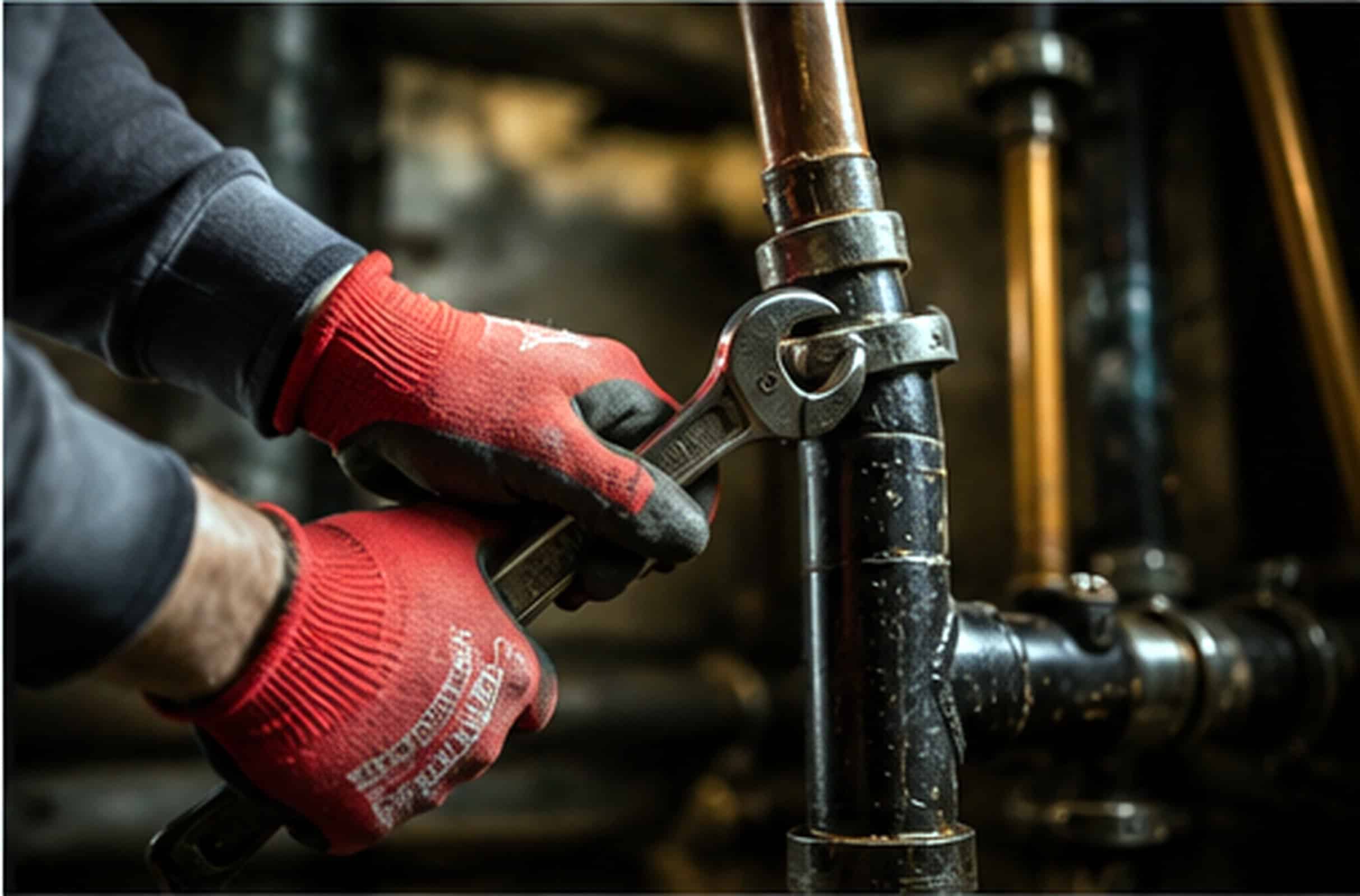
Summary:
If your current water heater is struggling to keep up — or you’re planning a buildout and trying to figure out what you actually need — you’re in the right place. Sizing a commercial tankless water heater is not complicated once you understand the variables, but get it wrong and you’ll end up with a system that works fine in July and leaves your kitchen scrambling in February. That’s a real problem in Cook County, where winter water temperatures change the math entirely. This guide walks you through how sizing works, what Cook County businesses need to know, and what to watch for when choosing a contractor.
The core idea behind a tankless system is simple: water is heated on demand, as it flows through the unit, rather than stored in a tank. No standby heat loss, no tank cycling on and off all day. For businesses with high and variable hot water demand, that’s a meaningful advantage — but only if the unit is sized to handle your actual peak load.
Sizing comes down to two numbers: how many gallons per minute (GPM) you need at peak demand, and how much you need to raise the water temperature. Multiply those together with a standard BTU formula, and you get the capacity requirement your system has to meet. The formula looks like this: BTU/h ≈ 500 × GPM × temperature rise. Everything else flows from there.
Here’s where most generic sizing guides fall short for Cook County businesses. Chicago’s municipal water supply in winter drops to roughly 35°F to 40°F — sometimes lower. That’s among the coldest incoming water temperatures in the continental U.S., and it has a direct, measurable impact on how much BTU capacity your system needs.
Take a restaurant in the South Loop that needs 140°F water at the dishwasher — a standard commercial requirement under NSF sanitation guidelines. In the summer, incoming water might be 55°F, giving you a temperature rise of 85°F. Manageable. But in January, that same incoming water is 38°F. Now you’re asking the system to bridge a 102°F gap. That’s a completely different load, and a unit that was barely keeping up in warm months will fail you when it matters most.
Run the numbers: a restaurant pulling 10 gallons per minute at peak, with a 100°F temperature rise in winter, needs 500,000 BTU per hour of capacity. A single commercial tankless unit tops out around 199,000 BTU. That means you need multiple units working together — what’s called a manifolded or cascaded system — to meet that demand reliably.
This is not a detail that shows up in most online sizing calculators, which are built around warmer baseline temperatures. It’s also the reason businesses that moved to tankless based on a contractor’s generic recommendation often find themselves in trouble come November. The sizing has to reflect where you are, not just what you need.
Manifolded systems have another benefit worth mentioning: redundancy. If one unit needs service, the others keep running. For a hotel with 200 guests or a commercial kitchen running two dinner services, that kind of built-in backup isn’t a luxury — it’s basic risk management.
This question comes up often enough that it’s worth addressing directly. The terms get used interchangeably in casual conversation, but they refer to different equipment categories — and the distinction matters for permitting, contractor qualifications, and equipment selection.
A commercial tankless water heater heats potable water on demand for direct use: sinks, dishwashers, showers, laundry. Most commercial applications — restaurants, hotels, office buildings, multi-unit residential properties — fall into this category. These units are rated by thermal efficiency percentage and are regulated under DOE commercial water heating equipment standards that have been in place since 1992.
A tankless boiler, technically called a hot water supply boiler, is a different product designed for higher input rates — typically above 200,000 BTU — and continuous operation in large-scale commercial or industrial settings. Think large hospitals, university buildings, or industrial facilities with sustained, very high-volume demand. They’re regulated separately, permitted differently, and require specific contractor qualifications.
For the vast majority of Cook County businesses — restaurants, boutique hotels, mid-size office buildings, multi-family properties — a properly sized commercial tankless water heater, or a manifolded system of two to four units, is the right solution. A tankless boiler is overkill for most of these applications and introduces unnecessary cost and complexity.
If a contractor quotes you a tankless boiler for a restaurant or small hotel without a clear explanation of why, that’s worth a second opinion. The right equipment for your load is the one that meets your demand without overengineering the solution. A good contractor will show you the math, not just hand you a spec sheet.
Once you understand your BTU and GPM requirements, the next question is what kind of unit — or system — actually meets them. There are a few meaningful distinctions worth understanding before you talk to a contractor or start comparing brands.
Condensing versus non-condensing is the biggest one. Condensing units achieve 90% to 98% thermal efficiency by capturing heat from exhaust gases before they leave the flue. Non-condensing units run at 78% to 82% efficiency. For a commercial building with high hot water usage, that gap in efficiency translates directly to operating costs — and in Cook County, where utility rates for commercial accounts are a real line item, it adds up.

Brand selection matters more in commercial settings than residential ones, because the consequences of a failure are immediate and costly. A residential water heater that underperforms is an inconvenience. A commercial unit that goes down during a Friday dinner service or a hotel checkout rush is a revenue problem.
The brands with the strongest track records in commercial applications include Rinnai, Navien, Noritz, Rheem, and Bradford White. Each has commercial-grade product lines with manifolding capability, high BTU outputs, and robust heat exchangers designed for continuous operation. The right brand for your application depends on your specific load, gas line configuration, and venting setup — not on what’s currently on sale.
One thing that doesn’t get enough attention in commercial settings: water quality. Cook County’s municipal water is moderately hard, and mineral scale buildup inside a heat exchanger is the primary reason commercial tankless units fail prematurely. Most manufacturers require annual descaling using permanently installed service valves to maintain warranty coverage. If a contractor doesn’t mention this during the sizing conversation, ask about it directly. Skipping annual maintenance on a commercial unit in Cook County’s water conditions is how a 20-year investment becomes a 7-year problem.
This is actually an area where our background in hydro jetting and pipe descaling gives us a practical edge. Scale buildup isn’t just a water heater issue — it’s a plumbing system issue. We approach commercial water heater maintenance the same way we approach drain and pipe maintenance: proactively, with the right equipment, before a small problem becomes a shutdown.
Yes — and this is not a technicality worth skipping. Commercial water heater installation in Chicago requires a Standard Plumbing Permit from the City of Chicago Department of Buildings. The unit itself must be third-party certified and carry a label and listing plate showing compliance with the Chicago Plumbing Code. After installation, a licensed inspector verifies the T&P relief valve, discharge pipe termination, venting integrity, and overall code compliance before the system is placed in service.
What makes Chicago’s regulatory environment distinct from the rest of Cook County is the dual licensing requirement. Under Chicago Municipal Code 18-29-106.1, no permit can be issued for plumbing installation except to a licensed registered plumbing contractor who is also duly bonded with the City of Chicago. A contractor who holds only a State of Illinois plumbing license — but not a separate City of Chicago plumbing contractor license — cannot legally pull a permit for work inside city limits.
This matters for commercial property owners because unpermitted work creates real liability. If a water heater is installed without a permit and something goes wrong — a leak, a fire, a flood — your commercial insurance policy may deny the claim. It also creates problems during property sales, lease renewals, and inspections. The cost of doing it right upfront is a fraction of what unpermitted work can cost you later.
We are licensed, bonded, and insured under both Illinois state requirements and City of Chicago requirements. We pull permits, schedule inspections, and handle the compliance side of every installation — because that’s what a commercial installation actually requires, and because our clients shouldn’t have to worry about whether their contractor cut corners on paperwork.
For businesses in suburban Cook County — Oak Park, Skokie, Evanston, Cicero, Berwyn — permit requirements vary by municipality, but all must meet the Illinois Plumbing Code as a minimum standard. We work throughout Cook County and know the permit process in each jurisdiction we serve.
The right commercial tankless water heater system starts with accurate sizing — and accurate sizing in Cook County means accounting for cold winter inlet temperatures, peak simultaneous demand, and the specific requirements of your facility. A system sized for a warm-weather baseline will let you down when temperatures drop and demand spikes. Getting it right the first time is almost always cheaper than fixing it later.
Compliance matters too. Permits, inspections, and dual licensing aren’t bureaucratic hurdles — they’re what protect your business, your insurance coverage, and your investment in the equipment itself.
If you’re ready to figure out what your building actually needs, we’ve been doing this work in Cook County since 2000. Give us a call at 708-669-3570 — we’re available 24 hours a day, seven days a week, and we’ll give you a straight answer on what your system requires before we ever talk about selling you anything.
Article details:
Share:
Continue learning: