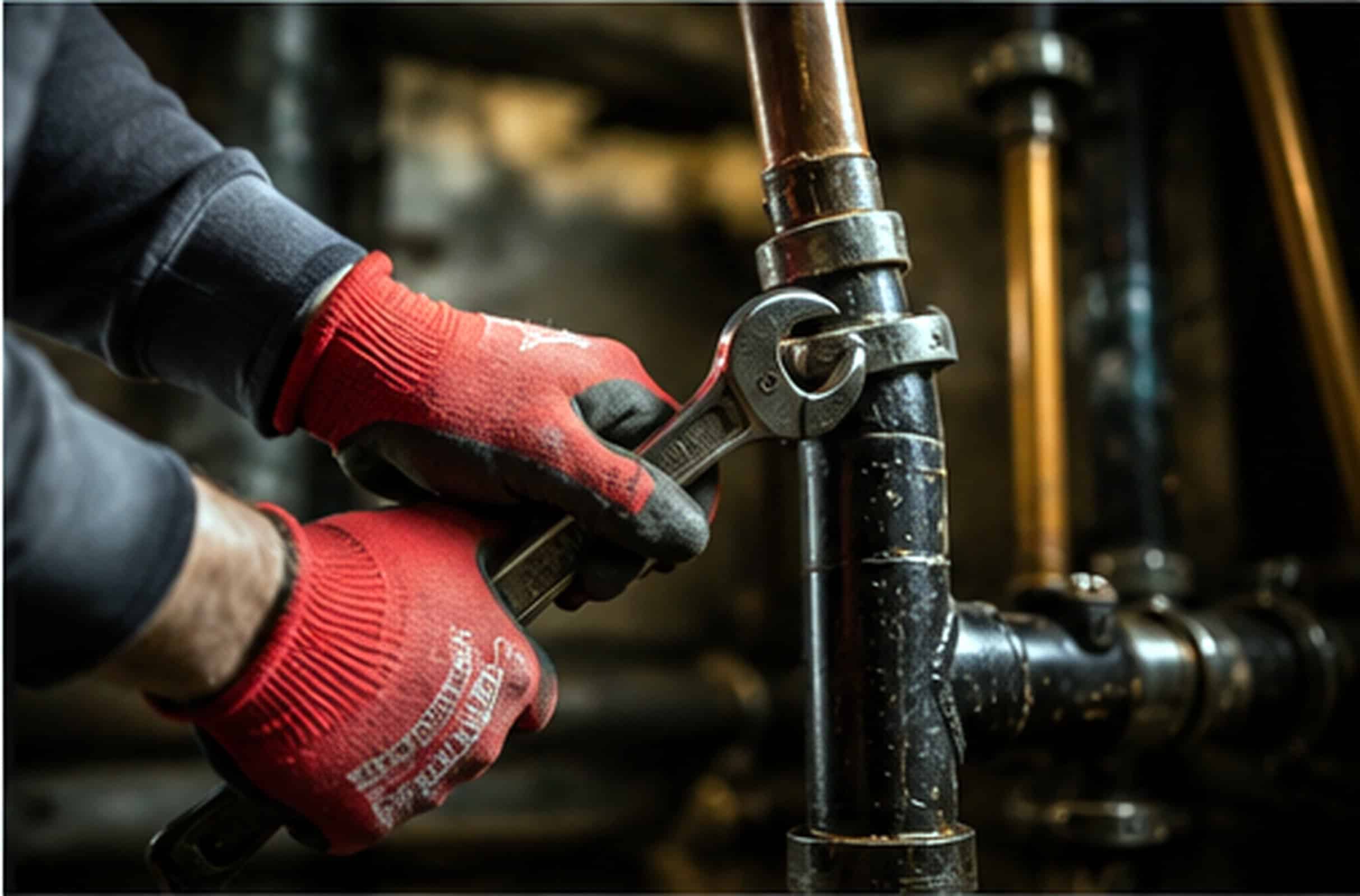
That slow drain or dripping pipe isn't going away on its own — and in Cook County, waiting almost always makes the bill bigger.
Share:
Summary:
There’s a version of this story almost every Cook County homeowner knows. You notice something — a slow drain, a faucet that drips, a water heater that takes longer than it used to. You tell yourself you’ll deal with it next month. Next month becomes six months. Then something gives, and suddenly you’re not looking at a repair bill anymore. You’re looking at water damage, a mold assessment, and a much bigger conversation with your insurance company. This page is about that gap — between what it costs to fix something now and what it costs when you wait — and what to do if money is the reason you’ve been holding off.
Plumber cost in Cook County typically runs between $45 and $200 per hour for standard work, with most small repairs — a toilet, a faucet, a basic drain issue — landing somewhere between $125 and $350. Larger jobs like sewer repairs or repiping tend to fall in the $500 to $800 range, sometimes more depending on what’s involved.
Emergency service is a different story. During Chicago winters, when a polar vortex sends temperatures below zero and pipes start freezing, emergency plumbing rates can run 1.5 to 3 times the standard rate — anywhere from $250 to $500 per hour. That’s not a markup invented to take advantage of you. It’s the reality of getting a licensed, insured professional to your door at 2 a.m. in January.
The point isn’t to scare you with numbers. It’s to show you that the cost of a plumbing repair is almost always lower than the cost of what happens when that repair gets deferred.
Cook County sits on aging infrastructure that was never designed for the demands placed on it today. Across neighborhoods from Berwyn to South Chicago to Oak Lawn, a significant number of homes still have galvanized steel or cast iron pipes that were installed decades before modern plumbing codes existed. These materials don’t fail all at once — they corrode slowly from the inside, narrowing the pipe diameter, reducing water pressure, and eventually cracking under stress.
Chicago’s winters make this worse. Water expands by roughly 9% when it freezes. In a confined pipe, that expansion can generate internal pressures reaching up to 40,000 PSI in extreme cases — far more than any residential pipe is built to withstand. When a polar vortex hits and temperatures drop below zero, pipes in uninsulated walls, crawl spaces, or exterior-facing areas are genuinely at risk. A burst pipe doesn’t give you a warning. It gives you water.
Beyond freezing, Cook County homes deal with tree root intrusion into older sewer lines, hard water mineral buildup from the Lake Michigan supply, and the general wear that comes from plumbing systems that are 40, 60, or 80 years old. None of these are hypothetical risks. They’re the calls we take every week.
The reason this matters for cost is simple: the older and more stressed a plumbing system is, the faster a small problem becomes a big one. A slow drain in a newer home might stay slow for years. In a 1950s bungalow in Archer Heights or a vintage two-flat in Berwyn, that same slow drain could be the first sign of a root-compromised sewer line that’s months away from a full backup.
A single plumbing leak can waste up to 10,000 gallons of water per year. That’s not a dramatic estimate — that’s what a slow, ongoing leak adds up to when it goes unaddressed. On your water bill, that’s money leaving your account every month for a problem that already existed.
But the water bill is the small part. When a leak goes undetected or ignored inside a wall, under a floor, or behind a cabinet, the damage it causes compounds in ways that are expensive to reverse. Drywall absorbs moisture almost immediately. Left wet, it becomes a mold environment within 24 to 48 hours. Wood framing begins to rot. Flooring warps.
What started as a $150 repair becomes a $4,000 remediation project — and that’s before you factor in the possibility that your insurance won’t cover it. Homeowner’s insurance typically covers sudden, accidental damage — a pipe that bursts without warning. It rarely covers damage that results from a known problem that wasn’t addressed. If an adjuster determines that the leak was visible or detectable before it caused damage, the claim can be denied.
The average insurance claim for water damage and freezing runs around $14,000. A single inch of water on your floor can cause up to $25,000 in structural damage. Those numbers aren’t worst-case scenarios — they’re averages. The repair you’re putting off because of cost is almost certainly cheaper right now than it will be in three months.
Some plumbing problems give you time to plan. Others don’t. A burst pipe, a sewage backup, a water heater that stops working in February — these aren’t situations where you schedule something for next week. The damage clock starts immediately, and every hour matters.
We offer 24/7 emergency plumbing service across Cook County because that’s when most of the serious calls come in — not during business hours, not when it’s convenient, but at night, on weekends, and in the middle of Chicago’s worst weather. If you’re dealing with something urgent right now, you can reach us by phone or text at 708-669-3570.
Water heater problems have a way of announcing themselves at the worst possible time — no hot water on a February morning, a puddle forming under the unit, or an energy bill that’s crept up without explanation. Most homeowners’ first instinct is to wonder whether it’s worth repairing or just replacing the whole unit.
The honest answer depends on the age of the heater and the nature of the problem. A water heater that’s less than eight to ten years old and showing a specific, isolated issue — a faulty thermostat, a failing heating element, a pressure relief valve that needs replacing — is usually worth repairing. The repair cost is a fraction of full replacement, and a well-maintained unit has years of life left.
A unit that’s pushing 12 to 15 years old, running inefficiently, showing rust in the water, or requiring repeated repairs is a different calculation. Running an aging, inefficient water heater doesn’t just risk a sudden failure — it costs you money every month in energy you’re not getting full value from. At some point, replacement is the more economical choice, not just the safer one.
What we’d encourage you to avoid is making this decision under pressure after a complete failure, when your options narrow and the urgency drives the cost up. A professional assessment while the unit is still functioning gives you time to plan, compare options, and — if the cost is a concern — look at financing before you’re in emergency mode. We offer water heater repair and installation services, including tankless units, and we’ll give you a straight answer on whether repair or replacement makes more sense for your situation before any work begins.
This is the question most homeowners don’t think to ask — and it’s probably the most useful thing on this page if cost is the reason you’ve been putting something off.
Yes, you can finance a plumbing repair. We offer financing through Hearth, which lets you apply online and spread the cost of a repair over time. This isn’t a workaround or a last resort. It’s a practical option for homeowners who have a real problem that needs to be fixed but don’t want to clean out their savings account or put a large charge on a high-interest credit card to do it.
Cook County is one of the most economically diverse counties in the country. Working-class neighborhoods on Chicago’s South and West Sides, middle-income suburbs like Oak Lawn and Berwyn, newer families in Chicago Heights — the reality is that a $600 drain repair or a $1,200 sewer job can be a genuinely difficult expense to absorb in a single month, especially when it comes out of nowhere.
Financing doesn’t make the problem go away, but it does make acting now financially manageable in a way that waiting is not. Instead of putting off a repair that’s getting worse — and more expensive — every week, you address it now, at today’s cost, and pay it back on a schedule that works for your budget. The alternative is waiting until the problem forces your hand, at which point the repair cost is higher, the damage is done, and you’re still facing a bill — just a bigger one, with less time to plan for it.
We accept a wide range of payment methods as well — Visa, MasterCard, Amex, PayPal, Apple Pay, Cash App, Venmo, Zelle, Check, and Cash — so however you prefer to handle it, we can work with you. Every job starts with a free estimate and upfront pricing, so you know exactly what you’re agreeing to before anything begins.
The right time is almost always sooner than feels necessary. That’s not a sales line — it’s just what the numbers consistently show. Small plumbing problems in Cook County’s older housing stock don’t tend to stabilize on their own. They develop, quietly, until something gives.
If you’ve been holding off because of cost, the financing option through Hearth is worth a serious look before that decision gets made for you by a burst pipe or a flooded basement. If you’re dealing with something urgent right now, we’re available 24/7.
All Rooter Hydro Jetting Experts Inc has been serving Cook County and the broader Chicagoland area since 2000. We’re locally owned, licensed, bonded, and insured, and we’ll give you a straight answer and a free estimate before any work begins. Reach out whenever you’re ready — by phone, text, or online.
Article details:
Share:
Continue learning: