Cook County winters don't give much warning. Here's what actually protects your pipes — and your wallet — before the next polar vortex hits.
Share:

Summary:
Most frozen pipe guides open with a reminder that Chicago winters are cold. You already know that. What you might not know is that by the time you turn on a faucet and nothing comes out, the real damage may have already happened — silently, inside a wall, hours earlier.
Cook County homeowners deal with something most national guides don’t account for: older housing stock, frost lines that can drop below water service line depth during polar vortex events, and temperature swings that can move 40 degrees in a single day. That combination is what makes frozen pipes such a persistent problem here — and why generic advice only gets you so far.
Here’s what actually works.
The science is simple: water expands about 9% when it freezes, and that expansion creates enough internal pressure to crack or split a pipe. The risk starts at 32°F but accelerates sharply once temperatures drop below 20°F — which happens regularly in Cook County, not just during once-a-decade polar vortex events.
What makes this area particularly vulnerable is the housing stock. A significant portion of homes in neighborhoods like Clearing, Marquette Park, and Bridgeport — and throughout the south and southwest suburbs — were built before 1960. These homes often have uninsulated basement rim joists, drafty crawl spaces, and supply lines running along exterior walls that were never designed with modern insulation standards in mind.
Add Chicago’s flat terrain and sustained winds off Lake Michigan, and pipes lose heat faster than the thermostat can compensate. During one severe winter, Chicago’s Water Management Department received more than 4,500 calls about frozen pipes — nearly five times the volume of the prior year. That’s not a fluke. It’s what happens when aging infrastructure meets extreme cold.

A lot of homeowners assume that because their pipes are inside, they’re safe. That’s not quite right. The pipes most likely to freeze are the ones closest to cold air — and in older Cook County homes, cold air gets in more places than you’d expect.
Pipes running along exterior walls are the most common culprit. In a Chicago bungalow, that often means the kitchen supply line, which frequently runs through an exterior wall near the sink cabinet. Opening those cabinet doors during a cold snap — so warm room air can reach the pipes — is one of the simplest and most effective things you can do.
Basement rim joists are another problem area. That’s the framing that sits on top of your foundation wall, and in many older homes it’s completely uninsulated and exposed to outside air. Any pipe that runs near that zone is vulnerable. The same goes for crawl spaces, attached garages with water lines running through them, and any pipe near an exterior door or window that doesn’t seal well.
Outdoor faucets and hose bibs are also a common freeze point that people overlook until it’s too late. If you haven’t already disconnected your garden hoses and shut off the interior valve that feeds your outdoor spigots, do that now — water left sitting in that line has nowhere to go when it freezes except into the pipe itself.
Underground service lines are a less obvious risk, but a real one. During severe Cook County winters, the frost line in the ground can actually drop below the depth of residential water service lines. When that happens, even pipes that are normally protected by soil depth can freeze — and there’s very little a homeowner can do about it once it’s started. That’s a situation that requires a licensed plumber.
The takeaway: frozen pipes aren’t just a problem for homes with obvious insulation gaps. If your home is more than 30 or 40 years old and hasn’t had a plumbing inspection recently, there’s a good chance you have exposure you don’t know about.
There’s no shortage of frozen pipe prevention checklists online. Most of them cover the same ground: insulate your pipes, drip your faucets, keep the thermostat up. That advice is solid, but it’s also incomplete if you’re living in a pre-war Cook County home with galvanized pipes and a drafty basement.
Pipe insulation sleeves are the single highest-return prevention investment you can make. They cost a few dollars at any hardware store, take about five minutes to install on accessible pipes, and can prevent thousands of dollars in damage. Focus on any pipe in an unheated space — basement, crawl space, garage — and any pipe along an exterior wall.
Keeping your thermostat set no lower than 55°F, even when you’re away, is non-negotiable during a cold snap. The temptation to drop it lower to save on the gas bill is understandable, but the math doesn’t work in your favor if a pipe lets go while you’re gone. The damage from even a small burst — remediation, drywall repair, pipe replacement — routinely runs into thousands of dollars.
Sealing drafts is something most guides mention but few explain well. The goal is to eliminate any pathway where outside air can reach your pipes. That means caulking gaps around where pipes enter exterior walls, sealing the rim joist in your basement with spray foam or rigid insulation, and making sure any vents or openings in your crawl space are closed for winter. A tube of spray foam from the hardware store can close gaps that have been letting in cold air for decades.
One thing worth understanding: dripping faucets help, but they’re a supplement to insulation, not a replacement for it. Running a slow trickle of cold water from the faucet farthest from your main shutoff keeps water moving through the lines, which makes freezing harder. But if a pipe is already severely exposed to cold air infiltration, a drip won’t save it. Insulation and draft sealing come first.
Here’s an angle that most prevention guides miss entirely: pipes with heavy mineral deposit buildup, grease accumulation, or sediment inside them are more vulnerable to freezing than clean pipes. Reduced flow velocity and that layer of buildup give ice more surface area to form on. Regular hydro jetting — which uses high-pressure water to clear the full interior diameter of a pipe — removes that buildup and restores full-bore flow. It’s something we do regularly for Cook County homeowners, and it’s one of the reasons we think of it as a winter preparation service, not just a drain-clearing one.
You turn on the tap and nothing comes out. Or you get a thin trickle where there should be full pressure. That’s the moment most homeowners realize they have a frozen pipe — and it’s usually early in the morning on the coldest day of the year.
The first thing to do is stay calm and locate your main water shutoff valve. Know where it is before you need it. If a pipe has already burst and water is actively flowing somewhere in your home, getting to that shutoff quickly is the difference between a manageable situation and a flooded basement.
If the pipe is frozen but hasn’t burst yet, you may be able to thaw it carefully. The key word is carefully.
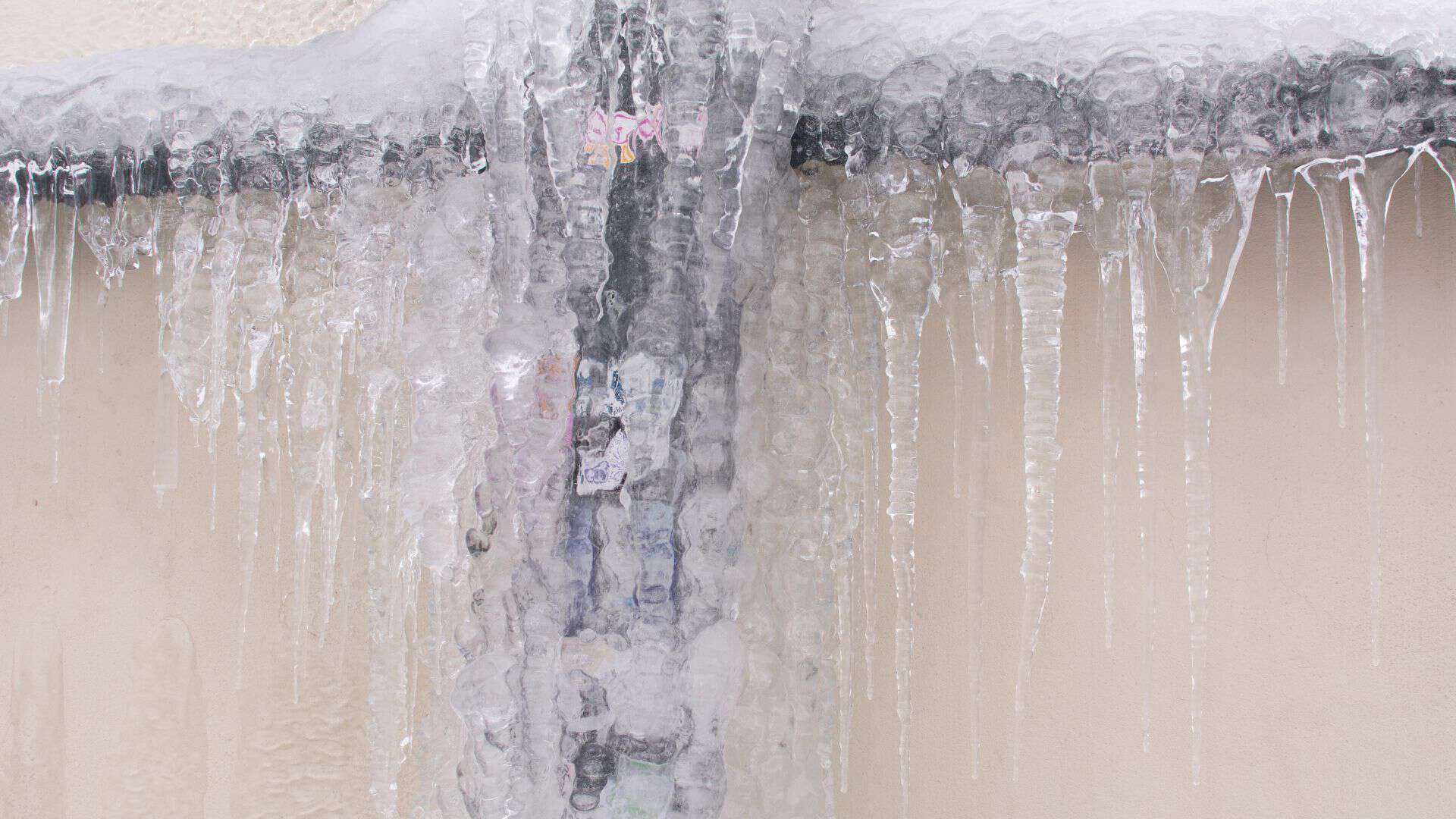
For pipes you can see and access — under a sink, in a basement, along an exposed wall — gentle, steady heat applied over time can thaw a frozen section without causing a burst. A hair dryer on a low setting, an electric heating pad wrapped around the pipe, or even warm towels changed out regularly can work. Start from the faucet end and work back toward the frozen section so that melting water has somewhere to go.
What you should never do is use an open flame — a propane torch, a heat gun set too high, or a space heater aimed directly at the pipe from close range. Rapid, uneven heating can cause an already-stressed pipe to rupture immediately. It’s also a fire hazard, particularly near the wooden framing common in older Cook County homes.
The bigger question is whether the pipe is in a location you can actually reach. Pipes inside walls, under concrete slabs, or in crawl spaces that aren’t safely accessible are not DIY thawing situations. Applying heat to a pipe you can’t see — or using a heat source that could reach framing, insulation, or wiring — is how a plumbing problem becomes a structural or fire emergency.
If there’s any doubt about where the freeze is located, or if you’ve applied heat for 30 minutes without results, that’s when you call a licensed plumber. We can use specialized pipe thawing equipment to safely address the freeze without risking further damage. And critically, we won’t just thaw the pipe and leave — we’ll inspect it for cracks or weakening that may have occurred during the freeze, and we’ll tell you honestly whether the pipe needs to be replaced before the next cold snap hits.
One more thing: a pipe that has frozen once is more likely to freeze again. The conditions that caused it — inadequate insulation, a draft, proximity to an exterior wall — haven’t changed. Getting a professional assessment after a freeze event is worth doing even if the pipe thawed without bursting.
A burst pipe that goes undetected — or that bursts while you’re away from home — can release more than 250 gallons of water per day. Even a crack less than one-eighth of an inch wide can cause catastrophic flooding. One inch of standing water in a typical home can cause up to $25,000 in damage, according to FEMA data. That’s not a worst-case number. That’s a realistic outcome for a pipe that lets go inside a wall and isn’t caught quickly.
In Cook County, where so many homes have finished basements used as living space, the secondary damage from a burst pipe is often more expensive than the pipe repair itself. Saturated drywall, ruined flooring, damaged electrical systems, and mold that develops within 24 to 48 hours of water exposure all compound the original problem. The average insurance claim for water damage and freezing runs $15,400 nationally — and in Chicago, where labor rates and the complexity of accessing pipes in older homes add cost, the actual number is frequently higher.
If you’re dealing with active flooding from a burst pipe, the sequence matters. Shut off the main water supply first. Then turn off electricity to the affected area at the breaker if there’s any water near outlets, appliances, or electrical panels — water and live circuits are a serious safety hazard. Then call a plumber. Emergency rooter service is available around the clock for situations like this, and getting a licensed professional on-site quickly limits how far the damage spreads.
For commercial property owners and landlords managing multi-unit buildings in Cook County — two-flats, three-flats, apartment complexes — the stakes are even higher. A burst pipe in a rental unit affects multiple tenants, triggers insurance and liability questions, and can take a property offline for weeks if the damage is severe. We handle commercial emergency plumber response regularly, and the process for commercial properties is different enough from residential work that it’s worth making sure whoever you call has real experience with it.
The honest bottom line: emergency basement flooding from a burst pipe is not a situation where waiting to see if it gets better is a reasonable option. Every hour of delay is more water, more damage, and more cost.
Frozen pipe prevention comes down to a few things done consistently: insulate the vulnerable pipes, seal the drafts that let cold air reach them, keep the heat on, and know where your shutoff valve is before you need it. Those steps won’t guarantee you’ll never have a problem — Chicago winters don’t make guarantees — but they dramatically reduce the odds.
What matters just as much is knowing who to call when something does go wrong. We answer at 2 a.m. on a Sunday, give you a real price before starting work, and have spent years dealing with the specific plumbing challenges of Cook County homes. That’s a different resource than a generic emergency line.
If you’re not sure whether your pipes are adequately protected going into winter — or if you’ve already had a freeze event and want a professional eye on the situation — All Rooter Hydro Jetting Experts Inc is available 24/7 and offers free estimates. Reach us by call or text at 708-669-3570.
—
FREQUENTLY ASKED QUESTIONS
**What temperature do pipes start to freeze?** Pipes can begin to freeze at 32°F, but the risk increases significantly once temperatures drop below 20°F. In Cook County, where polar vortex events regularly push overnight lows to -10°F or colder with wind chills reaching -40°F, even pipes that are partially insulated can be at risk during a sustained cold snap.
**How much does an emergency plumber cost in Cook County?** Emergency plumber rates in Cook County typically run $100 to $350 per hour, with after-hours and weekend calls often running higher during peak winter demand. Trip fees of $100 to $300 are also common. The best way to avoid surprise costs is to ask for a clear price upfront before any work begins — which is standard practice for us.
**Does homeowners insurance cover frozen pipes?** Usually, yes — if the burst was sudden and accidental. What insurance typically won’t cover is damage from gradual leaks or from pipes that froze because a home was left unheated. If you’re filing a claim, document everything before cleanup begins and contact your insurer as soon as possible.
**What should I do if my water heater is leaking in winter?** A leaking water heater in winter is an urgent situation, not a “watch and wait” one. Turn off the cold water supply to the unit and, if it’s a gas heater, turn the gas valve to the pilot position. Then call a plumber. Water heater failures are more common in winter because the unit works harder in cold conditions — and an older unit that’s already showing signs of trouble is unlikely to make it through the season without intervention.
**Do you have a plumber available on Sundays and holidays?** Yes. We offer 24/7 emergency plumbing service every day of the year, including Sundays and holidays. Plumbing emergencies don’t follow business hours, and neither do we. You can call or text 708-669-3570 at any time.
**What counts as a water heater emergency?** No hot water at all, water pooling around the base of the unit, a strong sulfur or gas smell near a gas water heater, or a pressure relief valve that’s actively discharging water — any of these warrant an immediate call. In Cook County winters, losing hot water isn’t just an inconvenience. It can signal a failure that’s about to get significantly more expensive if it’s not addressed quickly.
Article details:
Share:
Continue learning: