Wondering what hydro jetting actually costs in Cook County, IL? Here's a clear, honest breakdown — by job type, property size, and what drives the price up or down.
Share:
Summary:
If you’ve already had your drain snaked once or twice and you’re still dealing with the same problem, you’re probably wondering whether hydro jetting is actually worth the extra cost — or whether you’ll just be back here again in six months. That’s a fair question, and it deserves a real answer.
Most cost guides give you a national average and call it a day. This one focuses on Cook County specifically — because our region’s housing stock, soil conditions, and pipe materials create a different picture than what you’ll find in a newer suburb or a warmer market. Here’s what you actually need to know.
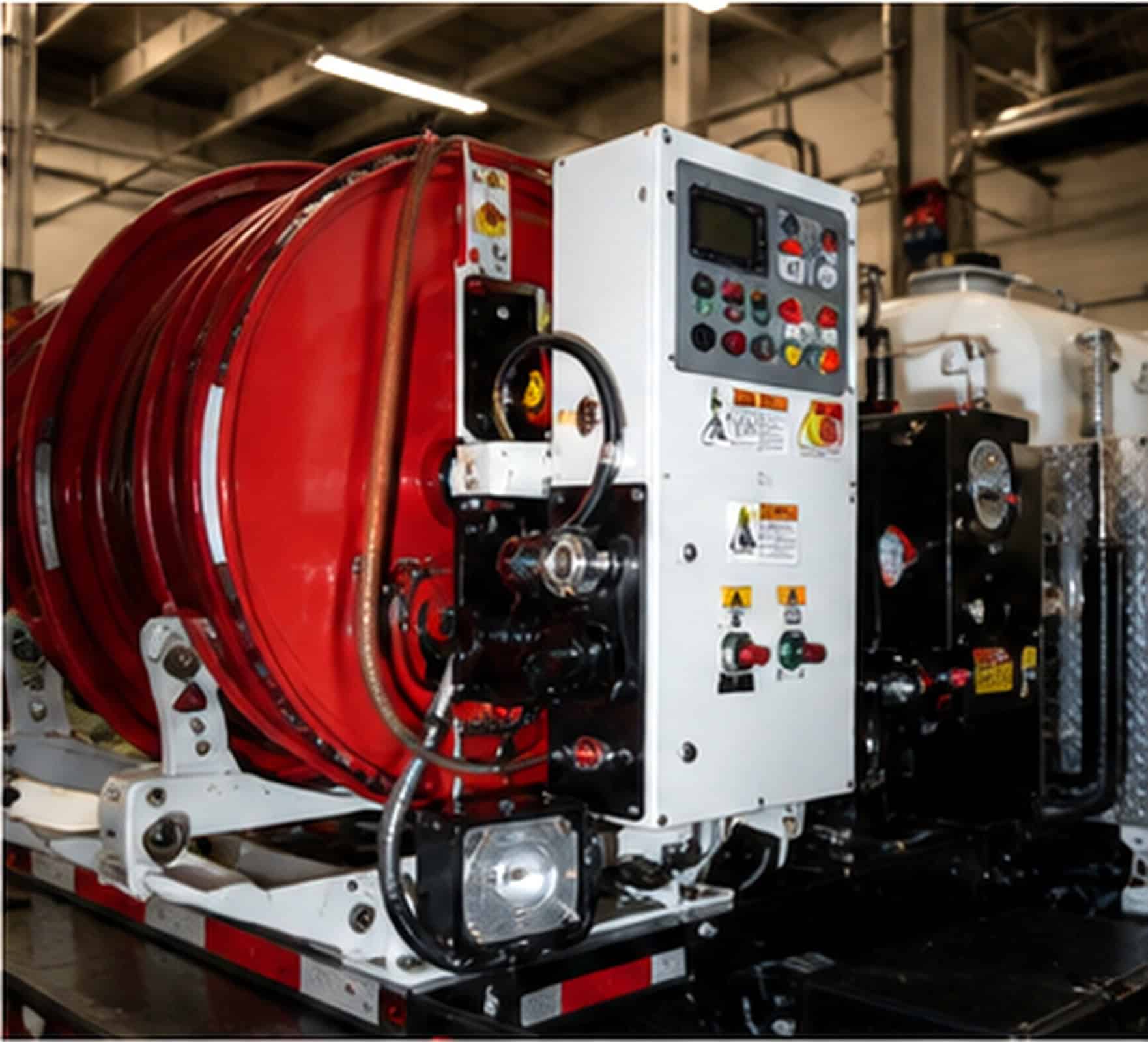
Hydro jetting sends a high-pressure stream of water — typically between 1,500 and 4,000 PSI — through your drain or sewer line using a specialized nozzle that cleans in multiple directions at once. It doesn’t just punch a hole through a clog the way a snake does. It strips grease, mineral scale, and root intrusion off the pipe walls entirely, leaving the line as close to clean as it can get without replacing it.
In Cook County, the average homeowner pays around $492 for a residential hydro jetting service, with most jobs falling somewhere between $363 and $622. Larger or more complex jobs — severe blockages, long sewer runs, or pipes that haven’t been cleaned in years — can push costs higher, while a straightforward sink or floor drain will typically land at the lower end of that range.
The biggest variable is the nature of the blockage itself. A grease buildup in a kitchen drain line is a different job than a main sewer line packed with roots and decades of scale. The more severe and widespread the buildup, the longer the job takes — and the more it costs.
Pipe accessibility matters too. If the cleanout is easy to reach and the line runs straight, the job is faster. If we have to work around a finished basement, navigate a complex layout, or deal with a line that hasn’t been touched since the Eisenhower administration, expect the price to reflect that.
Then there’s pipe condition — and this is where Cook County’s housing stock becomes directly relevant. A significant share of homes across the region — particularly in neighborhoods like Archer Heights, Brighton Park, Marquette Park, and across the bungalow belt on the Southwest and Northwest sides — were built between 1910 and 1950. Many of those homes still have their original cast iron or clay tile sewer laterals.
Before we hydro jet an aging pipe, we always run a camera inspection first to confirm the pipe can handle the pressure. That inspection is a separate line item, typically in the $150–$300 range, but it protects you from the much worse outcome of a high-pressure blast damaging a pipe that was already on its last legs.
Emergency service is another cost driver. If you’re calling at 11 p.m. because your basement is backing up, you’re going to pay more than you would for a scheduled appointment — and that’s true across the industry. The premium is real, but so is the problem you’re trying to solve.
Finally, residential and commercial jobs are priced differently. A single-family home is a different scope than a restaurant grease trap line or a multi-unit building with a shared main. Our commercial hydro jetting in Cook County typically runs between $800 and $2,500, depending on the size and complexity of the system.
This is the question most people don’t think to ask — and it’s the one that usually changes the math.
Traditional drain snaking costs between $150 and $350 per visit. For a one-time clog, that’s a perfectly reasonable solution. But if you’re calling a plumber every six to twelve months for the same drain, you’re not solving the problem — you’re managing it. In Cook County’s older housing stock, that cycle is genuinely common.
Here’s why. Cook County’s clay-heavy soils hold moisture around pipe joints year-round, which creates ideal conditions for root growth. When we snake a root intrusion, we clear the drain — but the roots grow back, often faster than before, because the conditions that attracted them haven’t changed. Hydro jetting removes the root mass from the pipe wall entirely, which significantly slows regrowth and extends the time between service calls.
The same logic applies to grease accumulation in kitchen drain lines. Snaking opens the flow. Hydro jetting clears the buildup off the walls. If your kitchen drain is slow again three months after it was snaked, the issue isn’t the snake — it’s that snaking was the wrong tool for that particular problem.
Cook County also runs a combined sewer system in many of its older neighborhoods, meaning stormwater and sanitary sewage share the same pipes. When those lines are partially restricted, a heavy rain event can push sewage back into basements. Hydro jetting a partially blocked main line before storm season isn’t just maintenance — it’s risk management. The cost of one hydro jetting service is a fraction of what a sewage backup cleanup, property damage, and emergency call-out will run you.
So is hydro jetting more expensive than snaking? Yes, upfront. But for the right problem — recurring clogs, grease-packed lines, root intrusion in aging clay or cast iron pipes — it’s almost always the cheaper option when you’re looking at a 12-to-24-month window.
For homeowners, hydro jetting is usually a reactive decision — something goes wrong, and you call a plumber. For commercial property owners and managers in Cook County, the calculus is different. A sewer backup in a multi-unit building or a restaurant isn’t just an inconvenience. It’s a health code issue, a tenant relations problem, and a potential liability.
Scheduled hydro jetting — once or twice a year for high-use commercial lines — costs significantly less than emergency service, and far less than the downstream consequences of a backup. That’s a simple ROI argument, and it holds up across almost every commercial property type.

It depends on the property type and how hard the drain system works. A restaurant kitchen puts an enormous amount of grease, food solids, and hot water through its drain lines every day. Without regular cleaning, those lines accumulate buildup faster than almost any residential application. For a busy kitchen, quarterly or semi-annual hydro jetting is often the difference between smooth operations and a surprise shutdown.
Multi-unit residential buildings — the two-flats, three-flats, and larger apartment buildings that make up a huge share of Cook County’s housing stock — deal with a different set of challenges. Shared main lines accumulate soap scum, hair, and debris from multiple units simultaneously. When those lines start to slow down, the problem affects every tenant, and the complaints come from all directions at once. Annual hydro jetting on shared lines is a reasonable maintenance standard for most buildings of this type.
Commercial drain cleaning also requires equipment that’s scaled to the job. Residential hydro jetters operate at lower pressure and flow rates than commercial-grade units. A plumber showing up to a restaurant or apartment building with equipment sized for a single-family home isn’t going to get the same result — and the difference will show up quickly. When you’re evaluating a commercial drain cleaning service, it’s worth asking specifically about the equipment being used and whether it’s appropriate for the scope of your property.
For Cook County property managers dealing with older buildings — and there are a lot of them, particularly in Chicago’s inner-ring suburbs and dense urban neighborhoods — the pipe age factor adds another layer. Cast iron and clay lines that are 60 or 70 years old require a more careful approach. A camera inspection before jetting isn’t just best practice; it’s the only responsible way to assess whether the line can handle high-pressure water without causing more damage than the cleaning would solve.
A few questions come up consistently when people are pricing hydro jetting in Cook County, and they’re worth addressing directly.
The first is whether hydro jetting will damage old pipes. It’s a legitimate concern — especially in Cook County, where a large portion of the residential and commercial building stock predates 1960. The honest answer is that it depends on the condition of the pipe, and the only way to know that is a camera inspection beforehand. We won’t jet a pipe we haven’t looked at first. If someone quotes you a hydro jetting job without mentioning an inspection, that’s a red flag.
The second question is about the difference between hydro jetting and rooter service. “Rooter” is the Cook County term for drain snaking — it’s been part of the local plumbing vocabulary for decades, partly because of how common root intrusion is in the region’s clay soil. Rooter service clears the drain by cutting through or pushing past the obstruction. Hydro jetting removes the obstruction from the pipe wall entirely. For a simple clog, rooter service may be all you need. For a line with root intrusion, grease accumulation, or mineral scale, hydro jetting delivers results that last significantly longer.
The third question is about insurance coverage. Most standard homeowners insurance policies don’t cover the cost of drain cleaning or hydro jetting as a routine maintenance service. However, if a sewer backup causes property damage, your policy may cover the remediation — depending on whether you have sewer backup coverage as an add-on. That’s a conversation worth having with your insurance agent, particularly if you’re in an older Cook County neighborhood with a combined sewer lateral.
Finally, people ask how to know if they actually need hydro jetting or just a standard snaking. If your drain has slowed down or backed up once and it’s a relatively new home, snaking is probably the right first step. If you’re dealing with a recurring problem — the same drain backing up every few months, a main line that’s been rodded before and is slow again, or a commercial line that’s never been professionally cleaned — hydro jetting is worth the conversation.
The cost of hydro jetting in Cook County is straightforward once you know what drives the price. The type of blockage, the age and condition of your pipes, whether a camera inspection is needed, and whether you’re dealing with a residential or commercial property — those are the factors that move the number. For most Cook County homeowners, a standard residential job lands between $363 and $622. Commercial work runs higher.
What shouldn’t be a variable is whether you know the cost before work begins. Upfront pricing isn’t a bonus feature — it’s the baseline expectation, and it’s how every job should be handled.
If you’re ready to get a straight answer on what your specific situation will cost, we’ve been doing this work in Cook County since 2000. Give us a call, send a text, or ask about financing through Hearth if you’d rather not pay everything at once. We’ll tell you exactly what we’re looking at before we touch anything.
Article details:
Share:
Continue learning: