A smart sensor can warn you about a leaking supply line, but it won't catch a sewer backup. Here is what protects a Cook County basement.
Share:

Summary:
It is late, the basement floor drain is gurgling, and you are searching emergency plumber 24/7 with one hand while hunting for a flashlight with the other. Or maybe things are calmer, and you just installed a smart leak detector and wonder what it protects you from.
Here is the short version. Those sensors do a real job, but they watch the clean water coming into your home. They cannot see sewage coming back up, and in Cook County, where most of the sewer system was built before 1930, that gap matters. Let us look at what a sensor catches and what it leaves to you.
Water damage and freezing made up 27.6% of homeowners insurance claims in 2022, second only to wind and hail, according to Insurance Information Institute data. So it is no surprise insurers like sensors. An often-cited insurer study found that 93% of water damage costs could be prevented or reduced with sensors paired with an automatic whole-house shutoff valve.
That is a strong result for the right kind of leak: a cracked supply line, a failing water heater, a dishwasher hose letting go while you are at work. The sensor spots the water early, and the valve stops more clean water from coming in.
Notice what all of those have in common. They are supply-side problems, with pressurized water arriving from the street. Sewage travels the opposite direction, and that is a different problem entirely.
Partly, and only the way a smoke alarm handles a fire. A sensor on the floor near a basement drain can tell you water or sewage has reached that spot, which is useful at 3 a.m. when you are asleep upstairs. What it cannot do is stop the backup or warn you before it starts.
A main-line shutoff valve does not help either. It closes off the clean water entering your house, and sewage is not coming through that pipe.
So if you bought a sensor, you did not waste your money. Insurers recommend them, and a supply leak can ruin a basement just as thoroughly as a storm can. You just have a device covering one half of the picture.
The other half is the pipe that carries wastewater out. Here is how it is laid out in Cook County: your home private pipe connects to a neighborhood sewer owned by the municipality, and that sewer feeds the larger intercepting sewers run by the Metropolitan Water Reclamation District, or MWRD. In Chicago and Cook County, rain, runoff, and household wastewater share those pipes, which is called a combined sewer system. More than 3.7 million people in the area are served this way.
The MWRD Cook County Flood Resource Guide points out something that surprises people. Basement backups can happen even when the big system has room, because a clogged local line cannot carry the flow. That is the stretch you can do something about, and no sensor will tell you a root ball is growing in it.
Most of Cook County sewer system was built before 1930, and it was not designed for the weather we get now. The MWRD says the system can get overwhelmed after just two-thirds of an inch of rain in an hour. WBEZ reported that the old system was designed around 2 inches of rain in 24 hours, and the Chicago area has recently seen about four times that in a single day.
When the pipes fill, water looks for the lowest exit, and sometimes that is your floor drain. Downspouts connected to the sewer make it worse because they send roof water into the same pipes, which is why the MWRD sells rain barrels to Cook County residents. The district had already issued 15 rain alerts by mid-August 2023, tying 2022 for the most in a year, and the July 2023 flood put plenty of basements across Cook County under water.
It does not land evenly, either. An MWRD official has said Chicago South and West sides get hit probably five times harder by floods, thanks to storm patterns and older infrastructure. After a recent round of weekend rain, WTTW reported two MWRD reservoirs near capacity.
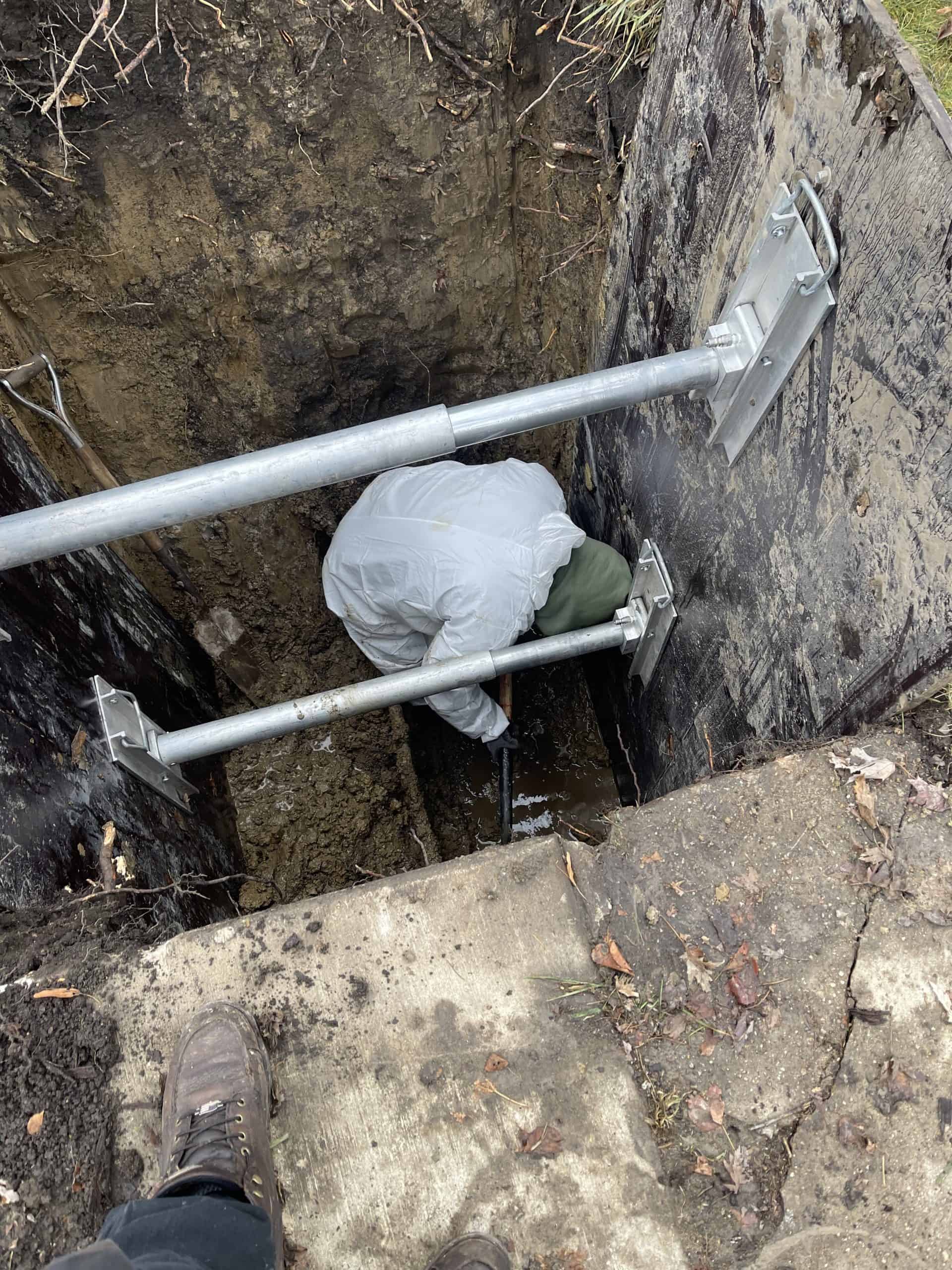
You cannot change the weather, and you cannot change the Deep Tunnel, the 110 miles of tunnels under Cook County sewers that lead to three reservoirs. You can change what is happening in your own line. A lateral that is clear of roots and grease has a better chance of moving water out when the system is under strain. One packed with roots, or one with a collapsed section, is more likely to fail you when it matters. That is why we start with a look inside the pipe instead of a guess.
Predictive gets thrown around with smart home gear, and for supply lines it makes sense: a device learns your normal water flow and flags unusual use. For sewer lines, the honest version is less high-tech and more useful. It means looking inside the pipe before it fails.
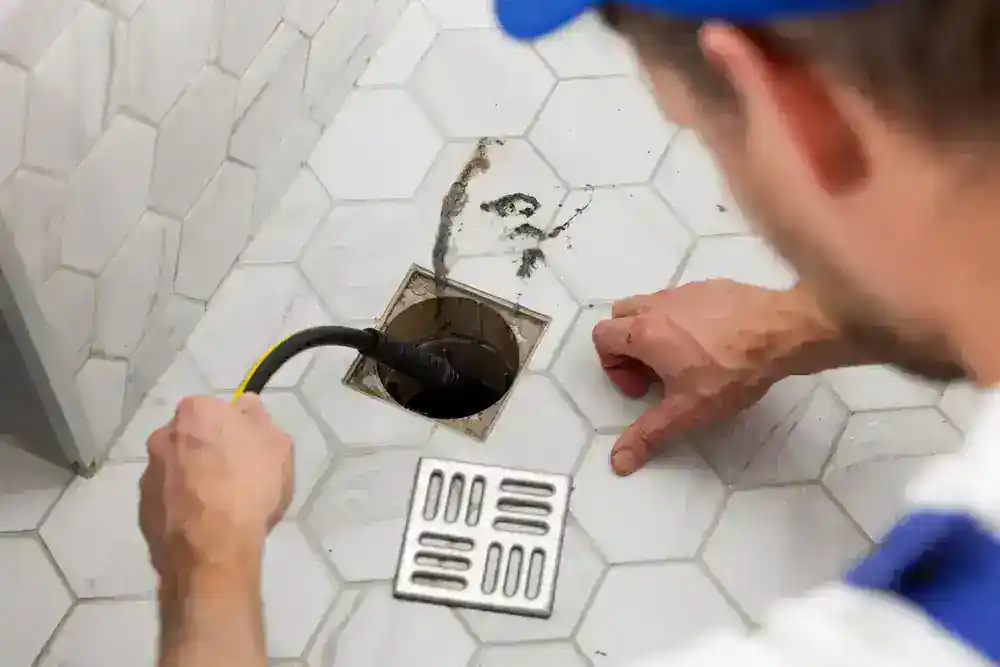
A camera inspection shows roots working into a joint, grease building up on the walls, scale, a low spot where water pools, or a section that has shifted out of line. Scheduled hydro jetting can then clear what the camera found. Early signs like slow drains and gurgling are your cue to book it.
Think of it as the layer a sensor cannot replace. Your sensor tells you something is wrong right now. A camera shows you what is likely to go wrong next.
It depends on the pipe, which is exactly why we do not jet blind. Hydro jetting uses high-pressure water to scrub the full wall of the pipe, so it works well on heavy roots, grease, and scale. Rodding, by comparison, mostly bores a hole through the clog and can leave buildup behind.
But an older line that is cracked, offset, or partly collapsed needs a different plan, and you will only know that from a look inside.
So a visit goes like this. We run a camera down the line and show you the footage. If the line is dirty but sound, jetting makes sense. If the camera shows a failed section, we explain your repair or replacement options and give you the price before work begins. After jetting, we send the camera back through so you can see the line run clear.
Hydro jetting is where we got our name, and cold weather does not stop us. Our job photos show a commercial building being jetted in 15-degree weather. For business owners, our commercial plumbing page notes that most commercial hydro jetting jobs in Cook County run $300 to $800, and complex main-sewer situations can cost more.
One piece of advice, whoever you hire: if a plumber quotes you a sewer replacement without having scoped the line, ask for the video. A reasonable plumber will have one.
Stop using water first. Every toilet, sink, shower, dishwasher, and washing machine in the house feeds the same line, and each flush gives the backup more to push back up. Keep everyone, pets included, out of the affected area. Sewage water is not something to wade through.
Next, take photos and video of the water, the drain, and anything damaged before you move or clean anything. The MWRD flood guide lists a sewer and drain backup rider as a protection step, and standard homeowners policies often do not cover sewer backup without one. A call to your insurer will tell you where you stand, and your photos will help if you file.
Then call us. We are open 24 hours at 708-669-3570, and you can text that number too. Tell us what is happening, if it has been raining, and if more than one drain is affected. We will tell you honestly what to expect based on current call volume and conditions.
One more question comes up a lot: whose problem is this, mine or the city? The private pipe running from your house to the street sewer is the homeowner side, while the neighborhood sewer is municipal. A camera helps show which side the trouble is on, and that is the answer you need for deciding who to call and what to tell your insurer.
Smart leak detectors are worth having, especially for the supply side of your plumbing. Just do not expect them to see the sewer, which is where Cook County combined system, older pipes, and heavy storms tend to cause trouble. The most practical protection is knowing what is inside your line before the next big rain, and knowing what to do in the first ten minutes if it backs up anyway.
At All Rooter Hydro Jetting Experts Inc, we are a locally owned company in Cook County, IL, licensed, bonded, and insured, and we answer the phone around the clock. Call All Rooter Hydro Jetting Experts Inc at 708-669-3570 today to get your Cook County home back on track.
Article details:
Share:
Continue learning: