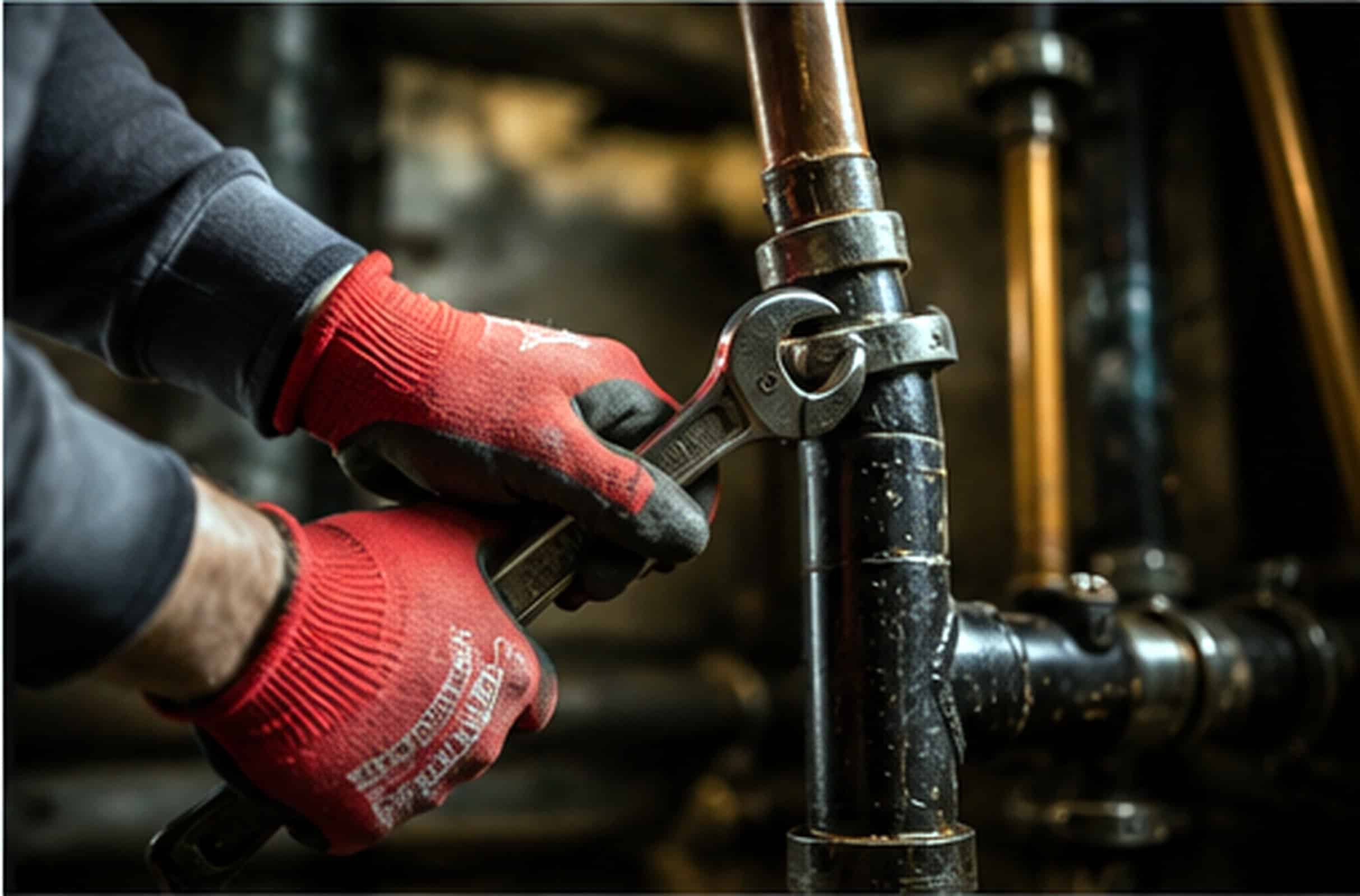
Chicago winters don't just freeze pipes — they set them up to burst during the thaw. Here's what Cook County homeowners need to know before it happens to them.
Share:

Summary:
Most people assume pipes burst during the coldest part of winter — the deep freeze, the polar vortex, the nights when it doesn’t get above zero. The truth is more surprising, and more dangerous. Pipes most often burst during the warm-up that follows. Ice expands, pressure builds, and when temperatures rise just enough for that pressure to release — that’s when the pipe gives way. In Cook County, where temperatures can swing 40 degrees in 48 hours, that pattern plays out every single winter. If you’re a homeowner here, understanding what’s actually happening — and what to do about it — matters more than most people realize.
The first five minutes after a pipe bursts will do more to determine your total repair cost than almost anything else. Water moves fast. It soaks into subfloor, drywall, and insulation within minutes — and once it does, you’re no longer dealing with a plumbing repair. You’re dealing with water damage restoration, possible mold remediation, and a much larger bill.
The single most important thing you can do is get to your main water shut-off valve and turn it off. In most Cook County bungalows and two-flats, that valve is in the basement near the front of the house. If you don’t know where yours is, find it now — before you ever need it. Once the water is off, open a faucet on the lowest floor to relieve any remaining pressure in the lines.
After that, document everything before you touch it. Take photos and video of the water, the affected walls, floors, and any visible pipe damage. That documentation is what your homeowner’s insurance adjuster will ask for, and having it ready speeds up the claims process significantly.
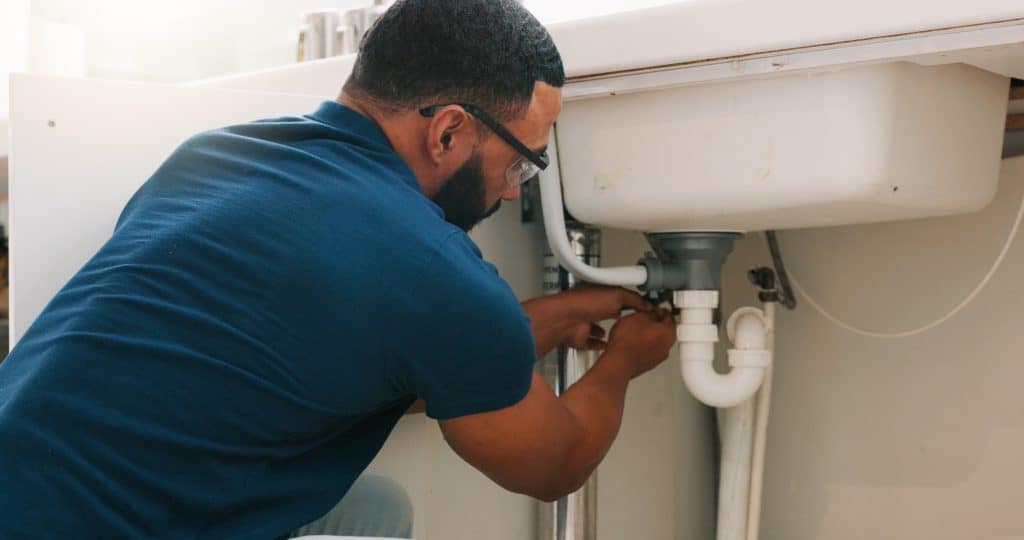
Once you’ve shut off the water and documented the damage, the next call is to a licensed plumber — and the repair process is more involved than most homeowners expect. A good burst pipe repair isn’t just patching the break and calling it done. It starts with diagnosing the full picture.
We typically use a camera inspection to locate the exact point of failure and assess whether surrounding pipe sections have been weakened. This matters because a pipe that bursts in one spot often has stress or corrosion in nearby sections — and those are the pipes that fail six months later if they’re not addressed. Skipping the inspection to save time is exactly how homeowners end up calling a plumber twice.
Once the damaged section is identified, we isolate it, cut out the failed portion, and replace it with new pipe. Depending on where the burst occurred — inside a wall, under a slab, in the ceiling — there may be drywall or flooring work involved to access the pipe. That’s normal, and we’ll walk you through what needs to happen before we start cutting.
After the repair, the line should be pressure-tested to confirm the fix is holding. If there’s been significant debris, scale, or root intrusion in the system — which is common in Cook County’s older homes — hydro jetting the affected line clears out everything that snaking alone can’t reach. High-pressure water flushes the pipe completely, not just pokes a hole through the buildup. It’s a longer-lasting result, and it addresses the conditions that contributed to the failure in the first place.
Repair costs in the Cook County area typically run between $200 and $500 for standard jobs. Major damage — particularly when water has reached walls, ceilings, or flooring — can push into the $1,000 to $2,000 range or beyond. The difference between those two outcomes usually comes down to how quickly the water was stopped.
Cook County doesn’t just get cold — it gets cold, then warm, then cold again, sometimes within the same week. That cycle is harder on pipes than a sustained deep freeze, and it’s something that plumbers who work exclusively in warmer climates simply don’t encounter the same way.
Here’s what happens inside the pipe: when temperatures drop below freezing, water in the pipe begins to freeze and expand. That expansion creates pressure between the ice blockage and the closed faucet downstream. If the pressure builds enough, the pipe wall gives way. But the pipe doesn’t always burst while it’s frozen solid. Often, it holds — barely — until the temperature rises and the ice starts to melt. That’s when the crack opens, the pressure releases, and water starts moving through a break you didn’t know was there.
This is why burst pipe emergencies in Cook County tend to spike not during the coldest nights, but in the day or two after a cold snap breaks. Homeowners wake up to wet ceilings, flooded basements, and water running down interior walls — on a morning when it finally feels like the worst of winter is over.
The pipes most vulnerable to this pattern are the ones that run through unheated spaces: exterior walls, uninsulated attics, crawl spaces, and garages. In the bungalows and two-flats that make up most of Archer Heights, Pilsen, Bridgeport, and Back of the Yards, those unheated runs are extremely common. Many of these homes were built in the 1920s through the 1950s, long before modern pipe placement standards accounted for Cook County’s specific climate demands.
Leaving a faucet dripping during a cold snap — particularly on lines that run through exterior walls — keeps water moving and reduces the chance of a full freeze. It’s a small habit that can prevent a very large problem.
A burst pipe in the upper floors of a Cook County home doesn’t stay there. Water follows gravity, and in most homes throughout the region, that means it ends up in the basement — often before the homeowner even realizes there’s a problem. By the time you see water on the basement floor, it’s already been traveling through walls and subfloor for some time.
Cook County’s combined sewer system adds another layer of risk. During heavy rain events, that system can be overwhelmed, causing sewer backups that push water up through basement floor drains. If a pipe bursts during or after a major storm, you may be dealing with both a plumbing failure and a sewer backup simultaneously. It’s not common, but it happens — and Cook County homeowners in older neighborhoods should be aware of it.

This is one of the most common questions we hear after a burst pipe, and the answer — in most cases — is yes. Standard homeowners insurance policies in Illinois typically cover sudden and accidental water damage from a burst pipe. What they generally don’t cover is damage from a slow leak that went unaddressed, or flooding that originates from outside the home.
The key word is documentation. Insurance adjusters need to see evidence of what happened, when it happened, and what was damaged. That means photos and video taken before cleanup begins, a written assessment from a licensed contractor, and a clear record of the repair that was made. When your plumber is licensed and insured — and provides a written estimate before starting work — that paperwork becomes part of your claim file.
One thing that trips up homeowners in Cook County: hiring a contractor who holds only an Illinois state plumbing license but not a City of Chicago license. Illinois requires both for compliant work within Chicago city limits. The City of Chicago issues its own separate plumbing license through the Buildings Department, distinct from the state credential issued by the Illinois Department of Public Health. If the work isn’t performed by someone holding both licenses, it may not be code-compliant — which can complicate your insurance claim and create liability down the road.
If you’re unsure whether your coverage applies, call your insurance agent before you start cleanup. Ask specifically about sudden and accidental water damage, and ask what documentation they’ll need. Most claims go smoothly when the contractor’s paperwork is in order.
Not every burst pipe announces itself with a flood. Some of the most damaging failures happen slowly, behind drywall or under flooring, where water accumulates for days before it becomes visible. By the time you see a stain on the ceiling or feel soft spots in the floor, the damage is already significant.
There are a few signs worth taking seriously before you reach that point. Unexplained drops in water pressure — especially if they come on suddenly — can indicate a break in the line. Discolored water, particularly a rust-brown tint, often signals that a galvanized steel pipe has corroded through. A water bill that jumps without any change in usage is another reliable indicator that water is going somewhere it shouldn’t.
In Cook County’s older housing stock, these warning signs are more common than most homeowners expect. Many homes throughout Bridgeport, Berwyn, Oak Park, and Chicago Heights still have original galvanized steel or cast iron pipe systems that were installed decades ago. Galvanized steel corrodes from the inside out — the exterior looks intact while the interior is rusting away, restricting flow and weakening the pipe wall over time. You can’t see it happening, which is exactly what makes it dangerous.
If you notice any of these signs, a camera inspection is the most direct way to find out what’s actually going on inside the pipe. We thread a small camera through the line and can see corrosion, cracks, root intrusion, and blockages in real time — without opening a single wall. It takes the guesswork out of the diagnosis and lets you make an informed decision about whether you’re dealing with a repair or a replacement.
The longer a hidden leak runs, the more it costs. Mold can begin developing within 24 to 48 hours of water exposure in a wall cavity. Structural damage to framing and subfloor follows. What starts as a plumbing problem becomes a construction project — and the repair bill reflects that.
If there’s one thing worth remembering from all of this, it’s that timing is everything. The difference between a manageable repair and a months-long restoration project is usually measured in hours — how quickly the water was stopped, how fast a qualified plumber arrived, and whether the damage was documented before cleanup began.
Cook County homes face real, specific risks that generic plumbing advice doesn’t fully account for: aging pipes, extreme freeze-thaw cycles, combined sewer exposure, and a dual-licensing requirement that not every contractor in the area actually meets. Knowing those factors ahead of time puts you in a much better position when something goes wrong.
If you’re dealing with a burst pipe right now — or you want a straight answer about what’s going on with your plumbing before it becomes an emergency — All Rooter Hydro Jetting Experts Inc is available around the clock. Free estimates, upfront pricing, and financing through Hearth if you need it. Reach us by call or text at 708-669-3570.
Article details:
Share:
Continue learning: