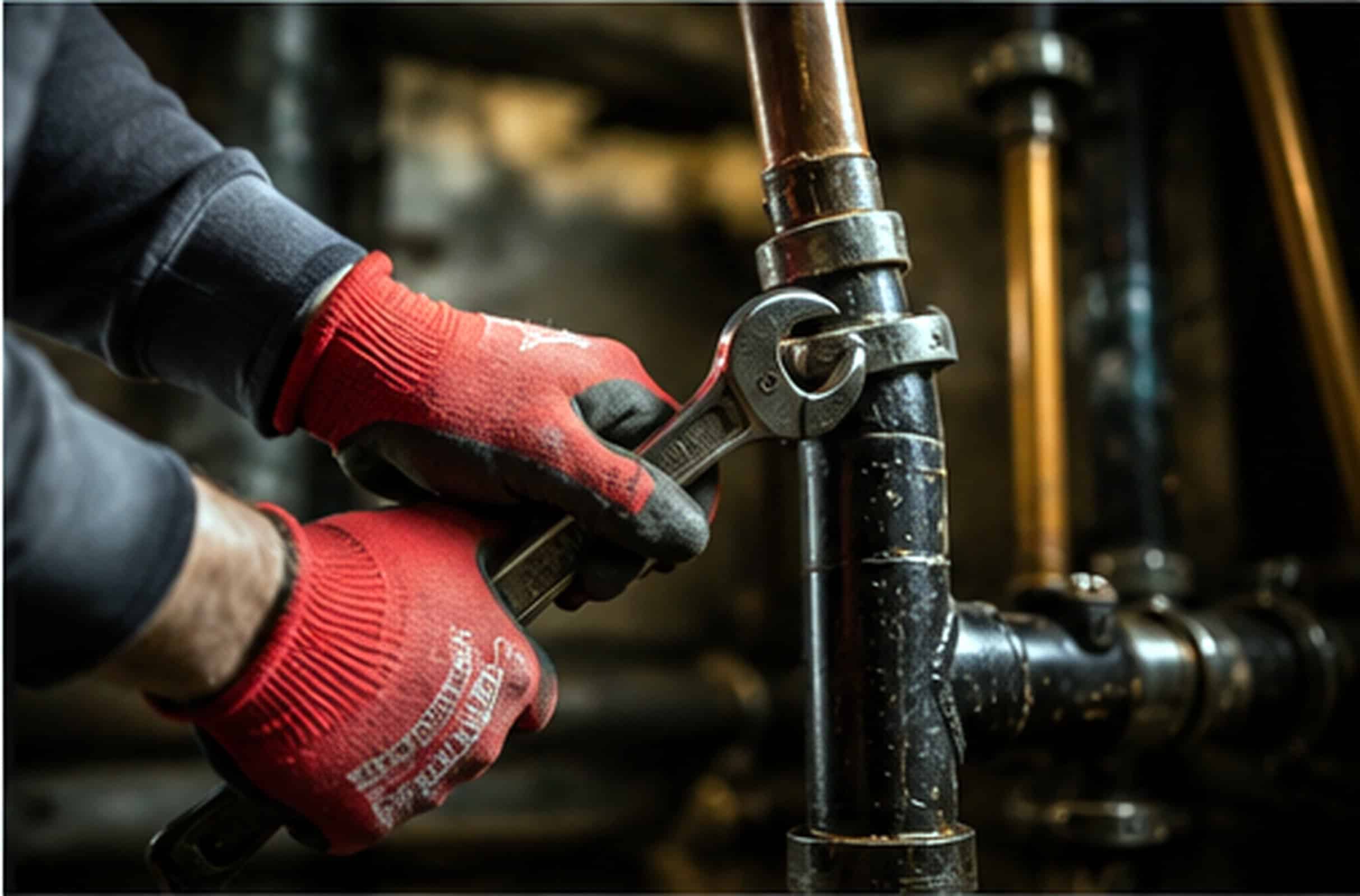
Some plumbing fixes are fine to handle yourself. Others will cost you far more if you try. Here's how to know which is which in Cook County.
Share:

Summary:
Most homeowners don’t want to call a plumber. Not because they don’t trust professionals, but because it feels like admitting defeat — or spending money you weren’t planning to spend. So you try the plunger. You pour in the Drano. You watch a YouTube video and give it a shot.
Sometimes that works. But in Cook County, where a huge portion of homes were built before 1950, the DIY calculation is different than it is almost anywhere else in the country. The pipes are older. The materials are different. And the margin for error is a lot smaller than it looks.
Here’s what you actually need to know before you decide.
There’s a real category of plumbing work that homeowners can handle safely — and it’s worth being honest about that. Replacing a showerhead, swapping out a faucet cartridge, unclogging a drain with a plunger, or tightening a supply line under the sink are all reasonable DIY tasks. They don’t require specialized tools, they don’t touch your main water line, and if you make a small mistake, the consequences are manageable.
The line starts to shift when you’re dealing with anything inside the walls, under the slab, or connected to your main drain or sewer line. That’s where the age of your home starts to matter — and in Cook County, that’s where a lot of homeowners get into trouble.
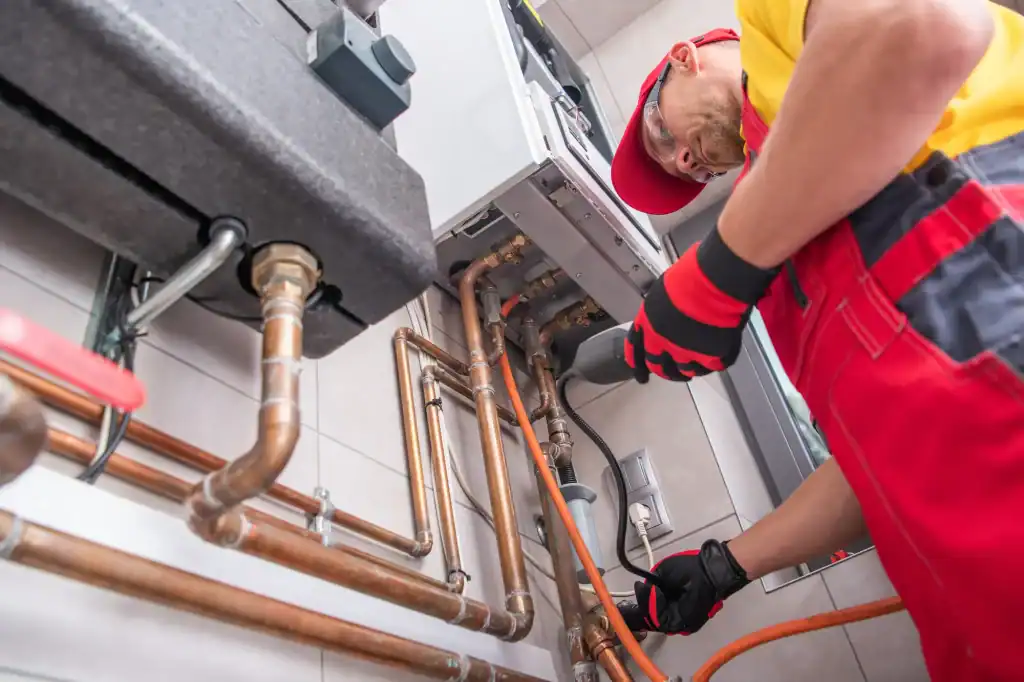
If you live in a Chicago bungalow, a greytone two-flat, or any home built between roughly 1890 and 1960, your plumbing infrastructure is operating on a completely different timeline than a newer suburban build. Galvanized steel supply lines. Cast iron drain stacks. Clay sewer laterals running out to the street. These materials were built to last — and many of them have — but after 80 or 100 years, they corrode, scale up, crack, and fail in ways that PVC or copper simply don’t.
Here’s where that creates a real problem for DIYers: a repair that’s straightforward on modern materials can backfire badly on older ones. Tightening a fitting on a corroded galvanized pipe can crack it. Running a store-bought drain snake through a scaled cast iron line can punch through a weak spot rather than clear the blockage. Pouring chemical drain cleaner into a clay lateral with root intrusion doesn’t clear the roots — it just delays the backup while potentially damaging the pipe further.
The neighborhoods throughout Cook County — Archer Heights, Brighton Park, Bridgeport, Gage Park, Marquette Park, Back of the Yards — are home to some of Chicago’s most beloved housing stock. They’re also home to some of the most plumbing-intensive maintenance needs in the metro area. The homes are beautiful, but they require a different level of care than a 2005 construction in the suburbs.
This doesn’t mean you can never DIY in an older Cook County home. It means you need to know what you’re working with before you start. If you don’t know what material your pipes are made of, or when they were last serviced, that uncertainty alone is a reason to get a professional set of eyes on the situation before you reach for a wrench.
Drain cleaning is probably the most common area where homeowners try to go it alone — and it’s also one of the most common reasons they end up calling a plumber anyway, usually after making the problem worse.
A plunger is a legitimate first step for a simple clog. If a sink or tub drains slowly and the blockage is close to the surface, a plunger or a basic hand-operated drain snake can clear it. That’s fine. But chemical drain cleaners are a different story. Products like Drano work by dissolving organic material — hair, grease, soap buildup — and they can be effective on minor clogs in modern plastic pipes. In older Cook County homes with cast iron or galvanized steel lines, repeated use of caustic chemicals accelerates corrosion. You’re trading a temporary fix for long-term pipe damage.
More importantly, a slow drain is often a symptom, not the problem itself. In Cook County’s older neighborhoods, a drain that keeps slowing down — even after you’ve cleared it — is frequently a sign of a larger blockage further down the line, root intrusion in the sewer lateral, or significant scale buildup inside the pipe. A bottle of drain cleaner doesn’t reach any of those issues. It just masks the symptom long enough to give you false confidence.
Professional drain cleaning is a different category of service entirely. We can run a video camera through your line to see exactly what’s happening inside the pipe — not guess at it from the outside. If the issue is grease buildup, scale, or root intrusion, hydro jetting uses high-pressure water to fully clear the pipe rather than just push a clog further down the line. That’s a permanent fix, not a patch.
The practical test: if you’ve cleared a drain twice in the last year and it’s slow again, stop reaching for the chemicals. The problem isn’t at the drain — it’s somewhere in the line. That’s a job for a professional with the right diagnostic tools.
Once you’ve decided to call a professional, the next question is who to call. Cook County has roughly 1,200 licensed plumbers operating across Chicago’s 77 neighborhoods and the surrounding suburbs — which sounds like plenty of options until you realize how much variation there is in quality, credentials, and honesty.
The single most important thing to verify before hiring anyone is licensure. Illinois law (225 ILCS 320) restricts plumbing work to licensed plumbers and their supervised apprentices. That’s not a technicality — it means work done by an unlicensed contractor can void your homeowner’s insurance claim if something goes wrong, and it can create real problems when you go to sell the home. Cook County also has its own registration requirements for plumbing contractors working in unincorporated areas, separate from the state license. A legitimate plumber will have no hesitation showing you their credentials.

Beyond licensure, there are a few things worth checking before you commit to anyone. First, ask for a written estimate before any work begins. A verbal quote is not a quote — it’s an opening position. Any reputable plumber will give you a written estimate that clearly outlines the scope of work and the cost. If someone is reluctant to put it in writing, that’s a signal.
Second, look for plumbers who offer free estimates. It removes the financial risk from the initial conversation and tells you something about how the company operates. A company that charges you just to show up and assess the problem has a different set of incentives than one that earns your trust before asking for your money.
Third, read reviews carefully — and look for specifics. Generic five-star reviews that say “great service, highly recommend” don’t tell you much. Reviews that name a specific technician, describe the problem that was solved, and explain how the company communicated throughout the job are far more useful. They tell you what the experience actually looks like, not just that the customer was satisfied.
Finally, ask about emergency availability. Cook County winters are brutal. The polar vortex events that hit the region periodically — temperatures dropping to -20°F or colder — create pipe-freezing emergencies that can’t wait until Monday morning. A plumber who offers genuine 24/7 emergency service, including weekends and holidays, is a different resource than one who takes after-hours calls and schedules them for the next business day.
One more thing worth knowing: one in 67 insured homeowners files a water damage or freezing claim in any given year, with an average claim of $15,400. That number has a way of reframing the cost of a professional repair. Calling a licensed plumber at the first sign of a serious problem is almost always cheaper than dealing with the downstream consequences of waiting or guessing wrong on a DIY fix.
This is one of the most common questions homeowners ask — and the honest answer is more nuanced than a simple yes or no.
Illinois law (225 ILCS 320) requires that plumbing work be performed by a licensed plumber or a plumber’s apprentice working under direct supervision. Becoming a licensed plumber in Illinois requires a minimum four-year apprenticeship, completion of an approved plumbing course, and passing both written and practical licensing exams. Licenses must be renewed annually by May 1, with continuing education requirements for renewal. This isn’t a low bar — it reflects the real complexity and risk involved in plumbing work.
In practice, minor maintenance tasks — replacing a showerhead, unclogging a drain with a plunger, swapping out a faucet aerator — fall into a gray area that no one is actively policing. But any structural plumbing work: replacing supply lines, working on drain and sewer connections, installing fixtures that require cutting into existing pipe — that’s the territory where licensure matters legally and practically.
The consequences of unlicensed work aren’t just theoretical. If an unlicensed repair fails and causes water damage, your homeowner’s insurance company has grounds to deny the claim. If you’re selling your home in Cook County and a buyer’s inspection reveals unpermitted plumbing work, it becomes a negotiating problem or a deal-breaker. And if something goes wrong during the repair itself, you have no licensed contractor’s warranty or liability insurance to fall back on.
The legal line in Illinois is drawn clearly enough that it’s worth respecting — not because someone is watching, but because the protections that come with licensed work are real and meaningful. For Cook County homeowners in older homes especially, the combination of aging infrastructure and strict licensing requirements makes professional plumbing repair the lower-risk path in most situations beyond basic maintenance.
The DIY vs. professional decision isn’t really about capability — it’s about risk. For simple, surface-level tasks in a home with modern plumbing, doing it yourself is often perfectly reasonable. But in Cook County, where a huge share of homes are running on infrastructure that’s 60 to 100 years old, the risk profile shifts. Older pipes are less forgiving. Hidden problems are more common. And the cost of a failed DIY attempt — paying for both the attempt and the professional repair afterward — adds up fast.
The clearest signal that it’s time to call a licensed plumber: you’ve tried to fix it and it keeps coming back, you can’t see where the problem actually is, or the repair involves anything beyond the most basic maintenance task.
If you’re in Cook County and want a straight answer about what you’re dealing with — no pressure, no inflated quotes — we offer free estimates and have been serving Cook County homeowners since 2000. Reach out by call or text at 708-669-3570, and we’ll give you an honest assessment of what the job actually requires.
Article details:
Share:
Continue learning: