Chicago homeowners face unique slab leak risks from clay soil and aging infrastructure. Recognize warning signs before hidden leaks destroy your foundation.
Share:

Summary:
That warm spot on your living room floor isn’t normal. Neither is the sound of water running when every faucet in your house is turned off. And your water bill jumping $80 in a month? That’s not a billing error.
You might have a slab leak—water escaping from pipes buried under your concrete foundation, silently eroding the soil that keeps your home stable. In Cook County, where clay soil shifts and 70-year-old copper pipes corrode from the inside out, these leaks destroy foundations before most homeowners realize there’s a problem. The longer you wait, the more expensive the damage becomes. Here’s what you need to know about catching these leaks early.
A slab leak happens when the water supply pipes running beneath your concrete foundation develop cracks, corrosion, or breaks. These pipes deliver water throughout your home, and when they fail underground, water escapes into the soil instead of reaching your faucets.
Chicago homes face higher slab leak risk than most other regions. The city’s infrastructure dates back decades—many homes built between the 1950s and 1980s still have their original copper pipes, now pushing 40 to 70 years old. Add Cook County’s expansive clay soil that swells when wet and shrinks when dry, and you’ve got constant pressure on aging pipes. Throw in Chicago’s brutal freeze-thaw cycles, and those pipes expand and contract until weak points finally give way.
The real danger isn’t the leak itself. It’s what happens next. Water saturates the soil under your foundation, causing it to shift and settle unevenly. Your foundation cracks. Your floors warp. Mold grows in places you can’t see. And all of this happens slowly, over months or even years, until the damage becomes impossible to ignore.
Cook County sits on clay-rich soil that behaves differently than the sandy or rocky ground found in other parts of the country. Clay absorbs water and expands. When it dries out, it contracts. This constant movement puts stress on everything touching it—including the copper pipes installed under your slab decades ago.
When your home was built, those pipes were new and flexible enough to handle some movement. But copper corrodes over time, especially when it’s in contact with soil minerals and moisture. The pipe walls thin out. Weak spots develop. And when the ground shifts during a heavy rainstorm or a winter freeze, those weak spots crack.
Chicago’s aging infrastructure makes this worse. The city was one of the first in the U.S. to install modern plumbing, starting in the 1850s. Many neighborhoods still have water mains and service lines that are 50, 60, or even 100 years old. When these older systems experience pressure fluctuations—which they do regularly—the stress transfers to your home’s pipes. High water pressure alone can accelerate corrosion and cause pipes to fail faster than they should.
You can’t see any of this happening. The pipes are buried under several inches of concrete. By the time you notice a problem, the damage has usually been building for weeks or months. That’s why understanding the warning signs matters so much. Early detection is the difference between a manageable repair and a foundation disaster that costs $10,000 or more to fix.
Several factors contribute to slab leaks in Chicagoland homes, and most properties deal with more than one at a time. Corrosion tops the list. Copper pipes react with minerals in the soil and water, gradually wearing thin from both the inside and outside. Chicago’s hard water—loaded with calcium and magnesium—accelerates this process. Over decades, tiny pinholes form, and water starts escaping.
Excessive water pressure is another major culprit. Ideal water pressure sits around 60 PSI. Anything over 80 PSI puts unnecessary stress on your pipes, causing them to expand and contract more aggressively. This constant flexing wears down joints and seams until they fail. If you’ve ever heard your pipes rattle when you turn on a faucet, that’s a sign your pressure might be too high.
Poor installation or construction damage also plays a role. Sometimes pipes get nicked or dented during construction, creating weak points that don’t fail until years later. In other cases, pipes were installed without proper protective sleeves, leaving them in direct contact with concrete. The concrete itself can be abrasive, wearing through the pipe wall as the ground shifts.
Foundation settling is particularly problematic in Cook County. As soil moisture levels change with the seasons, your foundation shifts slightly. This movement is normal to a degree, but when it’s combined with aging pipes, it creates stress points where pipes connect to fixtures or change direction. These stress points are where leaks most commonly develop. You might not notice any visible foundation cracks at first, but underground, your pipes are already compromised.
Slab leaks announce themselves in subtle ways long before they cause obvious damage. The trick is knowing what to look for. Most homeowners miss these early signals because they seem minor or unrelated to plumbing. But when you see multiple signs together, it’s time to call someone who can investigate properly.
Your water bill is usually the first indicator. If your usage habits haven’t changed but your bill jumped $50, $80, or more in a single month, water is going somewhere. Even a small slab leak can waste thousands of gallons monthly. Check your water meter with all fixtures turned off—if it’s still spinning, you’ve got an active leak somewhere in your system.
Physical signs in your home tell the rest of the story. Warm spots on your floor mean hot water is escaping and heating the concrete from below. Damp carpet or flooring that never fully dries, especially away from bathrooms and kitchens, indicates water is wicking up from underneath. And if you hear water running when everything is turned off, that’s water moving through a crack it shouldn’t be moving through.
Your floors and foundation react to water damage in specific, recognizable ways. Wood floors buckle or warp when moisture seeps up from below. Tile floors develop cracks that weren’t there before, or grout lines start crumbling. Carpet stays damp in odd places, and you might notice a musty smell that won’t go away no matter how much you clean.
Foundation cracks are more serious. Hairline cracks in your concrete slab can be normal settling, but when they widen or multiply quickly, water damage is usually involved. The water from a slab leak saturates the soil under your foundation, causing it to shift and settle unevenly. This creates stress on the concrete, and cracks form along the weakest points.
You might also notice cracks appearing in your walls, especially near the floor line. Doors that used to close easily might start sticking. Windows can become difficult to open or close. These are signs your foundation is moving, and a slab leak is often the root cause. The soil erosion happening under your slab is literally shifting the ground your home sits on.
Mold and mildew growth is another red flag. When water leaks under your slab, it creates the perfect environment for mold spores to thrive. You might see mold on baseboards, smell it in certain rooms, or notice respiratory issues getting worse at home. Mold from slab leaks is particularly dangerous because it’s growing in places you can’t easily clean—inside walls, under flooring, and within the foundation itself.
Don’t ignore these signs hoping they’ll resolve on their own. Foundation damage compounds quickly. What starts as a small crack can become a structural problem that requires tens of thousands of dollars to repair. The earlier you catch it, the more options you have for fixing it without destroying your floors or landscaping.
Twenty years ago, finding a slab leak meant guessing, jackhammering, and hoping you got the right spot. Today, licensed plumbers use technology that pinpoints leaks with remarkable accuracy before anyone breaks concrete. These non-invasive methods save you time, money, and a lot of unnecessary destruction to your home.
Acoustic leak detection is the most common approach. Specialized microphones and amplifiers detect the sound of water escaping from pressurized pipes. Even through several inches of concrete, these devices can hear the distinct hissing or whooshing sound a leak makes. Technicians move the equipment across your floor, listening for the area where the sound is loudest. That’s where the leak is.
Thermal imaging cameras add another layer of precision. These infrared devices detect temperature differences in your floor. Hot water leaks show up as warm spots, while cold water leaks create cooler areas compared to the surrounding concrete. Combined with acoustic detection, thermal imaging helps confirm the exact location before any cutting begins.
Electronic leak detection takes it further. These systems use sensors to detect moisture and pressure changes in your plumbing. Some methods involve isolating sections of your plumbing and monitoring for pressure loss, which indicates water is escaping somewhere in that section. Others use tracer gas—a harmless, detectable gas pumped through your pipes that escapes at the leak point and can be detected with specialized equipment.
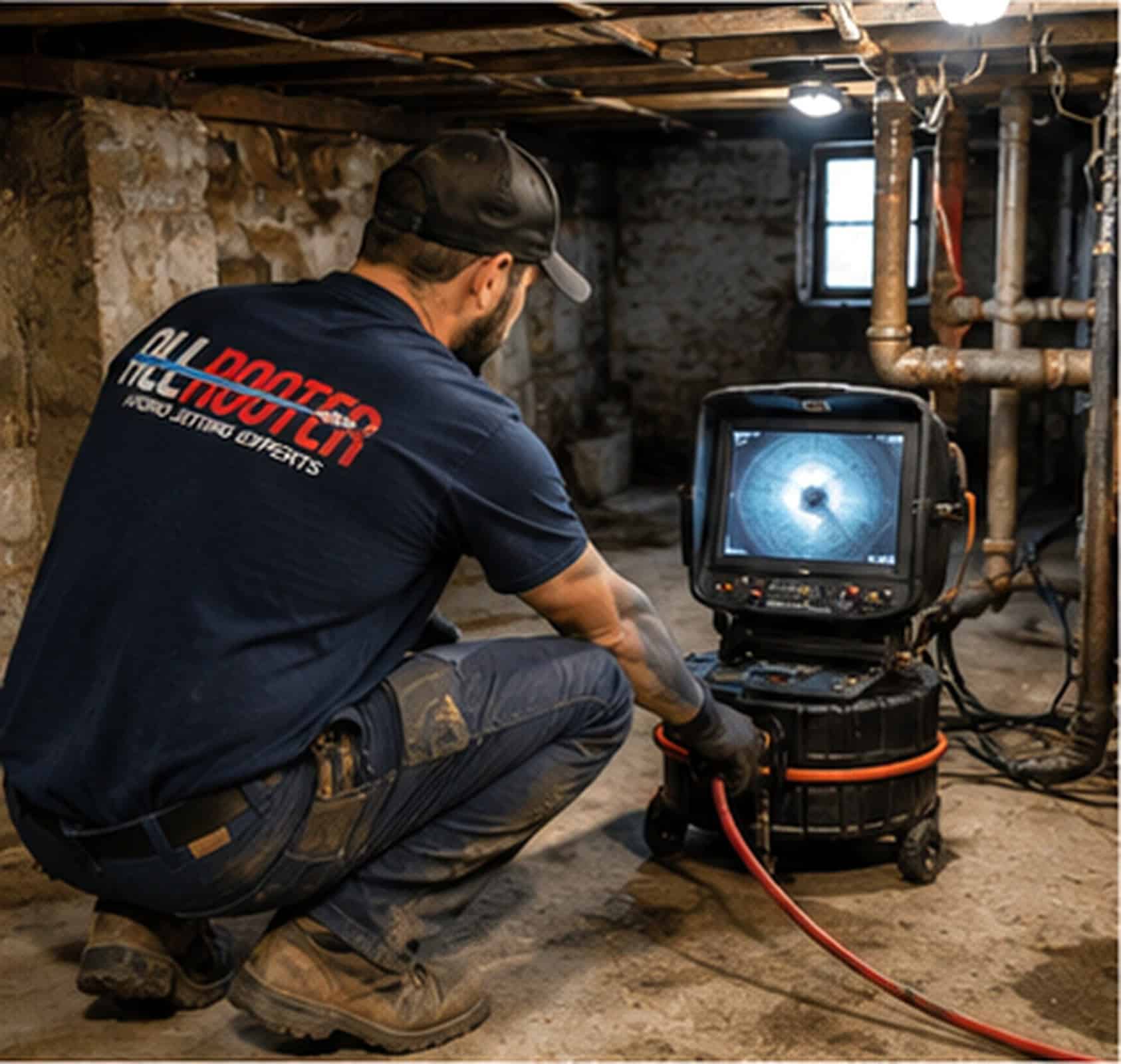
Video pipe inspection gives plumbers eyes inside your pipes. A small, high-definition camera on a flexible cable gets inserted through an access point and travels through your plumbing. This reveals cracks, corrosion, blockages, and the exact condition of your pipes. It’s especially useful for determining whether you need a spot repair or if multiple sections are compromised and need attention.
These methods work together to give you answers without tearing up your entire floor. In most cases, a licensed plumber can locate a slab leak within a few hours, confirm the extent of the damage, and give you a clear estimate for repair—all before anyone picks up a jackhammer. That’s the difference between modern leak detection and the guesswork of the past.
If you’re seeing multiple warning signs—unexplained water bills, warm floor spots, foundation cracks, or the sound of running water when everything’s off—don’t wait to investigate. Slab leaks don’t fix themselves, and the damage compounds daily. What costs $2,000 to repair today could cost $10,000 if you wait six months.
Professional leak detection gives you answers fast. Licensed plumbers with the right equipment can locate leaks accurately, explain what’s causing them, and present your repair options with upfront pricing. In Cook County, where clay soil and aging infrastructure make slab leaks more common, working with someone who understands Chicago-specific challenges makes a real difference.
We specialize in leak detection and repair throughout Cook County. Our team uses advanced acoustic and thermal detection methods to find leaks without unnecessary excavation, and we’re available 24/7 for emergencies. If you suspect a slab leak, getting a professional assessment now protects your foundation and your wallet from much bigger problems down the road.
Article details:
Share:
Continue learning: