Chicago's plumbing permit rules catch a lot of homeowners off guard. Here's a clear breakdown of what requires a permit — and what's at stake if you skip one.
Share:

Summary:
If you’ve ever had a plumber quote you on a job and wondered whether a permit was part of the deal — or even necessary — you’re not alone. It’s one of the most common questions Cook County homeowners ask, and the answers aren’t always obvious. Chicago’s plumbing code is broader than most people expect, and the gap between what homeowners assume and what the code actually requires can create real problems down the line. This guide is here to close that gap. By the end, you’ll know exactly which projects need a permit, what happens when work gets done without one, and what to look for in a licensed plumber who handles compliance correctly.
In Illinois, plumbing is one of the more tightly regulated trades — and for good reason. The state issues plumbing licenses through the Illinois Department of Public Health under the Illinois Plumbing License Law (225 ILCS 320). But here’s the part that trips people up: a state license alone isn’t enough to legally perform plumbing work in Chicago.
The City of Chicago adds its own licensing layer on top of the state’s requirements. Plumbers and plumbing contractors working within city limits must also hold a City of Chicago Department of Buildings license. That means a plumber who is fully state-licensed but hasn’t obtained city licensure isn’t compliant for work in Chicago — and any permits they attempt to pull won’t go through correctly.
When you hire someone and ask if they’re licensed, it’s worth asking which licenses they hold. The answer should include both.
This is where a lot of homeowners get confused, and it’s worth taking a minute to explain clearly. In Illinois, a licensed plumber is an individual — someone who has completed a minimum four-year apprenticeship, passed the state licensing exam, and holds a personal plumbing license issued by the IDPH. They are qualified to perform plumbing work.
A plumbing contractor, on the other hand, is the registered business entity that is legally authorized to pull permits. You can think of it this way: the licensed plumber does the work, and the plumbing contractor registration is what gives the company the legal standing to take on jobs, enter contracts with property owners, and apply for permits with the city or county.
In Cook County, plumbing contractor registration with the Cook County Department of Building and Zoning requires an IDPH Plumbing Contractor’s Registration license, a valid state plumber or Chicago Journeyman Plumber’s license, and a minimum of $1,000,000 in general liability insurance — with Cook County named as a certificate holder. That last requirement is not a formality. It’s there to protect you as a property owner if something goes wrong.
For work within Chicago city limits, the plumbing contractor must also post a $20,000 performance bond with the City Clerk before a contractor license is issued. This bond exists specifically to protect homeowners against incomplete or substandard work. When a plumbing company tells you they’re licensed, bonded, and insured, these are the three distinct protections they’re referring to — and all three matter independently.
Illinois does not have a formal state-issued “master plumber” license. You’ll hear the term used, and it does carry meaning in Chicago’s union context, but it is not an IDPH credential. The state’s progression goes from Apprentice to Licensed Plumber to Plumbing Contractor registration. If someone claims a “master plumber” designation, it’s worth asking what specifically they mean by it.
Asking a plumber if they’re licensed is a reasonable first step. But if you want to verify it — and you should — there are a few ways to do that in Illinois and Chicago specifically.
For state-level licensing, the Illinois Department of Financial and Professional Regulation (IDFPR) maintains a public license verification database. You can look up any individual plumber’s license status by name or license number. If a plumber gives you their IDPH license number, you can cross-check it there in a few minutes.
For Chicago-specific contractor licensing, the City of Chicago Department of Buildings handles licensing for plumbing contractors working within city limits. Continental Testing Services processes Chicago plumbing contractor license applications on behalf of the Department of Buildings — so if a contractor is city-licensed, that application went through that channel.
For Cook County work outside Chicago proper — meaning unincorporated areas or suburban municipalities — the Cook County Department of Building and Zoning issues registered contractor cards. A properly registered contractor should be able to produce that card on request.
Don’t just take a verbal “yes, we’re licensed” at face value. A legitimate plumbing company will have no hesitation providing their license numbers. If a contractor is evasive about credentials, that tells you something important before any work begins.
Here’s where most Cook County homeowners get caught off guard. Chicago Plumbing Code Section 18-29-102.4 requires a permit for any addition, alteration, or repair to a plumbing system. That language is intentionally broad — and it covers far more than a full bathroom renovation or a sewer line replacement.
The common assumption is that small jobs don’t need permits. In Chicago, that assumption is often wrong. Water heater replacements, sewer line repairs, new fixture installations, and work involving the main water supply or drainage connections all typically require permits. Two separate city departments handle plumbing permits depending on the scope of work: the Department of Buildings covers structural work and major renovations, while the Department of Water Management handles water supply, drainage, and sewer connections.

This is the question that doesn’t get asked often enough — usually because homeowners don’t think about it until they’re in the middle of selling their home and an inspector flags something.
Unpermitted plumbing work shows up during real estate transactions. Home inspectors are trained to identify work that appears to have been done without proper permits, and in a market like Cook County — where buyers are increasingly thorough and inspection contingencies are common — a flagged permit issue can stall or kill a deal. If unpermitted work is discovered, the seller may be required to retroactively permit the work, which can mean opening walls, having inspections done after the fact, and potentially redoing work that doesn’t meet current code. That’s a significantly more expensive outcome than pulling the permit correctly the first time.
Beyond home sales, unpermitted work creates liability exposure for you as the homeowner. If a pipe that was repaired without a permit fails and causes water damage, your insurance company may have grounds to dispute the claim on the basis that the work wasn’t properly inspected or approved. That’s a risk most homeowners don’t consider when they’re weighing whether to skip the permit on what seemed like a minor job.
Some municipalities in Cook County also impose penalties for work performed without required permits. The amount varies, but the process of resolving it — dealing with inspectors, potentially hiring a new contractor to bring things up to code — is rarely quick or cheap.
The cleaner path is straightforward: hire a licensed plumbing contractor who pulls permits as a matter of course, not as an optional add-on. When the work is done correctly and the permit is closed out with a passing inspection, you have documentation that protects you — not just for the life of the plumbing, but for every future transaction involving the property.
Once permitted work is complete, a plumbing inspection is the step that closes the loop. A city or county inspector visits the property to verify that the work was done in accordance with the applicable code — in Chicago’s case, the Chicago Plumbing Code — and that it’s safe for use. Until that inspection is passed and the permit is closed out, the work is technically unfinished from a compliance standpoint.
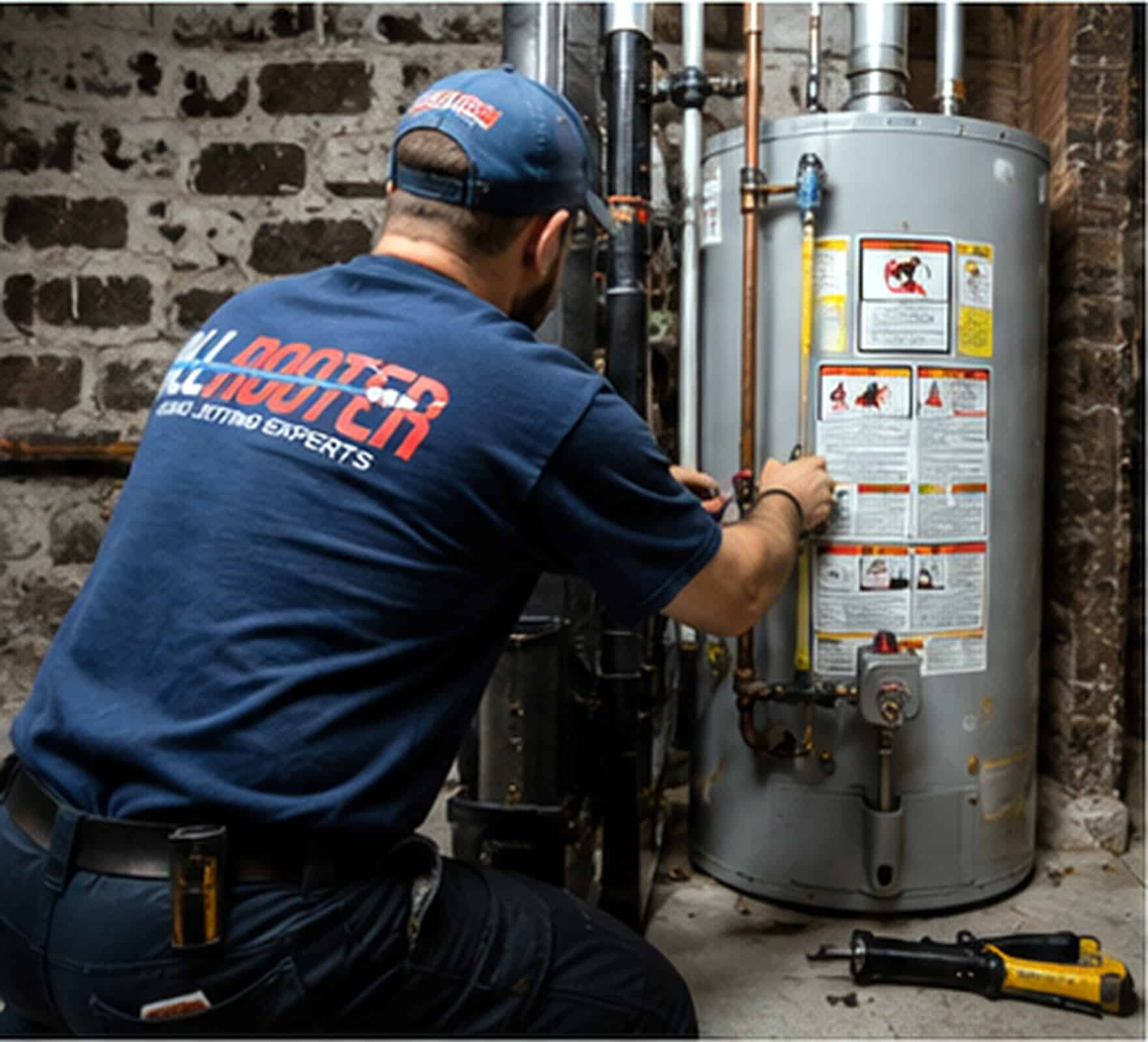
What inspectors look for depends on the scope of the project. For sewer line work, they’re checking that connections are properly sealed, that the correct materials were used, and that the system has appropriate slope and cleanout access. For water heater replacements, they verify proper venting, temperature and pressure relief valve installation, and correct fuel connections if applicable. The inspection isn’t adversarial — it’s a confirmation that the work meets the standard.
Chicago updated its permit program as of November 2, 2023, replacing the old Easy Permit Program with the Express Permit Program. If you’ve had work done in the past and your contractor referenced the old program, the process has since changed. A plumber who stays current on these administrative updates — not just the technical side of the trade — is one who understands that compliance is an ongoing responsibility, not a one-time checkbox.
For Cook County homeowners in Chicago’s older neighborhoods, this matters more than it might seem. A large portion of Chicago’s housing stock predates World War II. Older homes are more likely to have clay sewer laterals prone to root intrusion, galvanized steel pipes that have lost flow capacity over decades, and lead service lines that are subject to Chicago’s active replacement programs. Any work touching those systems almost certainly requires a permit — and a plumber who understands the city’s aging infrastructure is better positioned to do that work right the first time.
We’ve been operating out of our South Side location since 2000, and in that time we’ve seen what happens when permit requirements are treated as optional. It rarely ends well for the homeowner. Our team handles permit compliance as part of the job — not as a conversation to avoid.
The permit question isn’t complicated once you understand the rules — but it does require working with a plumber who takes compliance seriously. In Chicago and Cook County, that means verifying both state and city licensing, confirming the contractor is bonded and carries adequate insurance, and making sure permits are pulled before work begins, not explained away after the fact.
Unpermitted work is a liability that follows a property. The right contractor eliminates that risk entirely by doing things the way they’re supposed to be done from the start.
If you have a project coming up — whether it’s a sewer repair, a water heater replacement, a frozen pipe situation, or anything else that touches your plumbing system — and you want a straight answer on whether a permit is required and what the process looks like, reach out to All Rooter Hydro Jetting Experts Inc. We’re available around the clock, we offer free estimates, and we’ll tell you exactly what the job involves before any work begins.
Article details:
Share:
Continue learning: