Thinking about a plumbing camera inspection but not sure what it costs or what to expect? Here's what Cook County homeowners actually need to know.
Share:
Summary:
If a plumber, home inspector, or real estate agent has told you to get a sewer camera inspection — or if you’ve had one too many slow drains and want to know what’s actually going on — you’re probably asking the same questions most Cook County homeowners ask: What will this cost me? What might they find? And how do I know I’m not being set up for a repair bill I don’t need?
Those are fair questions. This page answers all of them plainly, so you can walk into the process informed and make the right call for your home.
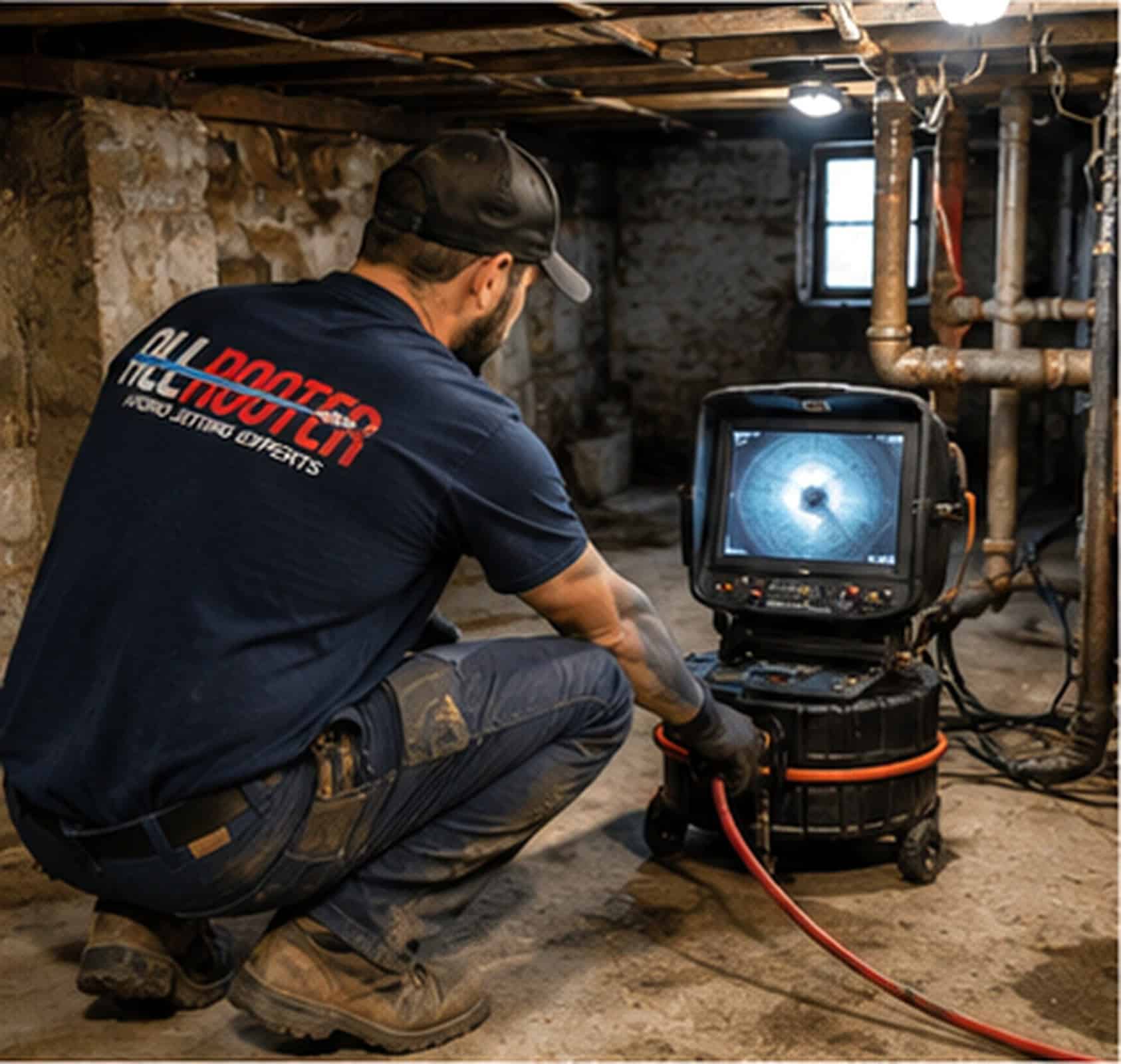
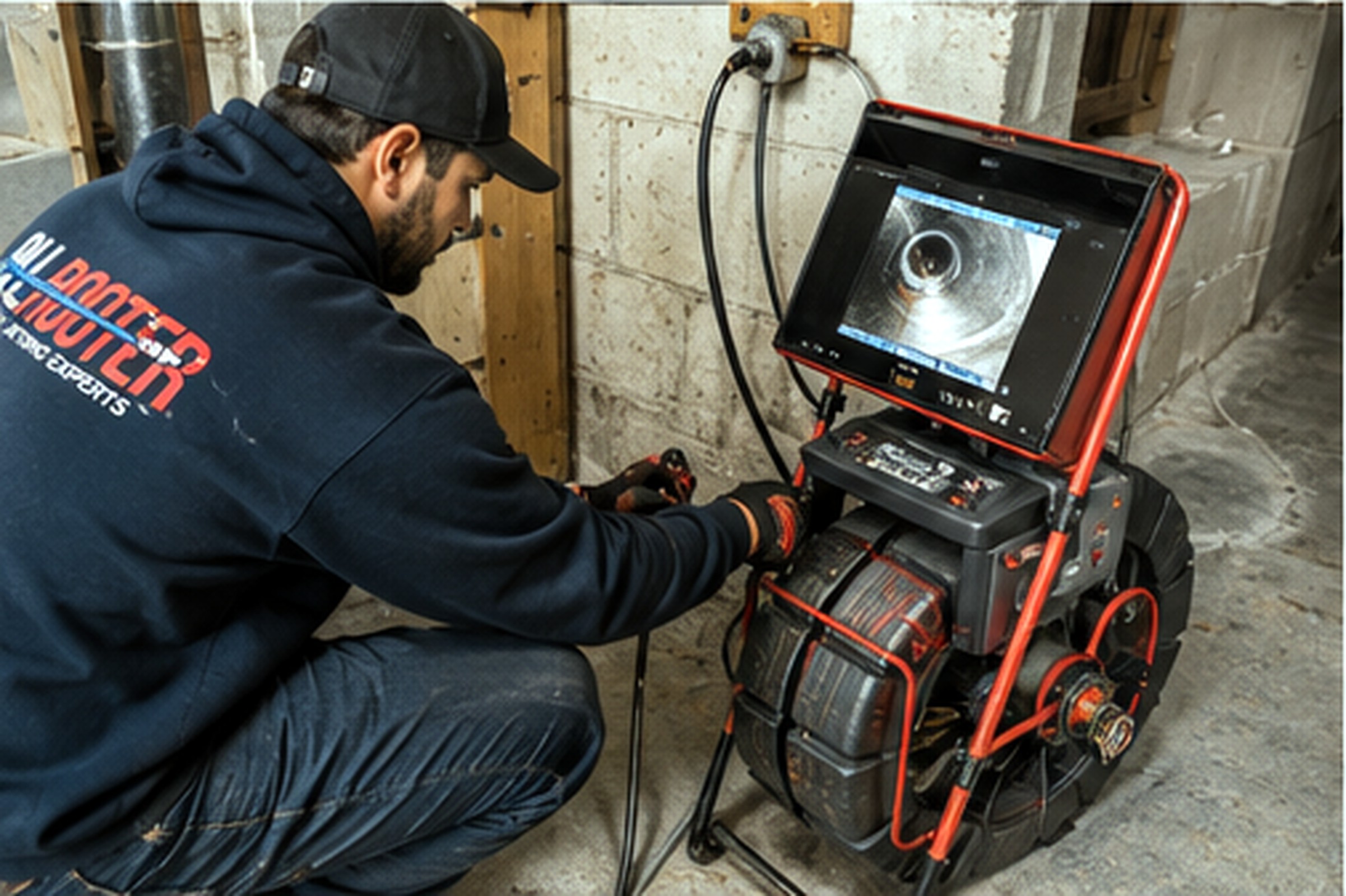
A sewer line camera is a flexible cable with a small, waterproof, high-definition camera head on the end. We feed it into your pipe through a cleanout access point — or in some cases through a toilet — and it transmits live footage of the pipe interior to a monitor. The whole process is non-invasive. Nothing is cut, dug up, or pressurized. The camera moves through the line while our technician watches for anything that shouldn’t be there.
What makes this particularly relevant in Cook County is the age of the housing stock. A significant share of homes in Chicago neighborhoods like Brighton Park, Gage Park, Marquette Park, and Bridgeport — as well as inner-ring suburbs throughout the county — were built before 1960. That means the sewer laterals running beneath them are often original clay tile or cast iron pipe, anywhere from 60 to over 100 years old.
These materials don’t fail all at once. They crack slowly, shift at the joints, and let tree roots in a little at a time. From the outside, everything looks fine. From the inside, the story is different.
The footage from a sewer line camera inspection isn’t just a visual check — it’s a condition report on a system that’s invisible to you under normal circumstances. Here’s what the camera commonly finds in Cook County homes, and what each finding typically means.
Root intrusion is one of the most frequent findings in this area. Chicago’s parkway tree program means nearly every residential block has mature trees planted between the sidewalk and the street, and their root systems actively seek moisture. Clay tile joints — the small gaps between pipe sections — are exactly the kind of entry point roots exploit over decades.
Early-stage root intrusion can often be cleared with hydro jetting. Left alone, those roots eventually block the line entirely or crack the pipe around them.
Cracked or separated pipe joints are another common finding, particularly in homes that have been through decades of Cook County’s freeze-thaw cycles. The ground here expands and contracts dramatically between winter and summer. That movement stresses buried pipe joints year after year, and eventually something gives.
A hairline crack might not cause an immediate backup, but it allows groundwater infiltration and gives roots a new entry point.
Bellied pipe — where a section of the line has sagged downward due to soil settlement — creates a low spot where waste and debris collect. It won’t always cause a complete blockage right away, but it’s a chronic problem that gets worse over time. The camera locates exactly where the belly is and how significant it is.
Grease and scale buildup, collapsed sections, and in some older Cook County homes, deteriorating Orangeburg pipe (a tar-paper composite used in the 1940s through 1960s that deforms and collapses as it ages) are also findings that come up regularly. None of these are visible from drain performance alone. A line can still flow while carrying all of these problems.
What you walk away with after a legitimate sewer camera service is the actual video footage — not a summary, not a verbal description, but the recording itself — along with a written report that marks every problem area by distance from the access point. That location data matters because it means any contractor can find exactly what needs fixing without additional guesswork or excavation.
For most residential properties in Cook County, a plumbing camera inspection runs between $200 and $400. That range covers a standard single-family home with accessible cleanout points and a straightforward lateral to inspect. It’s the number we publish on our website because we think homeowners deserve to know what they’re looking at before they call.
A few factors can affect where you land within that range — or push the cost higher. If your home doesn’t have a cleanout access point, our technician may need to remove and reinstall a toilet to get the camera into the line. That adds labor time and typically increases the cost. The total footage that needs to be recorded matters too: a longer or more complex pipe system takes more time to inspect thoroughly.
It’s worth putting that cost in context. A sewer scope that costs a few hundred dollars can reveal a problem that would run $4,000 or more to repair if it’s caught at the right stage — and potentially $25,000 or more if it’s ignored until a full collapse or emergency excavation is required.
For buyers purchasing a home in Cook County, a pre-purchase sewer scope is one of the most cost-effective inspections available. Standard home inspections don’t include the sewer lateral. That’s a separate system, and it’s one of the most expensive things that can go wrong.
If the camera does find something that needs addressing, the cost picture depends on what it is. Clearing a blockage or root intrusion with hydro jetting is typically a separate service from the inspection itself. Structural repairs — cracked pipe, bellied sections, collapsed lateral — are quoted based on the specific findings and location. We always provide that quote before any work begins, and we give you the footage and written report regardless of whether you proceed with repairs through us or take the information elsewhere.
One more thing worth mentioning: if the inspection reveals a repair need that’s beyond what you want to handle out of pocket right now, we offer financing through Hearth. You can apply online before work begins. No homeowner should have to delay a necessary repair because of upfront cost pressure.
Getting the footage is step one. Understanding what it means and what your options are is where most homeowners feel lost. A good camera inspection report doesn’t just tell you something is wrong — it tells you where the problem is, what type of problem it is, and how urgent it actually is.
Not every finding requires immediate action. A minor root intrusion in an otherwise intact clay tile lateral is a different situation than a collapsed section or a belly that’s actively causing backups. A trustworthy technician will explain the difference clearly and give you a realistic sense of urgency — not a one-size-fits-all “you need to fix this today” regardless of what the camera actually showed.
This is the question most homeowners are actually thinking about when they search for a plumbing camera inspection, and it deserves a direct answer.
The concern is legitimate. There are contractors who use camera inspections as a sales tool — running the camera, showing alarming footage (sometimes not even from your pipes), and pushing for immediate, expensive repairs before the homeowner has time to think. It’s a known problem in the industry, and it’s why so many people hesitate to schedule an inspection even when they know they probably should.
Here’s how we handle it at All Rooter Hydro Jetting Experts Inc: the inspection is a diagnostic service. You pay for information. We give you the actual footage, a written report with findings marked by location, and a clear explanation of what we found and what the options are. If repairs make sense, we’ll tell you why and give you a quote. If something is minor and can wait, we’ll tell you that too. You make the decision. We’re not going to manufacture urgency around a finding that doesn’t warrant it.
This matters especially in Cook County, where older homes and aging infrastructure mean the camera is going to find something in a lot of cases. That doesn’t automatically mean you’re facing a crisis. A small crack in a clay tile joint is not the same as a collapsed lateral. Root intrusion that’s just starting is not the same as a root mass that’s blocking the line. The footage shows you the actual condition — and our technicians, who have spent over 25 years working on Chicago-area sewer systems, can put what they see in honest context.
The other protection you have is the portability of the report. Because problem areas are marked by distance from the entry point, you can take that report to any sewer repair contractor for a second opinion or a competing quote. You’re not locked in. The information belongs to you.
Once you have your camera inspection report in hand, a few practical questions tend to come up. Here are the ones we hear most often from Cook County homeowners.
**How do I know if the repair is my responsibility or the city’s?** In Chicago and throughout Cook County, the city is responsible for the public sewer main running beneath the street. Homeowners are responsible for the sewer lateral — the pipe that runs from the house to the city main, typically to the property line. If the camera finds a problem in your lateral, it’s on you. If the problem is in the city’s main, you’ll need to contact the city. Because problem locations are marked by distance from the access point in a proper inspection report, you can determine which side of the line the issue falls on — which has significant financial implications.
**Can I use the report to get quotes from multiple sewer repair contractors?** Yes, and you should. A well-documented camera inspection report — with footage, written findings, and location markers — is exactly what a sewer repair contractor needs to give you an accurate quote without running their own camera. You’re not obligated to use the same company that did the inspection for any repairs.
**What if the inspection reveals a problem I can’t afford to fix right now?** First, ask the technician how urgent the issue actually is. Not every finding is an emergency. If repairs are genuinely needed and upfront cost is a concern, we offer financing through Hearth — homeowners can apply online before work begins. That option exists specifically so a camera inspection finding doesn’t have to turn into a delayed repair that gets worse over time.
**How do I find qualified sewer repair contractors in Cook County?** Look for contractors who are licensed by the Illinois Department of Public Health and hold a City of Chicago plumbing license if work is being done within city limits. Verify that they’re bonded and insured. Check reviews across multiple platforms, not just one. And ask whether they’ll honor the findings from your existing inspection report or insist on running their own camera — a legitimate contractor should be comfortable working from a documented report.
**How often should I have a sewer camera inspection done?** For homes with older clay tile or cast iron laterals — which describes a large portion of Cook County’s pre-1960 housing stock — inspections every 7 to 10 years are a reasonable interval, or sooner if you’re experiencing recurring backups, slow drains, or you’ve recently had significant tree removal near the sewer line. For newer PVC systems, every 18 to 22 years is generally sufficient unless symptoms appear.
The short version: a plumbing camera inspection is a low-cost way to get real information about one of the most expensive systems in your home. In Cook County, where a significant share of the housing stock sits above clay tile or cast iron sewer laterals that are decades past their intended lifespan, that information is worth having before a backup forces your hand.
What you’re looking for in a provider is straightforward. They should give you the actual footage. They should give you a written report with problem locations marked. They should explain what they found without manufacturing urgency. And they should give you a quote before any work begins.
If you’re dealing with recurring backups, slow drains, or you’re buying or selling a home in the Chicago area and want to know what’s under the property before closing, All Rooter Hydro Jetting Experts Inc has been doing this work in Cook County since 2000. Give us a call or reach out anytime — we’re available 24/7, and we’ll tell you what we find.
Article details:
Share:
Continue learning: