Before hiring a gas line plumber in Cook County, you need to know how to verify their license, what permits are required, and why it matters for your home and insurance.
Share:
Summary:
You’re not looking for just any plumber. You’re looking for someone who can install or repair a gas line without putting your home, your insurance coverage, or your future home sale at risk. That means finding someone who’s actually licensed in Illinois, registered in Cook County, and knows how to pull the right permits. The problem is, not everyone who shows up with a truck and a toolbox has those credentials. Some don’t even know they need them. This guide breaks down what licensing actually means in Cook County, how to verify it, what permits are required for gas line work, and why cutting corners now can cost you thousands later.
Illinois doesn’t mess around with plumbing licenses. If someone is installing, repairing, or touching your gas line, they need a state-issued plumber license from the Illinois Department of Public Health. That’s not optional. It’s the law under 225 ILCS 320.
But here’s where it gets layered. A state license isn’t the only thing you’re looking for. In Cook County, plumbers also need to register as contractors with the Cook County Department of Building and Zoning. That registration requires proof of their state license, $1 million in liability insurance, business references, and a Child Support Compliance form. Not every plumber bothers with that step, and that’s a red flag.
If you’re in Chicago specifically, the rules shift again. Chicago operates under its own plumbing code, and contractors need a separate City of Chicago license. So depending on where your home sits, you might be dealing with state rules, county rules, or city rules. Sometimes all three. That’s why asking “are you licensed?” isn’t enough. You need to know which licenses they hold and whether those licenses actually cover the work they’re about to do at your address.

You don’t have to take anyone’s word for it. Illinois makes it easy to verify whether a plumber is actually licensed. The Illinois Department of Public Health runs a public database where you can search by name, license number, or city. Every licensed plumber in the state has a license number that starts with “058-“. Apprentices start with “056-“. Contractor registrations start with “055-“.
Go to the IDPH Plumber License Search page. Type in the plumber’s name or the license number they gave you. If they’re legit, their license will show up with a status of “active.” If it says expired, suspended, or nothing comes up at all, walk away.
For Cook County contractor registration, you can check the Cook County Building and Zoning Registered Contractors database. This confirms they’ve registered with the county, submitted insurance proof, and met local requirements. It’s a separate step from the state license, and both matter.
Here’s the thing most people miss. A plumber can be licensed in Illinois but not registered in Cook County. That means they can’t legally pull permits in unincorporated Cook County. If they show up to do gas line work and tell you they’ll “handle the permit later” or that you don’t need one, that’s your cue to call someone else. Licensed professionals know the permit process. They don’t avoid it.
If you’re in Chicago, you’ll also want to verify their City of Chicago plumber license through the Chicago Department of Buildings. It’s one more step, but it’s worth it. Because when something goes wrong with an unpermitted gas line, the person who pays for it is you, not the contractor who disappeared.
Let’s clear up the confusion. Illinois has a tiered system, and understanding it keeps you from hiring someone who’s only halfway qualified.
At the state level, the Illinois Department of Public Health issues plumber licenses. To get one, a plumber has to work as a licensed apprentice for at least four years, complete approved coursework, and pass a state exam. That license allows them to perform plumbing work anywhere in Illinois. It’s the baseline. Without it, they’re breaking the law.
At the county level, Cook County requires plumbers to register as contractors if they’re pulling permits in unincorporated areas. That registration proves they have insurance, references, and a valid state license. It’s an extra layer of accountability. If a plumber is registered with Cook County, it means they’ve committed to operating above board.
At the city level, Chicago does its own thing. The city has its own plumbing code, its own licensing requirements, and its own permit process. A plumber with an Illinois state license can’t just walk into Chicago and start pulling permits. They need a Chicago journeyman or contractor license issued by the Chicago Department of Buildings. That’s a completely separate credential.
So here’s what that means for you. If your home is in unincorporated Cook County, you need a plumber with a state license and Cook County registration. If you’re in Chicago, you need a plumber with a state license and a Chicago license. If you’re in a suburb like Evanston or Oak Park, you need a plumber with a state license, and they’ll need to follow that municipality’s rules.
Don’t assume your plumber knows which rules apply. Ask them directly. “Do you have a valid Illinois plumber license? Are you registered in Cook County? Do you have a Chicago license if needed?” If they can’t answer those questions clearly, keep looking. Gas line work is too important to trust to someone who’s guessing about their own credentials.
Verification isn’t paranoia. It’s protection. You’re about to let someone work on a system that, if installed wrong, can leak gas into your home. You’re also about to invest money in work that needs to pass inspection and hold up when you file an insurance claim or sell your property. That’s why checking credentials before you hire isn’t optional.
Start with the Illinois Department of Public Health license lookup. It takes two minutes. If the plumber is licensed, their name, license number, and status will show up. If they’re not, you’ll know immediately. Next, check the Cook County contractor registry if your property is in an unincorporated area. If they’re not registered, they can’t legally pull permits in the county, which means the work won’t be inspected or approved.
Ask for proof of insurance while you’re at it. Cook County requires contractors to carry at least $1 million in general liability coverage. A licensed, registered contractor will have a certificate of insurance they can show you. If they hesitate or say they’ll “email it later,” that’s a warning sign. Legitimate plumbers keep that documentation ready because they know you’re going to ask for it.
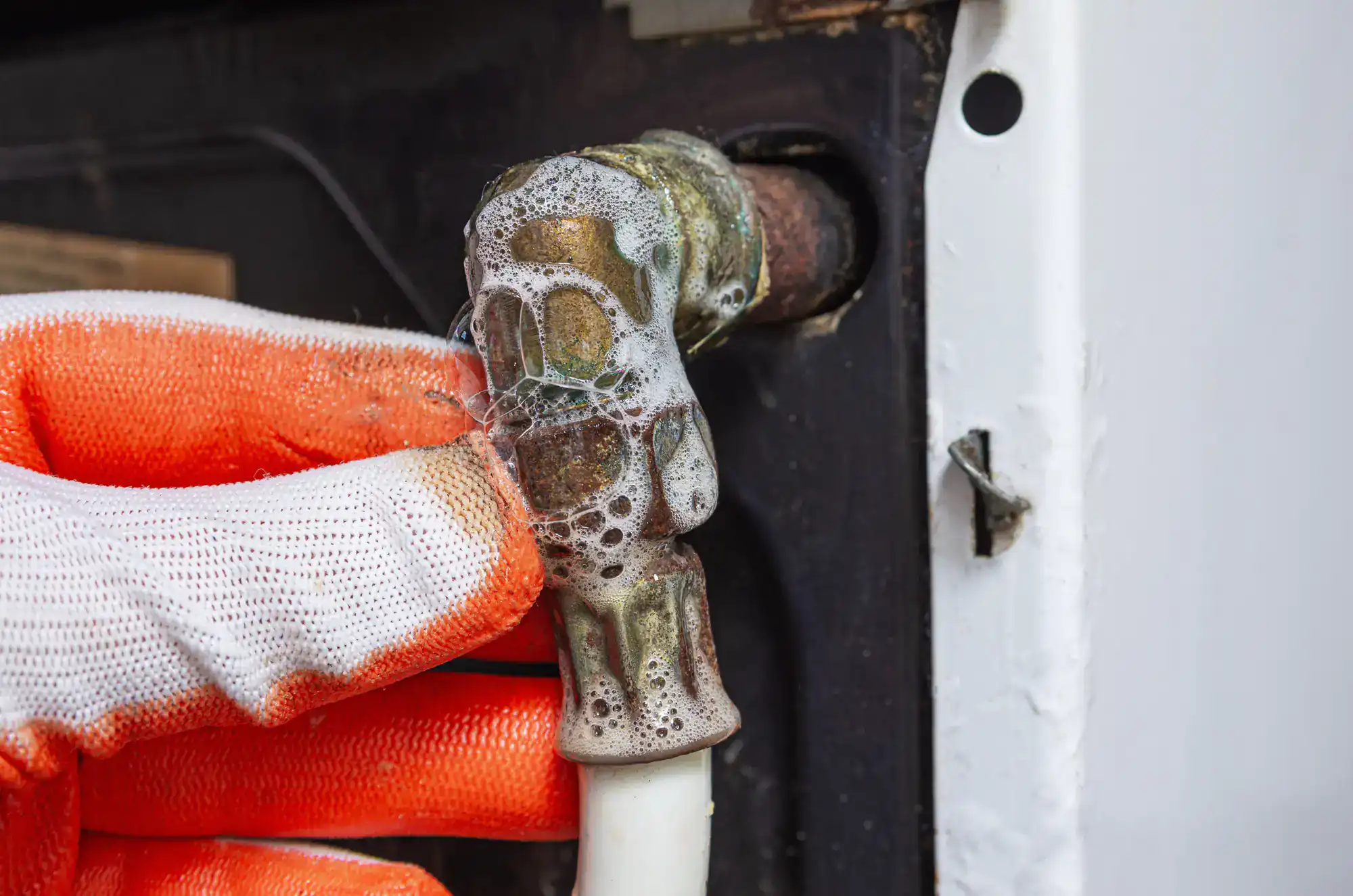
If you’re installing a new gas line, relocating an existing one, or connecting a new appliance like a water heater, range, or dryer, you need a permit. Cook County doesn’t let that work slide. Neither does Chicago. The permit process exists to make sure the work is done to code, inspected by a qualified inspector, and documented in public records.
In Cook County, plumbing permits are applied for by the registered contractor. Homeowners can’t pull these permits themselves unless they’re doing the work on their own single-family home and they meet specific exemptions, which are narrow. For gas line work, most jurisdictions require a licensed professional to do the installation and pull the permit.
The permit application requires details about the scope of work, the contractor’s registration number, proof of insurance, and sometimes a Child Support Compliance form. Once submitted, the county reviews it, issues the permit, and schedules inspections. There’s usually a rough-in inspection while the work is in progress and a final inspection once it’s complete. Both have to pass before the work is considered legal and complete.
In Chicago, the process is similar but goes through the Chicago Department of Buildings. Permit fees in Chicago start at around $300 for work that involves drawings or plans. Cook County fees vary depending on the project scope, but you’re typically looking at $85 to $400 depending on complexity.
Here’s what a lot of homeowners don’t realize. The permit isn’t just a piece of paper. It’s your proof that the work was done legally. If you ever sell your home, the buyer’s inspector will check permit records. If there’s no permit on file for that gas line you installed five years ago, the sale can stall. The buyer’s lender might refuse to finance the property. Your homeowner’s insurance might deny a claim if something goes wrong. The permit protects you from all of that.
If a plumber tells you that you don’t need a permit for gas line work, they’re either ignorant or dishonest. Either way, you don’t want them working on your house.
When you ask for an estimate, make sure it includes the permit. A lot of plumbers will quote you the labor and materials but leave out the permit fee, the inspection costs, and the time it takes to coordinate with the county. Then you get surprised with an extra $300 to $500 when the bill comes.
A good estimate breaks it all down. It should list the labor hours, the cost of materials, the permit application fee, and any inspection fees. In Cook County, permit fees are calculated based on the project’s estimated value, so the more complex the job, the higher the fee. For a straightforward gas line installation to a new water heater, you’re probably looking at $100 to $200 in permit costs. For a larger project that involves running new lines through walls or adding multiple connections, it could be $300 to $400.
Ask your plumber how long the permit process takes. In Cook County, it can take anywhere from a few days to a couple of weeks depending on the workload at the Building and Zoning office. In Chicago, it’s often longer. That means your project timeline needs to account for permit approval and inspection scheduling, not just the work itself.
If a contractor gives you a rock-bottom estimate and says they’ll “take care of the permit,” ask for specifics. How much is the permit? When will it be pulled? When is the inspection scheduled? If they’re vague, they’re probably planning to skip it. That’s not a deal. That’s a liability you’ll be stuck with.
Upfront pricing means knowing everything before the work starts. Permit costs, inspection fees, labor, materials, all of it. If your plumber can’t or won’t give you that breakdown, find one who will. We include permit costs in every estimate so you know exactly what you’re paying for and why.
Gas line work isn’t the place to cut corners. You need a plumber who holds a valid Illinois license, is registered in Cook County if required, carries proper insurance, and knows how to pull permits and schedule inspections. Anything less puts your home, your insurance coverage, and your future sale at risk.
Verify credentials before you hire. Use the IDPH license lookup. Check the Cook County contractor registry. Ask for proof of insurance. Get a detailed estimate that includes permit costs. And if something feels off, trust that instinct and call someone else.
When you work with us, you’re working with licensed, bonded, and insured professionals who handle permits, inspections, and compliance as part of the job. No surprises. No shortcuts. Just transparent, legal, properly documented work that protects your home and your investment.
Article details:
Share:
Continue learning: