Understanding septic tank pumping schedules, Cook County permit requirements, and warning signs can save Chicago homeowners thousands in emergency repairs and system replacements.
Share:
Summary:
Your septic tank works quietly underground, handling waste day after day without asking for attention. Until it does. And when a full tank finally makes itself known—through slow drains, foul odors, or worse, sewage backing up into your basement—you’re looking at more than an inconvenience. You’re facing health hazards, property damage, and cleanup bills that can hit five figures fast.
Regular septic tank pumping keeps that nightmare from happening. But if you’re in Cook County, you’re also navigating local permit requirements, trying to figure out how often your specific household actually needs service, and probably wondering what a fair price looks like. You’ll walk away from this guide knowing exactly what to expect, what it costs, and how to keep your system running without the surprise emergencies.
The standard answer you’ll hear is every three to five years. That’s not wrong, but it’s not the full picture either. Your actual pumping schedule depends on how many people live in your home, how much water you use, and how large your tank is.
A family of four with a 1,000-gallon tank should plan on pumping every three years. Larger households or smaller tanks need more frequent service—sometimes every two years. If you’ve got a garbage disposal, entertain often, or run multiple loads of laundry daily, you’re filling that tank faster than average. On the flip side, a vacation property with light use might stretch to five years or beyond.
The only way to know for certain is to have your system inspected. A professional can measure sludge levels and give you a schedule tailored to your actual usage, not just industry averages.
Septic tanks are designed to separate solids from liquids. Solid waste sinks to the bottom as sludge, while lighter materials float to the top as scum. The liquid in between flows out to your drain field for treatment. When you don’t pump on schedule, sludge builds up until there’s no room left for separation.
At that point, solids start escaping into your drain field. That’s a problem because drain fields aren’t designed to handle solids—they’re meant for liquid only. Once solids clog the soil absorption area, wastewater has nowhere to go. It backs up into your home through the lowest drains, usually in the basement.
Sewage backups aren’t just unpleasant. They’re classified as Category 3 water, also called black water, which means they contain harmful bacteria, viruses, and parasites. Professional cleanup runs $2,000 to $10,000 for moderate basement contamination. Extensive damage can push costs past $50,000. And if your drain field is ruined, you’re looking at a complete system replacement, which easily hits five figures.
Pumping every few years costs a few hundred dollars. Ignoring it costs exponentially more. The math isn’t complicated, but homeowners still delay until they’re dealing with a crisis instead of routine maintenance. Don’t be one of them.
You don’t have to guess whether it’s time to pump. Your septic system will tell you when it’s getting full, and the warning signs are hard to miss if you’re paying attention.
Slow drains are usually the first indicator. If multiple fixtures—toilets, sinks, showers—are draining slower than normal, your tank is likely approaching capacity. One slow drain might be a simple clog in that pipe. Multiple slow drains point to the septic system.
Foul odors are another red flag. When your tank is full, gases can’t vent properly, and you’ll smell sewage near drains or outside around the tank and drain field. That smell isn’t just unpleasant—it’s a warning that wastewater isn’t being contained and treated the way it should be.
Pooling water or wet spots in your yard, especially near the septic tank or drain field, mean the system is overflowing. Unusually green or lush grass in those areas is another giveaway. Sewage acts as fertilizer, so if one patch of your lawn looks noticeably healthier, it’s probably getting fed by a failing system.
Gurgling sounds from your plumbing, sewage backing up into toilets or floor drains, and water backing up when you run the washing machine or flush the toilet are all emergency-level signs. At that point, you’re past preventive maintenance and into damage control. Stop using water immediately and call for service. Every flush or shower you run is pushing more wastewater into a system that’s already overloaded.
If you’re seeing any of these signs, don’t wait to schedule service. The longer you delay, the worse—and more expensive—the problem becomes.
In Cook County, you can expect to pay between $250 and $1,250 for a href=”https://allrooter-plumbing.com/services/septic-tank-plumbing/”>septic tank pumping, with most homeowners paying around $347 to $500 for a standard residential tank. The final price depends primarily on tank size, but accessibility, how long it’s been since your last pump, and whether any additional services are needed also factor in.
A 600-gallon tank—common for very small homes or single-toilet setups—might cost as little as $250. A 2,000-gallon tank can run $1,250 or more. Most residential tanks fall between 1,000 and 1,500 gallons, putting the typical cost in the $300 to $600 range.
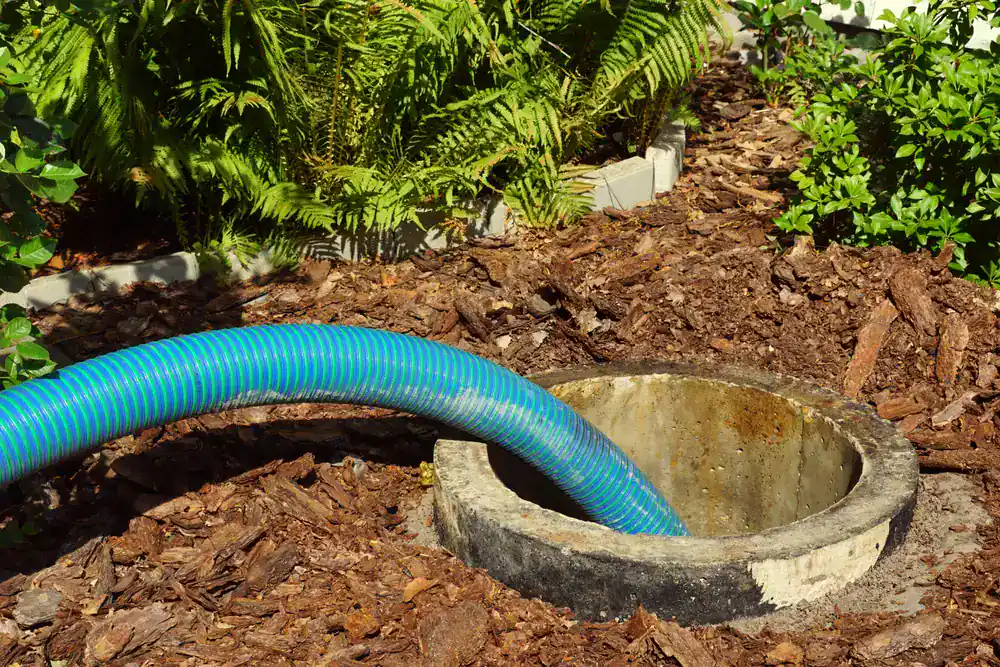
Tank size is the biggest cost driver. Larger tanks hold more waste and take longer to pump, which means more labor and disposal fees. If you don’t know your tank size, it’s usually listed on your original permit or septic system diagram. A professional can also measure it during an inspection.
Accessibility matters too. If your tank is buried under a deck, located on uneven terrain, or doesn’t have a riser bringing the access lid to ground level, the crew will need extra time and possibly special equipment to reach it. That adds to the bill. Installing a riser costs a few hundred dollars upfront but saves $50 to $100 in labor every time you pump going forward.
How full your tank is also affects pricing. If it’s been years since your last pump and sludge levels are high, the job takes longer. Tanks with heavy grease buildup are especially time-consuming and may come with additional charges—up to $500 in severe cases.
Location plays a role as well. Urban and suburban Chicago properties sometimes face higher costs if access is tight or if the truck can’t park close to the tank. Rural properties with long driveways or difficult access can see similar increases.
Seasonal demand can shift prices too. Spring is the busiest time for septic services in the Chicago area, and some companies raise rates when they’re slammed with calls. If your tank isn’t critically full, scheduling service in late summer or fall might save you money.
Finally, emergency or after-hours service costs significantly more—often 50% to 100% above standard rates. If you’re calling on a weekend or holiday because sewage is backing up into your home, expect to pay a premium. That’s another reason to stay on a regular maintenance schedule instead of waiting for a crisis.
Pumping is the most visible septic expense, but it’s not the only one. Maintaining a septic system properly in Cook County typically costs $200 to $700 per year when you factor in inspections, minor repairs, and routine upkeep.
Professional inspections should happen every one to three years, depending on your system and usage. An inspection runs $200 to $400 and includes checking sludge and scum levels, inspecting baffles and filters, and looking for signs of damage or leaks. Catching small problems early—like a cracked baffle or a clogged effluent filter—prevents expensive emergency repairs down the line.
Filter cleaning or replacement is another common maintenance task. Effluent filters prevent solids from reaching the drain field and need cleaning every one to three years. Some homeowners handle this themselves, but professional cleaning costs $200 to $300. Replacing a filter runs a similar amount.
Baffle repairs or replacements add another $200 to $800 if needed. Baffles direct the flow of wastewater in your tank and prevent scum from escaping. When they deteriorate, solids can reach your drain field and cause serious damage.
If you’re proactive about maintenance—pumping on schedule, getting regular inspections, and addressing minor issues before they escalate—you’ll stay on the lower end of that annual cost range. Neglect the system, and you’ll face much higher bills when something fails.
Compared to the cost of replacing a failed septic system, which can easily exceed $10,000, annual maintenance is a bargain. It’s also a lot less stressful than dealing with sewage in your basement.
If you’re hiring someone to pump your septic tank in Cook County, make sure they’re properly permitted. The Cook County Department of Public Health requires all septic tank cleaners and trucks hauling septage within county boundaries to obtain an annual permit for each vehicle. Contractors must also hold the appropriate state licenses issued by the Illinois Department of Public Health.
These regulations exist to protect homeowners and the environment. Permitted contractors follow proper disposal protocols, ensuring wastewater is handled safely and doesn’t contaminate groundwater or surface water. Unlicensed operators might offer lower prices, but they’re also cutting corners that can come back to haunt you—and the community.
When you hire a licensed, permitted professional, you’re getting someone who understands local codes, follows environmental regulations, and carries the insurance to protect you if something goes wrong. That peace of mind is worth paying for.
Article details:
Share:
Continue learning: