Your water heater rarely fails at a convenient time. Here's how to spot the warning signs before it becomes a full-blown emergency.
Share:
Summary:
Your water heater is one of those things you don’t think about until it stops working. Then suddenly it’s all you’re thinking about — usually at 6am, standing in a cold shower, running late for work. If you’ve noticed your hot water running out faster than it used to, heard strange noises coming from the tank, or spotted rust-colored water coming from your tap, your water heater is probably trying to tell you something. This guide breaks down the five signs that replacement makes more sense than repair, what it costs here in Cook County, and what a proper installation actually involves.
The repair-or-replace question is where most homeowners get stuck. Nobody wants to spend money on a replacement they don’t need — but nobody wants to spend $400 on a repair that buys them six more months before the unit fails completely. A good rule of thumb: if your water heater is more than eight years old and a repair would cost more than half of what a replacement would, replace it. You’re not saving money by patching an aging unit.
The five signs that most reliably point toward replacement are a unit older than 10 years, rusty or discolored hot water, a rumbling or popping sound coming from the tank, visible corrosion or moisture around the base, and hot water that runs out noticeably faster than it used to. Any one of these on its own warrants a closer look. Two or more together, and you’re likely past the point where repair makes financial sense.
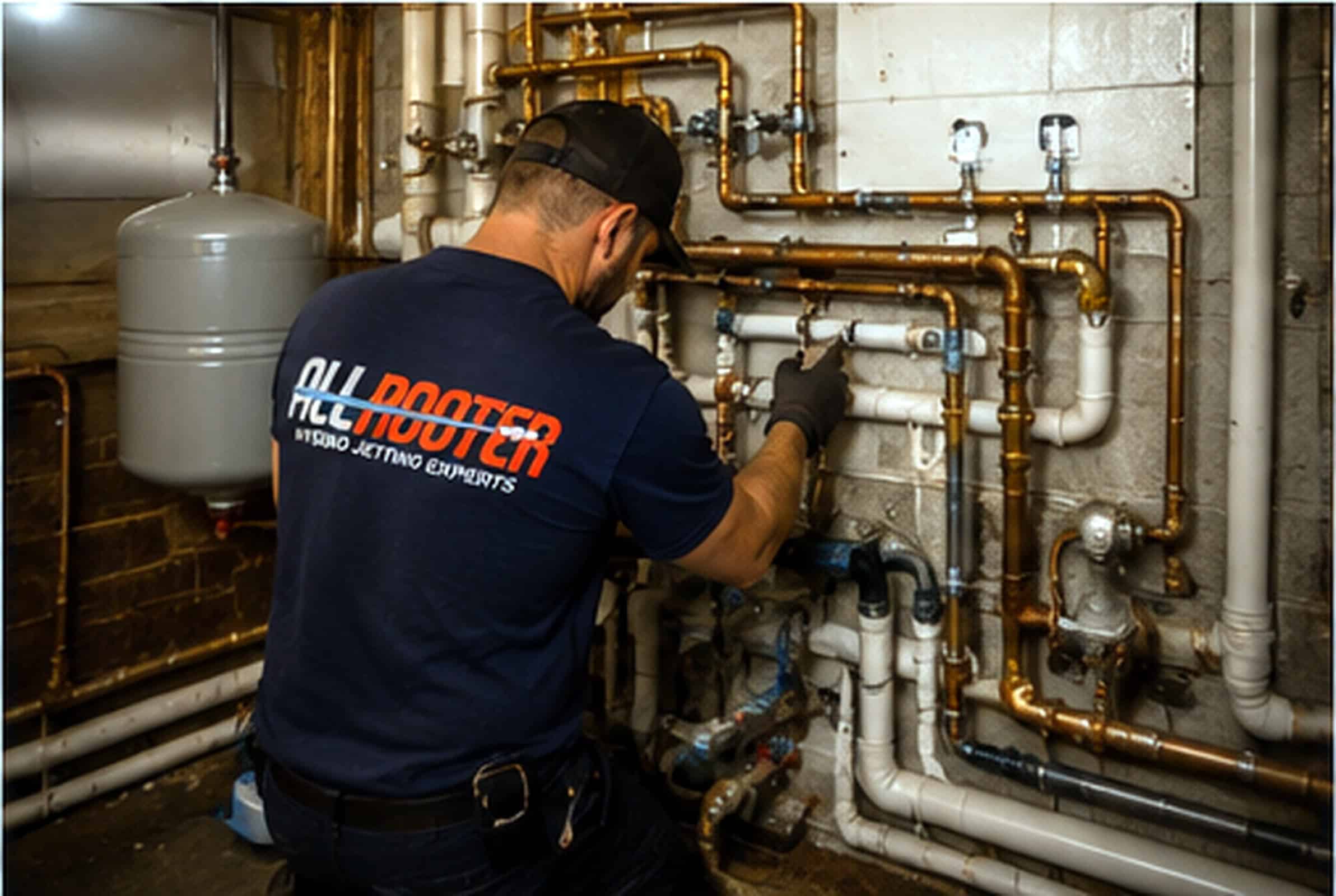
Chicago’s water supply is hard — meaning it carries a higher mineral content than many other markets. That’s not just a water quality issue. Over time, those minerals settle at the bottom of your tank as sediment. As the layer builds up, your water heater has to work harder to heat the water above it. That extra strain is exactly what causes the rumbling and popping sounds homeowners notice — it’s the burner forcing heat through a layer of sediment, not a sign that something is about to explode, but definitely a sign that efficiency has dropped and wear has accelerated.
In a softer-water market, a gas tank water heater might realistically reach 11 or 12 years. In Cook County, that same unit running on Chicago’s water supply may start showing serious signs of wear at 8 or 9 years. Annual flushing slows the buildup, but it doesn’t eliminate it entirely. If your unit is approaching that 8-to-10-year window and you haven’t been flushing it annually, the sediment accumulation alone may have already cost you a year or two of useful life.
This is also why rusty water is such a meaningful warning sign here specifically. When the anode rod — the sacrificial metal component inside your tank that prevents corrosion — has been depleted, the tank itself starts to rust from the inside. By the time you’re seeing discolored water at the tap, the corrosion is already advanced. At that point, no repair addresses the root problem. The tank is compromised, and replacement is the only real answer.
The harder the water, the more aggressively you need to stay on top of maintenance. And if you’ve moved into an older Cook County home and have no idea when the water heater was last serviced — or installed — that’s reason enough to have it inspected.
There’s a version of this that plays out every winter in Cook County. A homeowner notices their water heater is making noise or the hot water isn’t lasting as long, but nothing has failed yet, so they put it off. Then a polar vortex rolls in, temperatures drop to -10°F, and the unit — which was already running at its limit — gives out completely. Now it’s an emergency. Options are limited, timing is terrible, and the homeowner has no opportunity to compare quotes or choose the right unit at a reasonable pace.
Proactive replacement almost always costs less than emergency replacement — not necessarily in the dollar amount of the unit itself, but in the total experience. When you’re not in crisis mode, you can take the time to understand your options, ask questions, and make a decision that fits your household’s actual needs. When you’re without hot water in a Chicago January, you’re making decisions under pressure.
There’s also the flood risk to consider. A failing water heater doesn’t always just stop heating water — sometimes it leaks. A slow leak that goes unnoticed can cause significant water damage to a basement floor, nearby walls, or stored belongings. A sudden failure can release a significant volume of water. For homeowners in older Cook County bungalows and two-flats where the water heater lives in the basement, that kind of damage is both expensive and disruptive.
The practical takeaway: if your unit is showing two or more of the warning signs listed above, getting a professional assessment now — before it becomes an emergency — is almost always the smarter move. You stay in control of the timeline, the decision, and the cost.
Most homeowners in Cook County can expect to pay somewhere between $1,200 and $2,500 for a standard tank water heater replacement, fully installed. Tankless systems run higher — typically $2,500 to $5,000 or more depending on the unit and the complexity of the installation. Those are real ranges, not lowball estimates designed to get you on the phone.
What moves the number up or down is the type of unit, the size of your household, the condition of your existing gas lines and plumbing connections, and whether your home requires any modifications to bring the installation up to current code. Chicago’s older housing stock — the bungalows, two-flats, and three-flats that make up most of Cook County’s residential neighborhoods — often involves a few more variables than a newer suburban build.

If you’re in a home built before 1970 — which describes a large portion of Cook County’s housing stock — your water heater installation may involve more than just swapping out the unit. Older gas lines sometimes need to be resized to accommodate higher-efficiency equipment. Aging copper or galvanized pipe connections may need to be updated at the point of installation. And if the water heater sits in a basement with limited clearance, that can add time and labor to the job.
None of this is unusual, and none of it should come as a surprise if your contractor is doing their job properly. We assess these things before quoting the work — not after. That’s actually one of the most important things to ask about when you’re comparing quotes: does this price account for what’s already in my home, or is it a generic number that might change once someone shows up?
Cook County also requires a permit for water heater replacement. This isn’t optional, and it’s not a formality. The permit ensures the installation is inspected and documented — which matters for your homeowner’s insurance, your manufacturer’s warranty, and your home’s resale value. An unlicensed contractor who skips the permit process is saving you nothing; they’re transferring risk onto you. We handle the permit paperwork as part of every installation, so you don’t have to navigate that process yourself.
Illinois law under 225 ILCS 320 requires that all water heater installation work be performed by a licensed plumber. That’s not a suggestion — it’s state law. When you hire a licensed, bonded, and insured team, you’re not just getting professional workmanship. You’re getting documentation that protects you if anything ever comes into question with your insurer or a future buyer of your home.
Replacing a water heater is a significant expense, and the last thing you want is to be back in the same conversation in seven years because the new unit wasn’t maintained. The good news is that a few simple habits extend the life of your water heater meaningfully — especially in Cook County, where hard water is working against you from day one.
Annual flushing is the most important thing you can do. Draining a few gallons from the tank once a year removes the sediment before it has a chance to accumulate into the thick layer that forces your burner to work overtime. It takes about 20 minutes and makes a real difference in both efficiency and lifespan. If you’ve never done it and your current unit is more than three years old, it’s worth scheduling sooner rather than later.
The anode rod is the second thing most homeowners never think about until it’s too late. It’s a metal rod inside your tank — typically magnesium or aluminum — that corrodes slowly over time so your tank doesn’t. Once it’s depleted, the tank itself becomes the sacrificial material. Checking and replacing the anode rod every three to five years is a low-cost way to add years to your tank’s life. In Chicago’s hard water environment, leaning toward the three-year end of that range is the smarter call.
You should also know where your temperature and pressure relief valve is and how to test it. This valve is a safety device — it releases pressure if the tank overheats or pressure builds beyond safe levels. Testing it once a year (by lifting the lever briefly to confirm it releases water and reseals) takes about 30 seconds. If it doesn’t release, or if it releases but doesn’t reseal properly, it needs to be replaced. This isn’t optional maintenance — it’s a safety check.
Finally, keep the area around your water heater clear and dry. Moisture near the base of the unit — even minor condensation that pools over time — is an early warning sign of a slow leak. Catching it early means a minor repair. Ignoring it means potential water damage and a faster path to full replacement.
If your water heater is showing the signs — age, noise, rust, inconsistent heat, or visible wear — the most useful thing you can do right now is get an honest assessment from someone who will tell you the truth about whether repair or replacement makes more sense for your situation. Not every aging unit needs to be replaced immediately, and not every repair is worth doing. The answer depends on your specific unit, your home, and your household’s needs.
What you shouldn’t have to deal with is a quote that changes once someone shows up, or a contractor who skips the permit and leaves you holding the liability. Every replacement we do comes with a written price upfront, proper Cook County permit handling, and a licensed installation that’s documented and inspected.
If you’re in Cook County and want a straight answer about your water heater, we’re available 24/7 — including weekends and holidays. Call us, get a real assessment, and know exactly what you’re dealing with before you commit to anything.
Article details:
Share:
Continue learning: