Everything Cook County homeowners need to know about propane tankless water heaters — how they work, what they cost, and why sizing matters in a Chicago winter.
Share:
Summary:
Not every home in Cook County is connected to Peoples Gas. If you’re in the outer suburbs — parts of Palos Township, Orland, Rich Township, or a semi-rural property farther out — propane might be your only gas option. And if you’re still running a propane storage tank water heater, you already know the frustration: someone always gets a cold shower, the tank takes forever to recover, and you’re paying to keep 40 gallons of water hot around the clock whether you use it or not.
Propane tankless water heaters solve all of that. Here’s what you actually need to know before making the switch.
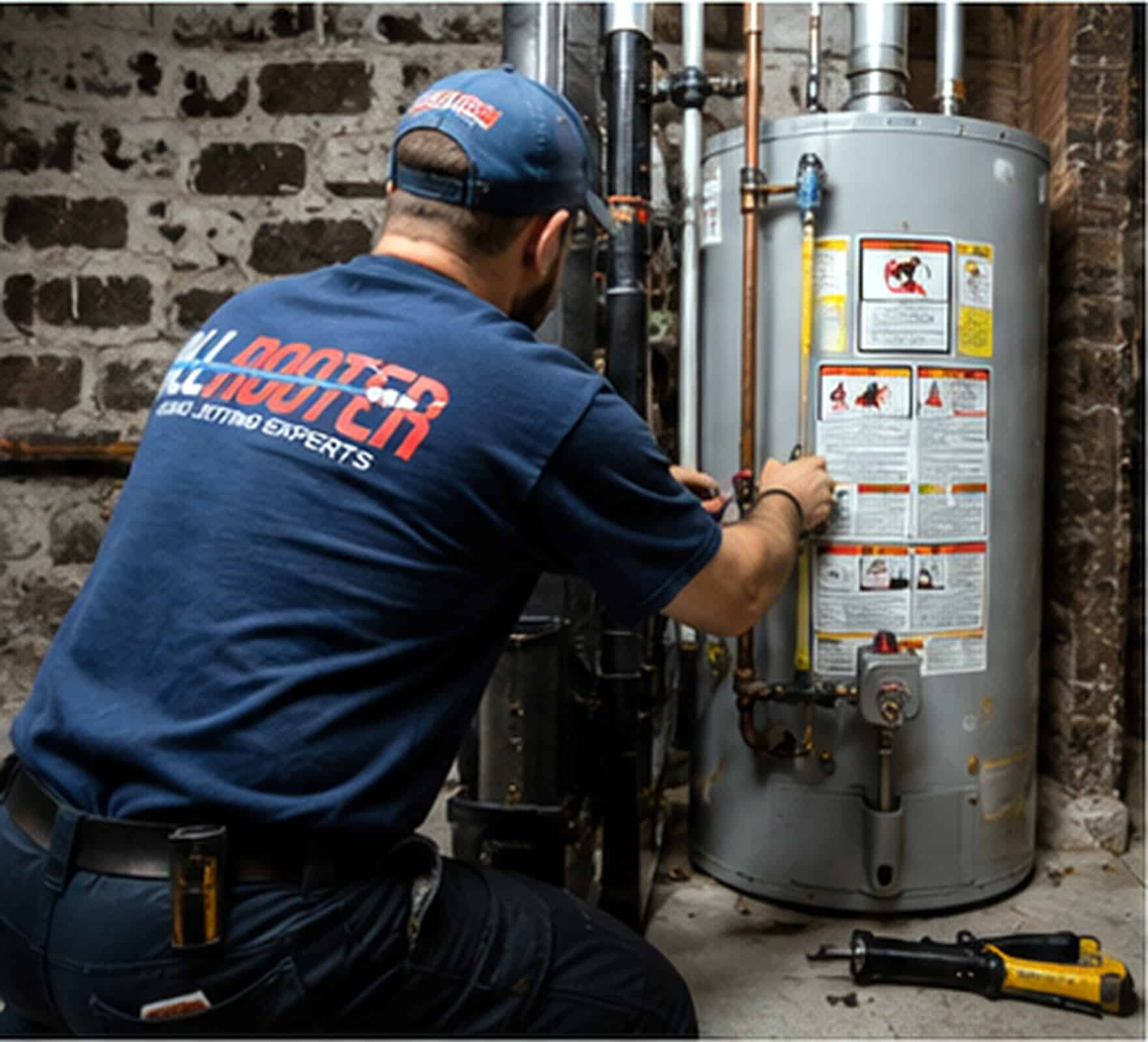
The concept is straightforward. When you turn on a hot water tap, cold water flows into the unit, triggers the burner, and gets heated on the spot. No storage tank, no standby heating, no waiting for a depleted tank to recover. The moment you open the tap, you have hot water. The moment you close it, the burner shuts off.
That’s the core of what makes a propane on demand water heater different from what most people grew up with. Traditional tank heaters keep a fixed supply of water hot at all times — day and night, whether you’re home or not. That continuous heat loss, called standby loss, accounts for a significant portion of your energy bill. A tankless unit eliminates it entirely.
Efficiency for water heaters is measured by something called the Uniform Energy Factor, or UEF. The higher the number, the more of your fuel actually becomes hot water. A conventional propane storage tank heater typically lands between 0.62 and 0.67 UEF — meaning up to 38 cents of every dollar spent on propane is wasted. A non-condensing propane tankless unit runs between 0.80 and 0.82. Step up to a condensing model and you’re looking at 0.85 to 0.96. That’s a meaningful gap over the course of a year, and it compounds over the 15 to 25 years a quality unit is expected to last.
Propane itself packs a serious punch — about 91,452 BTUs per gallon. That energy density is part of why propane tankless units can heat water fast enough to serve multiple fixtures at the same time, even in a large home. It’s also why they’re a legitimate alternative for homeowners in Cook County who don’t have access to natural gas but want the same on-demand performance.
One thing worth understanding: condensing units are more efficient but cost more upfront. They also produce lower-temperature exhaust, which means they can use PVC venting rather than more expensive stainless steel pipe. Non-condensing units cost less initially but require high-temperature venting materials. Neither is universally better — it depends on your budget, your home’s layout, and how long you plan to stay.
What doesn’t vary is the lifespan advantage. Quality propane tankless units routinely last 15 to 25 years with proper annual maintenance. Budget models — the ones in the $400 to $500 range — average 3 to 5 years. Field data suggests that 68% of people who buy the cheap unit end up replacing it within 2 to 3 years, spending more in total than if they’d bought quality from the start.
This is where a lot of propane tankless installations go wrong, and it’s a mistake that’s almost entirely avoidable with the right upfront assessment.
Flow rate — measured in gallons per minute, or GPM — tells you how much hot water a unit can produce at any given moment. A unit rated at 7 GPM sounds like plenty for most households. And in Georgia or Texas, it probably is. In Cook County in January, it’s a different story.
Chicago’s groundwater temperature drops to around 35 to 40°F in the coldest months. To deliver water at the standard 120°F, your tankless unit has to raise the incoming water temperature by 80°F or more. That temperature rise requirement directly reduces the unit’s effective flow rate. A unit that delivers 7 GPM at a 35°F rise might only push 4 to 5 GPM when the temperature rise climbs to 80°F. If you’re running a shower and the dishwasher at the same time, that’s not enough.
The Propane Education and Research Council specifically recommends 10 GPM or higher for homeowners in northern states like Illinois. For a family of four in Cook County, a unit rated between 145,000 and 180,000 BTUs — and sized up for cold-climate performance — is the right starting point. Getting there requires an actual load calculation based on your home’s fixture count, simultaneous demand, and local groundwater temperature. It’s not something to guess at.
This is also why freeze protection matters. A propane tankless unit installed in an unheated garage or utility room needs built-in freeze protection or supplemental heating to survive a Chicago polar vortex. Some units include this feature; others don’t. It’s one of several details that a licensed installer will assess before recommending a specific model.
Installing a propane tankless unit is not a weekend project, and in Cook County, it’s not something you can legally do without a permit. The county requires plumbing permits for water heater installations, and registered plumbing contractors must carry a minimum of $1,000,000 in liability insurance. That’s not bureaucratic fine print — it matters, especially when you’re working with a gas appliance.
Beyond the permit, the installation itself involves several components that need to be assessed and often upgraded. When it’s done right, you don’t have to think about it again for a long time.
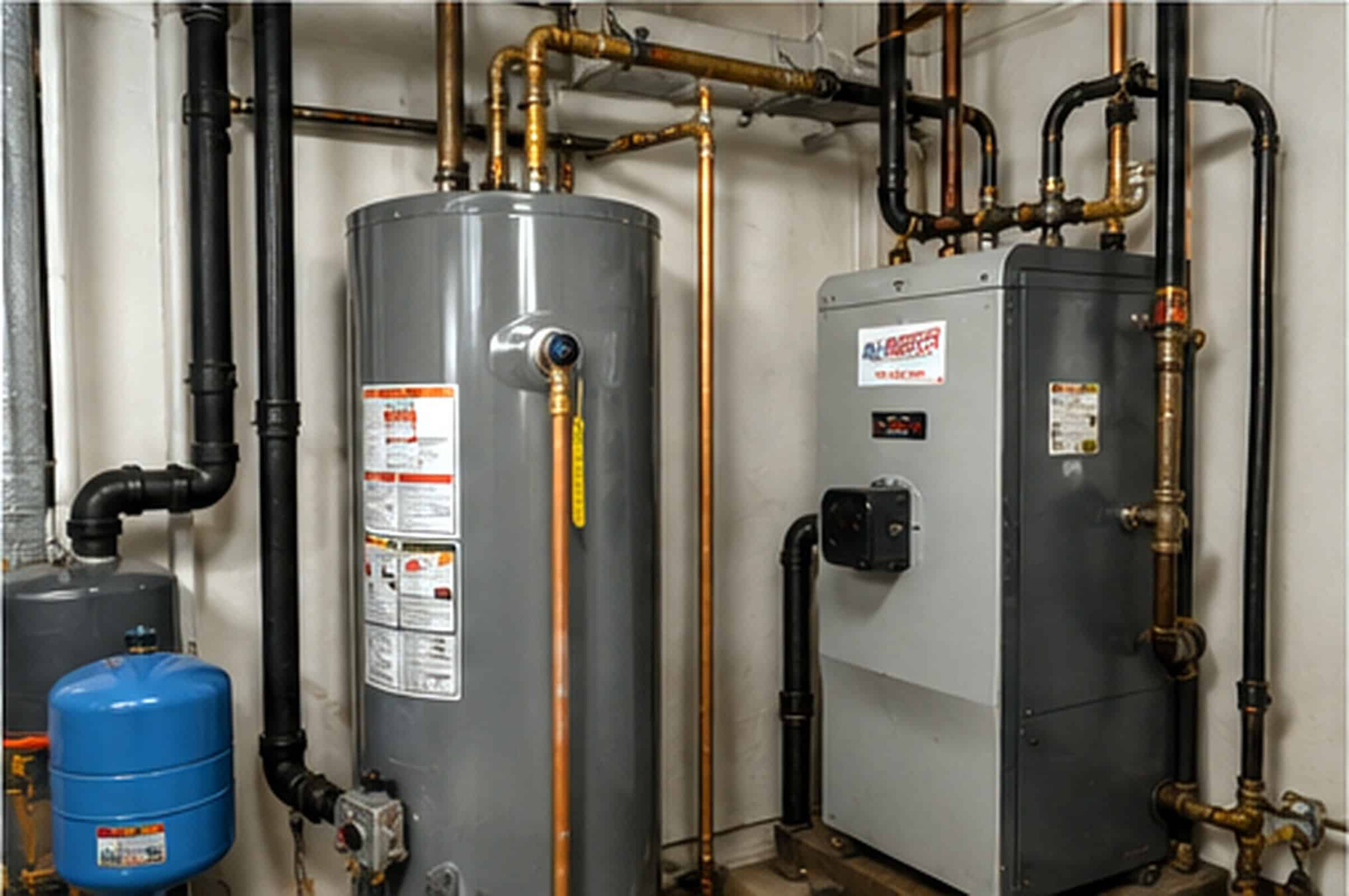
Propane tankless water heaters are high-demand appliances. A unit drawing around 200,000 BTUs requires a minimum ¾-inch gas supply line to deliver adequate flow without excessive pressure drop. Many older Cook County homes — particularly those built before 1960 — have undersized lines that were never designed for this kind of load. Upgrading the gas line is a common part of the installation process, and it’s something that needs to be assessed before any unit is purchased.
Propane also operates at a different pressure than natural gas. LP systems deliver gas to the appliance at approximately 11 inches of water column at the inlet — a specific pressure range (typically 8 to 14 inches W.C.) that the unit’s regulator must maintain for safe, consistent operation. If the pressure isn’t right, the burner won’t perform correctly. This is not something to eyeball.
Venting is another area where propane tankless units differ from what most homeowners expect. These units cannot use an existing masonry chimney. The exhaust temperature is too low, which causes condensation inside the flue and creates a backdrafting risk. Propane tankless units require dedicated direct-vent or power-vent piping routed directly to the exterior. In Chicago’s older housing stock, finding a clean venting path can take some creative problem-solving — which is exactly the kind of thing we handle without drama.
For condensing models, the exhaust is cool enough to use PVC or CPVC pipe, which is less expensive and easier to route. Non-condensing units require stainless steel or AL29-4C alloy venting, which costs more but is still a manageable part of the overall installation.
One of the most common misconceptions about propane tankless water heaters is that they’re maintenance-free. They’re not — and in Cook County, that matters more than it might in other parts of the country.
Chicago’s water supply comes from Lake Michigan and is treated for the metro area. The result is water with a hardness rating of roughly 7 to 10 grains per gallon — technically in the moderately hard to hard range. Over time, that mineral content builds up inside your tankless unit’s heat exchanger. Unlike a storage tank, a tankless unit doesn’t have standing water sitting around to accumulate scale, but the heat exchanger sees a high volume of water passing through it every day. Scale still forms, and when it does, it reduces efficiency and shortens the life of the unit.
Annual descaling — flushing the heat exchanger with a descaling solution — is the standard maintenance practice. It takes a couple of hours, it’s not expensive, and it’s the single most effective thing you can do to protect your investment. If you’re also dealing with particularly hard water, a sediment pre-filter or whole-home water softener upstream of the unit can significantly reduce the maintenance burden and extend the heat exchanger’s life.
The other maintenance item worth mentioning is the inlet filter screen. Propane tankless units have a small screen at the cold water inlet that catches sediment before it reaches the heat exchanger. Cleaning it once or twice a year takes minutes and prevents flow restriction issues that can cause the unit to behave erratically — that frustrating pattern of water going hot, then cold, then hot again that some homeowners experience with poorly maintained units.
If your unit is installed in an area exposed to freezing temperatures, checking the freeze protection system before each winter is also worth adding to the routine. Most quality units have built-in protection, but it only works if the unit has power. If you lose electricity during a cold snap, the freeze protection won’t function — something to be aware of if you’re in an area of Cook County that sees extended outages during winter storms.
For homeowners in Cook County who rely on propane and are tired of the limitations of a storage tank, the answer is usually yes — with the right unit, properly sized for Chicago’s climate, and installed by someone who knows what they’re doing.
The technology works. The efficiency gains are real. And a quality unit, maintained annually, will outlast two or three conventional tank heaters. What separates a great installation from a frustrating one is the upfront work: calculating actual cold-climate demand, assessing the gas line, planning the venting route, and pulling the required permits. Skip any of those steps and you’ll feel it eventually.
If you’re ready to have a real conversation about whether a propane tankless water heater makes sense for your home, we’ve been doing this work in Cook County since 2000. We’re licensed, bonded, and insured, available 24/7, and we give you a straight answer on price before any work begins. Give us a call — we’ll figure out what you actually need.
Article details:
Share:
Continue learning: